Outings 1999 - 1984
by Hugh Deam
The Cotswolds
Saturday 23rd October 1999
10.15am Hatherop
Gloucs · St Nicholas (6) 7cwt
11.15am Lechlade
Gloucs · St Lawrence (6) 13cwt
12.15pm Alvescot
Oxon · St Peter (6) 9cwt
01.00pm The Talbot Arms
Bampton
02.30pm Aston
Oxon · St James (6) 12cwt
03.30pm Standlake
Oxon · St Giles (6) 11cwt
Richard Day, Hugh Deam, Roy Goodwin, Sally Harrison, Anthony Hughes and Roy Jones.
St Clements, Plain Bob Minor, St Simon’s, St Martin’s and Grandsire.
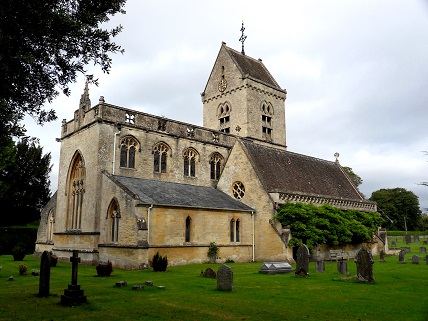
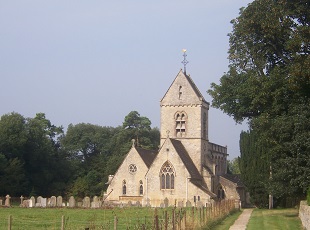
Hatherop · St Nicholas
Hatherop See Sunday 16th September 2012 for full details.
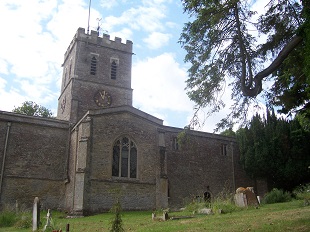
Lechlade Although sited on the course of the River Thames, the settlement was documented in the Domesday Book as Lecelade (river crossing near the River Leach). St John’s Lock is the first and highest lock on the river. A Victorian statue that depicts Old Father Thames is to be found at the side of the lock. Originally carved for the Crystal Palace, in the wake of the devastating fire there, the statue was rescued from the ruins and moved to the source of the river, but vandalism resulted in it having to be moved to Lechlade. The parish church overlooks the market square at the heart of the town, and was completed in 1476 on the site of earlier churches, the first of which was Saxon. Mainly in the Perpendicular style the present church was built under the patronage of Cecily, Duchess of York, with monies freed up from the dissolution of Lechlade Priory.
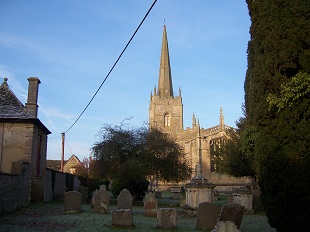 Regarded as one of the finest churches in the Cotswolds, the spire was added early in the 16th century. The poet Shelley was inspired to write his famous stanzas “In a Country Churchyard”. Fragments of medieval stained-glass can be found in the window above the south door. A series of roof-bosses in the chancel bear a carving of a pomegranate, the symbol of Katherine of Aragon, who held Lechlade Manor from 1501 to 1535. The bells are in keeping with the rest of this lovely church in that they are a veritable treat to ring. The oldest bell, the fourth, is by Joseph Carter of Reading, 1599. The back two bells were cast by Ellis Knight, also Reading. Tenor, 1635 and fifth, 1626. The second, 1742, Abel Rudhall, Gloucester. Third from 1802, by James Wells, Aldbourne. Treble by John Warner, London, 1911.
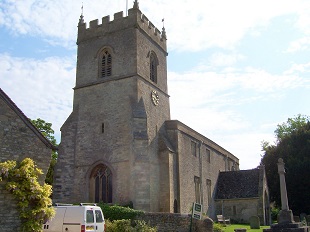
Alvescot The village is widely thought to take its name from St Allege of Elphege, also known as Elphegus the Bald. At the time of the Domesday Book (1086) the settlement was documented as Elfegescote, the addition of cote stemming from the Anglo-Saxon description for a cottage.
Regarded as one of the finest churches in the Cotswolds, the spire was added early in the 16th century. The poet Shelley was inspired to write his famous stanzas “In a Country Churchyard”. Fragments of medieval stained-glass can be found in the window above the south door. A series of roof-bosses in the chancel bear a carving of a pomegranate, the symbol of Katherine of Aragon, who held Lechlade Manor from 1501 to 1535. The bells are in keeping with the rest of this lovely church in that they are a veritable treat to ring. The oldest bell, the fourth, is by Joseph Carter of Reading, 1599. The back two bells were cast by Ellis Knight, also Reading. Tenor, 1635 and fifth, 1626. The second, 1742, Abel Rudhall, Gloucester. Third from 1802, by James Wells, Aldbourne. Treble by John Warner, London, 1911.
Alvescot The village is widely thought to take its name from St Allege of Elphege, also known as Elphegus the Bald. At the time of the Domesday Book (1086) the settlement was documented as Elfegescote, the addition of cote stemming from the Anglo-Saxon description for a cottage.
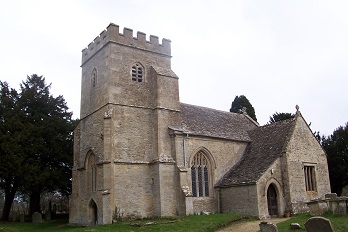 The village was long known for the manufacture of high quality furniture. The church here originally served as a chapel of the mother church in Bampton. Only a doorway and the font remain from the original Norman building, which was dedicated to St Nicholas until early in the 13th century. The architecture is a mix of Early English and Perpendicular styles. The church was originally a cruciform design without a tower, this being built in 1498 after local landowner John Bonde left 100 sheep in his will to fund its construction. In the south transept is the window of the “Sower and Reaper” by Burne-Jones, installed in1910, but designed some years previously, as he died in 1898. The tower is in three stages, with external buttressing and a south-west stair projection. The bells are rung from the ground floor Four of the six bells date to the 18th century (2. 5. 6) all 1721, by Abraham II Rudhall of Gloucester, and the fourth by Robert & James Wells of Aldbourne. Third, 1859, by George Mears of Whitechapel. The treble was added in 1985 by Whitechapel.
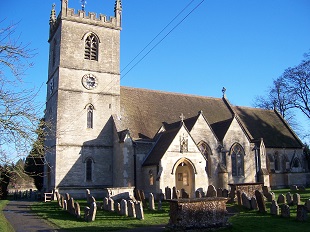
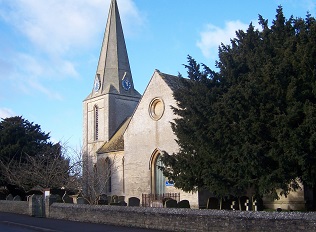 Aston The village derives its name from an easterly farmstead, with a documentation in 1086 as Estone. Situated just north of Bampton, it is sometimes known as Aston Bampton, clearly differentiating it from numerous other Aston’s. The village is possibly best known in recent years for the working pottery here, which not only makes hand-stencilled tableware, but also offers a tour of the works and a café. The parish church was built in 1839, under the supervision of Thomas Greenshields of Oxford, but it underwent a swift succession of restorations during the latter half of the 19th century. The style is Regency Gothic, with a west tower and spire. Even though it is not well regarded by architectural experts, the clean and simple tower does reflect the light superbly. As an added bonus the church is fronted by a selection of trees that provide a spectacular array of colour, from the spring through to the autumn.
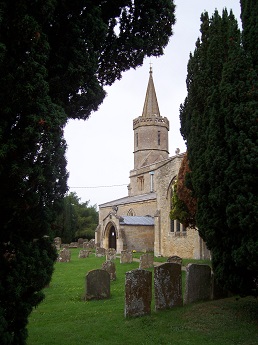 The bells are rung from the ground floor and are an undoubted challenge to your handling. All six bells are from 1883, cast by Taylor’s of Loughborough.
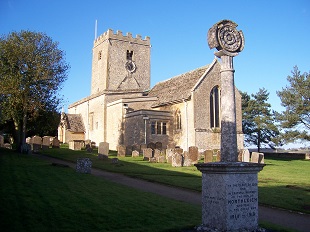
Standlake The Anglo-Saxons named the village in recognition of it being on a hill close to a stream, being noted as Stanlache in 1155. Today Standlake is surrounded by eight lakes of varying sizes, with the village encompassing the hamlets of Brittendon and Brighthampton. Evidence has been uncovered of early Iron Age farmsteads, Roman habitation, and also the outline of Saxon dwellings. During the Civil War, the moated Gaunt House was garrisoned for Charles I, but eventually fell to the Parliamentarians in 1645, and was used for stabling cavalry and housing infantry for raids on Kidlington and Radcot. In the wake of the war, Christ Church in Oxford was bequeathed the house in order to provide an income to pay for bursaries. The parish church was originally cruciform in layout, but was remodelled in the 13th century, and is constructed of coursed limestone and rubble. A restoration (1880 – 91) was overseen by Oxford architect Clapton Crabb Rolfe. The slender octagonal tower was added at the west end of the nave in the 14th century, with the spire being restored in 1911. The tower’s three oldest bells were cast in 1709 (second and third) and 1710 (fifth) by Henry III Bagley of Chacombe.
The bells are rung from the ground floor and are an undoubted challenge to your handling. All six bells are from 1883, cast by Taylor’s of Loughborough.
Standlake The Anglo-Saxons named the village in recognition of it being on a hill close to a stream, being noted as Stanlache in 1155. Today Standlake is surrounded by eight lakes of varying sizes, with the village encompassing the hamlets of Brittendon and Brighthampton. Evidence has been uncovered of early Iron Age farmsteads, Roman habitation, and also the outline of Saxon dwellings. During the Civil War, the moated Gaunt House was garrisoned for Charles I, but eventually fell to the Parliamentarians in 1645, and was used for stabling cavalry and housing infantry for raids on Kidlington and Radcot. In the wake of the war, Christ Church in Oxford was bequeathed the house in order to provide an income to pay for bursaries. The parish church was originally cruciform in layout, but was remodelled in the 13th century, and is constructed of coursed limestone and rubble. A restoration (1880 – 91) was overseen by Oxford architect Clapton Crabb Rolfe. The slender octagonal tower was added at the west end of the nave in the 14th century, with the spire being restored in 1911. The tower’s three oldest bells were cast in 1709 (second and third) and 1710 (fifth) by Henry III Bagley of Chacombe.
Lechlade · St Lawrence
Alvescot · St Peter
Aston · St James
Standlake · St Giles
Charnwood Forest, Leicestershire
Saturday 10th July 1999
Loughborough
Leics · Taylor's Bell Foundry (10) 6cwt
Woodhouse Eaves
Leics · St Paul (6) 10cwt
Copt Oak
Leics · St Peter (6) 9cwt
Misterton with Walcote
Leics · St Leonard (6) 7cwt
Shawell
Leics · All Saints (6) 8cwt
Richard Day, Hugh Deam, Roy Goodwin, Barry Hall, Sally Harrison, Roy Jones, Susan King, Peter Lloyd,
Nesta Long, Brian Lowe, Carol Lowe, Paul Lucas, Paul Morley and Serge Zvegintov.
Nesta Long, Brian Lowe, Carol Lowe, Paul Lucas, Paul Morley and Serge Zvegintov.
Cambridge, Stedman, Plain Bob and Grandsire.

Taylor's Bell Foundry
Loughborough The Domesday Book refers to the settlement as Lucteburne, describing "a fortified house belonging to Luhhede". The River Soar runs through the east of the town, and navigation north to the Trent was achieved in 1778 by the Loughborough Navigation, this forming part of the Grand Union Canal. The town was the destination for the first package tour organised by Thomas Cook for a temperance group from Leicester. After the success of this excursion in 1841 he chartered a train carrying nearly 500 passengers a distance of twelve miles and back for one shilling. It was not for another four years that he conducted his first trip for profit, a railway journey to Liverpool from Leicester, Nottingham and Derby. The University of Loughborough is widely recognised for its sports scholarships. Amongst the famous past graduates are, Lord Sebastian Coe, Sir Clive Woodward, Dame Tanni-Grey Thompson, Paula Radcliffe and Steve Backley. The Carillon War Memorial that stands in Queen's Park is 152ft high, having been completed in 1923. It was the first grand carillon in England, the concept being associated with Belgium. The carillon, designed by Sir Walter Tapper and built by William Moss, has 47 bells, all of which were cast at the local foundry.
 Recitals are held on Thursday and Sunday during the summer. The town holds one of the largest street fairs in England every November. The Loughborough Canal Festival, first held in 1997, is an annual event in May centred around Chain Bridge.
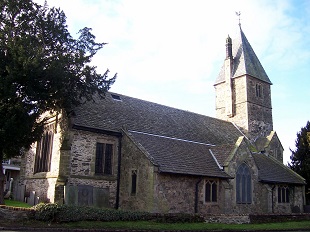
Woodhouse Eaves The village is built on the slopes of Windmill Hill, which itself lies in the shadow of 818ft Beacon Hill to the north. Sited just to the east of Charnwood Forest, this was originally an Iron Age settlement. Around 1220 it was known as Wodehuses (houses near a wood), the affix describing virtually the same thing. The parish church and a group of houses are separated from the village centre, the church being a granite structure of 1836/37, designed by William Railton, who also designed Nelson's Column in Trafalgar Square. The west tower also serves as the entrance to the church. All six bells were cast by Taylor's of Loughborough in 1904.
Recitals are held on Thursday and Sunday during the summer. The town holds one of the largest street fairs in England every November. The Loughborough Canal Festival, first held in 1997, is an annual event in May centred around Chain Bridge.
Woodhouse Eaves The village is built on the slopes of Windmill Hill, which itself lies in the shadow of 818ft Beacon Hill to the north. Sited just to the east of Charnwood Forest, this was originally an Iron Age settlement. Around 1220 it was known as Wodehuses (houses near a wood), the affix describing virtually the same thing. The parish church and a group of houses are separated from the village centre, the church being a granite structure of 1836/37, designed by William Railton, who also designed Nelson's Column in Trafalgar Square. The west tower also serves as the entrance to the church. All six bells were cast by Taylor's of Loughborough in 1904.
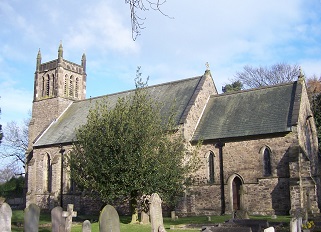 Copt Oak As the name suggests, the village is closely associated with Charnwood Forest, taking its name from the pollard oak which is thought to have survived here for over 2000 years up until 1855. A corner of the churchyard marks the spot where the tree once stood. Widely regarded as the "King of the Forest", the oak tree has given sterling service down the ages, many being felled to build English "Men-O-War" which sailed the high seas ensuring maritime supremacy during turbulent times. The parish church was designed by William Railton, and is very similar to his design of St Paul's church in Woodhouse Eaves, although the towers are very different, as are the extensions and additions. Just two days separated the consecration of the churches, September 3rd 1837 at Copt Oak and September 5th 1837 at Woodhouse Eaves. All six bells were cast by Taylor's of Loughborough in 1889.
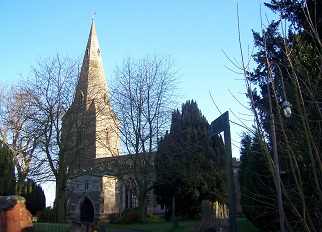 Misterton with Walcote In 1086 the settlement here was documented as Minstretone (an estate with a church belonging to a monastery). The village is sometimes confused with the larger village of the same name in Nottinghamshire, hence the conjunction of Walcote here. The village is situated just to the east of the M1, but happily retains a rural atmosphere, with the River Swift running through the fringe. The impressive Memorial Hall in Brook Street has been diligently renovated in recent years. The elegant 14th century parish church, with its demure west tower and broach spire, is situated at the heart of the village, although the area that directly adjoins it is comprised of a small copse, a bridleway, and open field. The oldest of the six bells here is the tenor, 1607, by Robert III, Thomas III & William Newcombe of Leicester. The fifth is of 1620 by Hugh II Watts, also of Leicester. The third is from 1675 by Henry I Bagley of Chacombe. The other three bells date to 1946, by Taylor's of Loughborough.
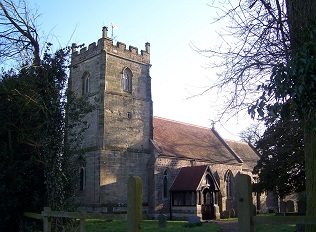 Shawell The village, with a brook running through its centre, manages to retain a quiet dignity despite being bordered by the M1 and M6. It is situated just to the east of what was the Roman town of Tripontium (a place of three bridges), with numerous bricks and tiles of this era having been unearthed. The settlement here in 1086 was noted as Sawelle (a boundary spring or stream). In recent decades a number of lagoons have been created in the area, enticing a variety of wildlife not previously seen locally. Earthworks remain of a motte-and-bailey castle that was founded during the reign of King Stephen. Shawell Castle was part of a series of defensive baileys that are known to have existed in the county. Either side of Shawell stood Lilbourne Castle and Gilmorton Castle. The parish church, rebuilt in 1866, is situated close to these earthworks on a track that leads from the main street. The oldest bell dates to around 1480, cast by itinerant London bell-founder John Danyell. The fourth is of 1560 by Thomas II Newcombe from the Leicester foundry. The third was cast in 1632 by Hugh II Watts, also in Leicester. Second bell, 1656, by Bryan II Eldridge of Chertsey. The tenor, 1770, Joseph Eayre of St Neots, and the treble added in 1990 at Whitechapel.
Woodhouse Eaves · St Paul
Copt Oak · St Peter
Misterton · St Leonard
Shawell · All Saints
Hertfordshire
Saturday 17th April 1999
10.00am Lemsford
Herts · St John the Evangelist (6) 3cwt
11.00am Northaw
Herts · St Thomas a Becket (6) 12cwt
12.05pm South Mymms
Herts · St Giles (6) 11cwt
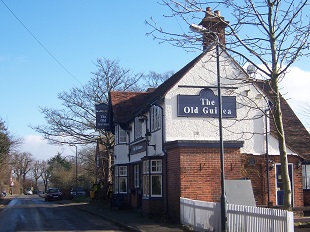
01.00pm The Old Guinea
Ridge
02.30pm Ridge
Herts · St Margaret (6) 11cwt
03.30pm Radlett
Herts · Christ Church (6) 3cwt
04.30pm Langleybury
Herts · St Paul (6) 8cwt
David Badger, Joan Badger, Richard Day, Hugh Deam, Sally Harrison, Kerry Harwood, Anthony Hughes, Tamsin Hughes, Roy Jones, Peter Lloyd, Nesta Long, Brian Lowe, Leonora Richardson, Jim Richardson, Mary Richardson, Dinah Wainwright, Dot Waring and Neville Whittell.
Plain Bob Minor, Stedman, St Simon's, St Martin's and Grandsire.
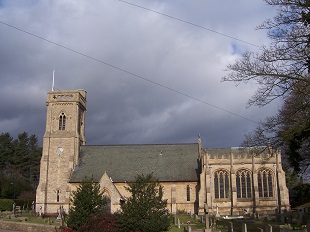
Lemsford · St John
Lemsford The village is situated on the River Lea, and was created out of Hatfield parish during 1858. The stately home of Brocket Park Hall has a notable, if morbid, place in the political annals of Britain, as it was where two Prime Ministers passed away, namely Lord Melbourne and Lord Palmerston. During World War II the house served as a maternity hospital. The estate is the seat of the 3rd Baron Brocket, known to television viewers as Charlie Brocket after he made a huge impact on the third series of I'm a Celebrity... in 2004. He had initially gained notoriety in 1996 when his playboy lifestyle led to his being jailed for insurance fraud. The landscaped grounds incorporate the river flowing over a series of small waterfalls. The Victorian parish church designed by David Brandon, is located directly across the road from the grand entrance to the Brocket Estate, being erected as a memorial to George Augustus, 6th Earl of Cowper, who died before he could realise his intention to build a church at Lemsford the benefit of his tenants. The Brocket Chapel was built in memory of Florence Nall-Cain, who died in 1927. To the left of the chapel door is her stone effigy lying on a canopied marble tomb, with heraldic cats at her feet. The tower is complete with perforated quatrefoil parapet and corner-mounted dragon gargoyles. The third, fifth and tenor were cast in 1873 by John Warner & Sons, London. The front two bells and the fourth were cast in 1977 at Whitechapel Bell Foundry.
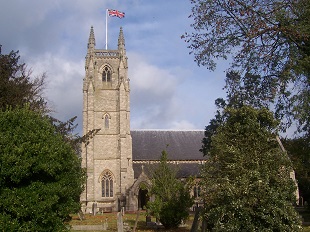 Northaw Described as North Haga during the 11th century, the name refers to a northern enclosure. This photogenic village grew around the source of the River Colne, and is now very close to the northern fringe of busy Potters Bar. According to local legend, a wise hermit named Sigar lived in Northaw and was buried in St Alban's Abbey, close to King Henry I. There are several fineGeorgian buildings in the village, including the Old Vicarage and Dower House. Also here, between Northaw and Cuffley, is the "Great Wood", which was designated as a country park in 1968. There is an abundance of oak, birch, hornbeam, sycamore, ash and sweet-chestnut. It was in the skies over Northaw during the First World War that Lt William Leefe Robinson of the Royal Flying Corps won a VC for shooting down a German Zeppelin SL11 that was on its way to bomb London. This feat in the dark of 2am on 3rd September 1916, was the first occasion where a British airman had succeeded in downing an enemy airship. The parish church, with its tall and slender tower, dates from 1881/82. For over a century it was heated by means of a high pressure hot water heating system that was considered to be a masterpiece of Victorian engineering.
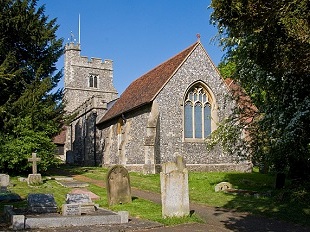 Built by C. Kirk & Son of Sleaford, the church consequently displays a distinct Lincolnshire influence, with its rock-facing, extravagant pinnacles, and flowing tracery. The west tower is unique in the county for its design. All six bells were cast by Taylor's of Loughborough in 1884.
South Mymms (Mimms) The village was previously in Middlesex, the parish being split in 1894, with the area transferring to Hertfordshire upon the creation of Greater London in 1965. South Mymms served as home for Queen Wilhelmina of the Netherlands during her exile in World War II. A German air attack on the village amidst the conflict narrowly missed her, but killed two of her guards. Throughout the war she was an inspiration to her subjugated people, regularly broadcasting messages over Radio Oranje and convincing them not to support the puppet government led by Dirk Jan de Geer. The village is undoubtedly known most widely for its huge motorway service station which is something akin to a village in itself, being the first service area on the M25,
Built by C. Kirk & Son of Sleaford, the church consequently displays a distinct Lincolnshire influence, with its rock-facing, extravagant pinnacles, and flowing tracery. The west tower is unique in the county for its design. All six bells were cast by Taylor's of Loughborough in 1884.
South Mymms (Mimms) The village was previously in Middlesex, the parish being split in 1894, with the area transferring to Hertfordshire upon the creation of Greater London in 1965. South Mymms served as home for Queen Wilhelmina of the Netherlands during her exile in World War II. A German air attack on the village amidst the conflict narrowly missed her, but killed two of her guards. Throughout the war she was an inspiration to her subjugated people, regularly broadcasting messages over Radio Oranje and convincing them not to support the puppet government led by Dirk Jan de Geer. The village is undoubtedly known most widely for its huge motorway service station which is something akin to a village in itself, being the first service area on the M25,
 opening in 1986. Much of the complex had to be rebuilt after a major fire started by a deep fat fryer in 1998, and there was no fire suppression system in place. In 2003 its public conveniences won the National Loo of the Year award. The parish church is in the west of the parish, and has a chancel with north vestry and chapel, nave with north aisle and south porch, and west tower. Except for the north aisle and chapel, which are partly of brick, the walls are of flint rubble with stone dressings. Repairs and renovations were carried out in a piecemeal fashion during Victorian times. The original set of four bells were replaced by a new peal of six in 1812, by Whitechapel foundry. Two of the bells were recast in 1893 and the bells re-hung. The front two bells were added in 1971, also by Whitechapel.
Ridge Long part of the Manor of Tyttenhanger, the village sits at 400ft above sea level and
opening in 1986. Much of the complex had to be rebuilt after a major fire started by a deep fat fryer in 1998, and there was no fire suppression system in place. In 2003 its public conveniences won the National Loo of the Year award. The parish church is in the west of the parish, and has a chancel with north vestry and chapel, nave with north aisle and south porch, and west tower. Except for the north aisle and chapel, which are partly of brick, the walls are of flint rubble with stone dressings. Repairs and renovations were carried out in a piecemeal fashion during Victorian times. The original set of four bells were replaced by a new peal of six in 1812, by Whitechapel foundry. Two of the bells were recast in 1893 and the bells re-hung. The front two bells were added in 1971, also by Whitechapel.
Ridge Long part of the Manor of Tyttenhanger, the village sits at 400ft above sea level and
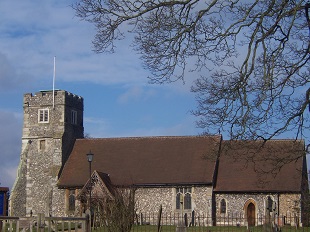 derives its name from Littleridge Wood to the north, being documented as Le Rigge (the ridge) in 1248. The River Colne flows across the heath to the north and the St Catherine Bourne Brook crosses the centre of the village. There are numerous timber-framed houses and one of the most famous pubs in the county, The Old Guinea. Across the road is the 14th century parish church with a three-stage tower, originally of the 15th century, but much modernized, with a modern embattled parapet, and the angle buttresses restored. The ringing chamber is very nearly a mirror-image of the one at South Mymms. Prior to 1998 the tower contained a ring of three bells. The tenor dates to 1613, cast at Whitechapel by William Carter. The fourth, 1685, by William & Philip Wightman of London, and fifth by Lester & Pack, also of Whitechapel.The treble and three were cast at Whitechapel in 1998, and a redundant bell, cast by John Warner in 1889, was located by the Keltek Trust, now serving as the second bell here.
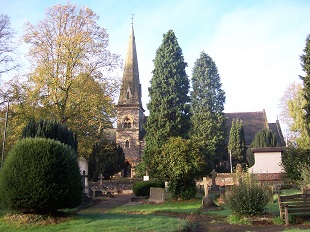 Radlett Documented as Radelett (junction of roads) in 1453, the town developed notably only in the 20th century as it became a dormitory settlement for London. It is located on the course of Watling Street and set amidst undulating countryside, in a valley known as "Tykes Water" that runs from Aldenham reservoir to the River Colne. On 8 December 1865, the ecclesiastical parish of Radlett was created, thus marking the start of its modern history. The railway station was built here, connecting Radlett with London around this time. Handley Page Ltd opened a grass airfield and aerodrome nearby in 1929, and this was upgraded by 1939 to have three hard runways for use in production of Hampden and Halifax bombers. The company went bankrupt in 1969 and the airfield closed, but the disused airfield still had its most famous moment to come, when in 1977 the motorcycle stunt rider Eddie Kidd successfully jumped over 14 London double-decker buses. The 1948 Olympic Marathon passed through Radlett as part of its out and back course from the Empire Stadium, Wembley. The elegant parish church is situated on the edge of the town and has a slender tower and spire, the churchyard being sited across the road. All six bells, cast at Whitechapel, were installed in 1964 to mark the centenary of the church. An exceptionally light set, they are rung from the ground floor and require deft handling on the front two.
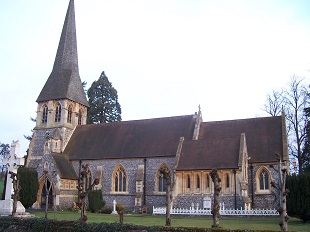 Langleybury (Hunton Bridge) The village is not marked on many large-scale road maps, and thus is not easy to locate. Deriving its name from the Anglo-Saxon description for a long woodland clearing, Langley is a common place-name in the county. Whist the others garnered their affixes from church or king, Langelege attached "bury" (a place by a fort) during the Middle Ages. The church is situated on the perimeter of a small copse within the triangle of land created by the M25 and A41. Most of the money for its construction was provided by John Loyd of Langleybury House, who also paid for the school opposite. Monuments to him and his wife, Caroline, are to be found inside the church. This flint and stone building was designed by H. Woodyer in 1865, with the greater part of the fittings also his work. The interior is very ornamental, with the delicate carvings of musical angels around the arches being the work of Thomas Earp. The nave, chancel, south chapel and west tower are all from this period. One of the most notable female explorers of the 20th century, Violet Cressy-Marcks is buried in the churchyard here. Elected to the Royal Geographical Society in 1922, she mounted numerous explorations (Arctic Circle, Amazon to Andes, India to Moscow, and eight times around the world) and was also a war reporter in China and at the Nuremberg Trials. The ring of six bells all date to 1864, cast at the Whitechapel Bell Foundry by George Mears.
Northaw · St Thomas

South Mymms · St Giles
The Old Guinea · Ridge
Ridge · St Margaret
Radlett · Christ Church
Langleybury · St Paul
A record of outings 1998
by Hugh Deam
West Oxfordshire
Saturday 17th October 1998
10.00am Tackley
Oxon · St Nicholas (6) 14cwt
11.00am Wootton
Oxon · St Mary (6) 10cwt
12.05pm Bladon
Oxon · St Martin (6) 6cwt
02.30pm North Leigh
Oxon · St Mary (6) 9cwt
03.30pm Church Hanborough
Oxon · St Peter & St Paul (6) 15cwt
Richard Day, Hugh Deam, Roy Goodwin, Barry Hall, Sally Harrison, Anthony Hughes, Roy Jones, Susan King, Peter Lloyd, Brian Lowe, Paul Morley, Charles Smith, Basil Townsend and Serge Zvegintzov.
Kent, Plain Bob Minor, Stedman and St Simon's.
Tackley · St Nicholas
Tackley Noted as Tachelie in 1086, the name refers to "a woodland clearing". The village sits amidst beautiful countryside that is popular with walkers and cyclists, enhanced by the River Cherwell acting as the parish boundary to the east. There is a wealth of limestone buildings and examples of dry-stone walling. In the wake of the Civil War the village was left in a state of near ruin having been situated between the warring encampments. As a consequence little remains by way of architecture prior to this period, other than one large Elizabethan manor house, and one other smaller dwelling. Tackley expanded during the first half of the 20th century due to the cement works nearby, and the car manufacturing in Oxford. The parish church, situated just south of the village, is of cruciform design, dating from the 11th century, retaining several remnants of its original Saxon stone-work. During the 15th century, the Perpendicular Gothic clerestory and upper part of the tower were built and both transepts rebuilt. In 1862 lightning struck and damaged the church, and two years later the Gothic Revival architect G.E. Street directed a restoration. The tower houses a ring of six wonderful bells, the ringing chamber being accessed via a selection of ladders and steps. The oldest bells are by Richard Keene of Woodstock, fifth and tenor, 1664, and third, 1689. John Warner & Sons of Cripplegate cast the second and fourth in 1859, with the treble by Mears & Stainbank, 1924.
 Wootton The hilly parish of Wootton takes its name from a farmstead by a wood, and is built alongside what was the supply routs from the farmlands of Steeple Barton to the Saxon Royal Manor of Woodstock, following the course of two rivers, the Glyme and the Dorn. The village has steeply banked pavements, with several copses and large hedgerows bordering its perimeter. The parish church in "English Gothic" style, with Perpendicular tower, is situated at the heart of the village on a bend of the main road. The nave and aisle are Early English period, with a Tudor clerestory and Decorated period chancel. The upper part of the tower was added during the 15th century in a Perpendicular Gothic style. The oldest bells are the third, fourth and fifth, cast by Edward Hemins of Bicester in 1732. The tenor was cast at the same foundry seven years later. Abel Rudhall of Gloucester cast the second bell in 1749, with the present treble added in 1923 by Whitechapel. The floor of the ringing chamber has a very noticeable slope from left to right as you enter.
 Bladon The village takes its name from the previous description for what is now known as the River Evenlode, namely the River Blade. Situated close to the western wall of the Blenheim Estate, the village is a place of dry-stone walls, limestone and tile buildings, with an aura of solidity. Originally the medieval church here served as the parish church for Woodstock. This building was demolished and rebuilt on the orders of the then Rector in 1891 to the designs of Sir A.W. Blomfield, and was re-opened on St Martin's Day by the Bishop of Oxford. It now consists of chancel, nave, narrow aisles and a west tower. Above all this though, it is the graves of the Churchill family in the churchyard that primarily attracts the tourists. After the state funeral at St Paul's Cathedral (January 1965), Sir Winston Churchill was laid to rest here beside his parents, Randolph and Jessie. The headstones all face directly towards the estate.
 The work on the late Victorian church was carried out largely at the expense of the Rector, Arthur Majendie. Because of these efforts, three windows in the chancel are dedicated to his memory. Other feature windows in the church include a copy of Sir Joshua Reynolds "Choir of the Cherubs". In 1893, Majendie gave a lych-gate in memory of his mother. In 1937, a statue of St Martin was placed in a niche over the porch. All six bells were cast in 1883 by Mears & Stainbank, Whitechapel.
North Leigh The church is of great interest, with facets remaining from c.1000 - 1200. The Wilcote Chapel is replete with intricate decoration and fine stained glass work. A second aisle was added early in the 18th century, with a restoration from 1864. The Saxon tower is one of the oldest surviving in the county. See Saturday 8th June 2013 for full details.
The work on the late Victorian church was carried out largely at the expense of the Rector, Arthur Majendie. Because of these efforts, three windows in the chancel are dedicated to his memory. Other feature windows in the church include a copy of Sir Joshua Reynolds "Choir of the Cherubs". In 1893, Majendie gave a lych-gate in memory of his mother. In 1937, a statue of St Martin was placed in a niche over the porch. All six bells were cast in 1883 by Mears & Stainbank, Whitechapel.
North Leigh The church is of great interest, with facets remaining from c.1000 - 1200. The Wilcote Chapel is replete with intricate decoration and fine stained glass work. A second aisle was added early in the 18th century, with a restoration from 1864. The Saxon tower is one of the oldest surviving in the county. See Saturday 8th June 2013 for full details.
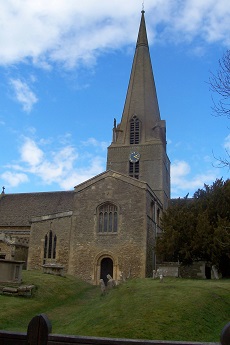 Church Hanborough Documented as Hansberge (Hagena's Hill) in 1086, the village has an enviable literary history, with both J.B. Priestley and Penelope Lively having been residents, plus Lewis Carroll wrote several chapters of Alice in Wonderland whilst on holiday here. Folly Bridge crosses the River Evenlode here, with its predecessor serving as part of the route used by Charles I in his flight from Oxford in 1644. As the Parliamentary forces led by Essex and Waller were stationed at Woodstock and Eynsham, the only safe passage left open to him was this route between the two. The bulk of housing and shops are in Long Hanborough, this being where the Oxford Bus Museum has its home, with around 50 vehicles on show and others in the process of being restored. The exhibition is housed in the former British Rail yard. The magnificent spire of SS Peter & Paul's church can be seen from miles around and accurately heralds a superb and mostly unspoilt medieval building that is constructed of local stone, having been built by local craftsmen during the 12th century. Inside there is a notable 15th century wooden screen which comprises three sections, and crosses both the chancel and aisles. Rung from a capacious chamber, the bells are a splendid and weighty six, the oldest bell being the fourth, cast 1602 by Joseph Carter of Reading. The fifth is from a year later, cast by Richard I Purdue of Stoford. Third, 1615, by Robert Atton of Buckingham. Tenor, 1786, cast by Robert II Wells of Aldbourne. Second by James Wells, 1807, also in Aldbourne. Treble added in 1956 by Mears & Stainbank.
Wootton · St Mary
Bladon · St Martin
North Leigh · St Mary
Church Hanborough
Aylesbury Vale
Saturday 28th March 1998
09.30am Piddington
Oxon · St Nicholas (5) 8cwt
10.30am Ludgershall
Bucks · SMV (5) 9cwt
11.30am Wotton Underwood
Bucks · All Saints (6) 11cwt
12.30pm Brill
Bucks · All Saints (6) 11cwt
01.30pm The Black Bull
Launton
03.00pm Launton
Oxon · The Assumption of the BVM (6) 6cwt
04.00pm Caversfield
Oxon · St Lawrence (5) 4cwt
05.00pm Islip
Oxon · St Nicholas (8) 8cwt
Richard Day, Hugh Deam, Jonathan Everett, Steve Everett, Keith Godfrey, Roy Goodwin, Sally Harrison, Alex Holmes, Anthony Hughes, Roy Jones, Brian Lowe, Paul Lucas, Paul Morley, Dee Nunan, Josh Nunan, Basil Townsend, Mark Walker and Ruth Walker.
Grandsire Triples, Kent, Plain Bob Minor, Stedman and Rev Canterbury.
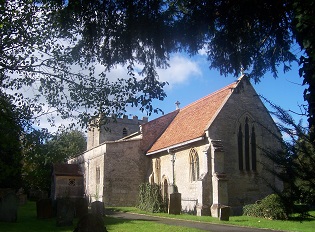
Piddington · St Nicholas
Piddington The Domesday Survey (1086) notes the settlement here as Petintone (Pyda's Estate). Today the village is bordered to the west by two small woods, Piddington Wood and Little Wood, with a larger area of open ground to the south known as "The Wilderness". Buried in the churchyard here is the poet and playwright John Drinkwater (1882 - 1937) who, with like-minded poets such as James Elroy Flicker and Rupert Brooke, founded the literary journal, Georgian Poetry. The parish church is situated on the western fringe of the village, with the 16th century tower rising to a height only fractionally above that of the nave. The opulent chancel dates to around 1300 and has lancet windows with slender jamb-shafts to the side walls. A major restoration in 1893 by J.O. Scott included a new chancel-arch. The bells are rung from the ground floor, the back two bells having been
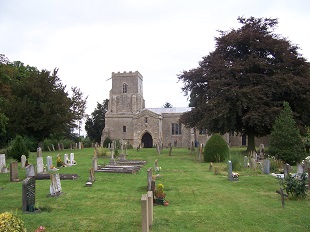 cast at the Bicester foundry of Edward Hemins in 1729 (tenor) and 1738 (fourth). The front three bells are from the Bristol foundry of Llewellins & James, 1887.
Ludgershall In 1086 the settlement here was known as Lotegarser (nook with a trapping spear). A myriad of roads meet in the village, which is notable for its hilly open spaces similar to those at nearby Brill. There is a mill-mound dating back to medieval times on the north-eastern edge of Ludgershall. The parish church is situated on the southern extreme, with various extensions to the building down the years easy to discern. A number of mature trees frame the church and the churchyard is capacious in the extreme. The chancel fabric is primarily 14th century, but there was an extensive reconstruction conducted by F.C. Penrose in 1889, when the organ chamber was added. The west tower has a superb bell-cote, with the oak doors to
cast at the Bicester foundry of Edward Hemins in 1729 (tenor) and 1738 (fourth). The front three bells are from the Bristol foundry of Llewellins & James, 1887.
Ludgershall In 1086 the settlement here was known as Lotegarser (nook with a trapping spear). A myriad of roads meet in the village, which is notable for its hilly open spaces similar to those at nearby Brill. There is a mill-mound dating back to medieval times on the north-eastern edge of Ludgershall. The parish church is situated on the southern extreme, with various extensions to the building down the years easy to discern. A number of mature trees frame the church and the churchyard is capacious in the extreme. The chancel fabric is primarily 14th century, but there was an extensive reconstruction conducted by F.C. Penrose in 1889, when the organ chamber was added. The west tower has a superb bell-cote, with the oak doors to
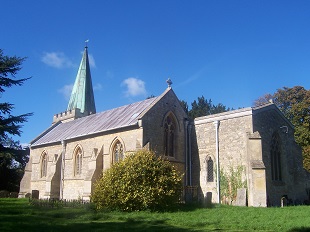 the room under the gallery being the work of Les Adams (1987 - 90). The carvings depict the Tree of Life set against local scenes. The bells are rung from a spacious gallery, with the oldest being the treble and fourth by Richard Keene of Woodstock, 1658. The third bell is from 1745, by Thomas Lester of Whitechapel. Second and tenor both by Taylor's of Loughborough, 1889.
Wotton Underwood Originally known as Oltone (a farm near a wood), the settlement was later renamed Wudotun and the affix Underwood added in order to differentiate the village from several others of the same name. The grandest feature of this small and remote village is Wotton House, which was built between 1704 - 14 by master-mason John Keene, on a model created by William Winde. It is reputed to be almost identical to Buckingham House, the forerunner to Buckingham Palace. The owner at that time
the room under the gallery being the work of Les Adams (1987 - 90). The carvings depict the Tree of Life set against local scenes. The bells are rung from a spacious gallery, with the oldest being the treble and fourth by Richard Keene of Woodstock, 1658. The third bell is from 1745, by Thomas Lester of Whitechapel. Second and tenor both by Taylor's of Loughborough, 1889.
Wotton Underwood Originally known as Oltone (a farm near a wood), the settlement was later renamed Wudotun and the affix Underwood added in order to differentiate the village from several others of the same name. The grandest feature of this small and remote village is Wotton House, which was built between 1704 - 14 by master-mason John Keene, on a model created by William Winde. It is reputed to be almost identical to Buckingham House, the forerunner to Buckingham Palace. The owner at that time
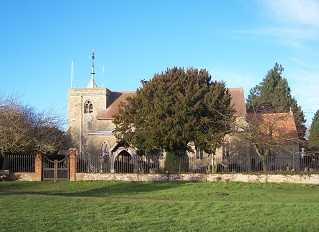 was Richard Grenville, whose son also inherited the mansion at Stowe, with the family being the Dukes of Buckingham for some 800 years. The church, which stands in the outer grounds of the estate, is almost wholly a 19th century rebuilding by G.E. Street, but containing much of interest within to make up for a plain exterior, with an incongruous spire. There is a carved stone screen that was added at the behest of the then Duke in 1867. Also here is a Norman frieze, as well as numerous monuments, and a mortuary chapel for the Grenville family. The bells are rung from the ground floor, with the middle four bells dating to 1728, cast by Edward Hemins in Bicester. The treble and tenor are both of 1800, cast by Thomas I Mears, Whitechapel.
Brill Documented as Bruhella in 1072, the name references the Celtic description for a hill, with the village
was Richard Grenville, whose son also inherited the mansion at Stowe, with the family being the Dukes of Buckingham for some 800 years. The church, which stands in the outer grounds of the estate, is almost wholly a 19th century rebuilding by G.E. Street, but containing much of interest within to make up for a plain exterior, with an incongruous spire. There is a carved stone screen that was added at the behest of the then Duke in 1867. Also here is a Norman frieze, as well as numerous monuments, and a mortuary chapel for the Grenville family. The bells are rung from the ground floor, with the middle four bells dating to 1728, cast by Edward Hemins in Bicester. The treble and tenor are both of 1800, cast by Thomas I Mears, Whitechapel.
Brill Documented as Bruhella in 1072, the name references the Celtic description for a hill, with the village
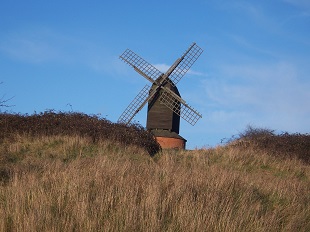 commanding some of the finest panoramic views in the country, sited as it is on the slopes of a 700ft hill. Numerous roads lead to and from Brill, and an impressive 17th century wooden windmill overlooks the western extremity of the village. This area is particularly photogenic, with an expanse of hillocks that were created by the abandoned clay-diggings of Brill Common. Clay-based industrious such as pottery, tile-making and brick-making all thrived until the early part of the 20th century, although stone and wood carving is still practised here. The village boasts a wealth of attractive Georgian housing, plus a red-brick Elizabethan manor house. Edward the Confessor is known to have owned a substantial property here, with Brill having been a Royal Manor up until the 14th century. The church in Brill served as a chapel for nearby Oakley until the 16th century. A major restoration of 1885-89
 conducted by J.O. Scott left little of the Norman building intact, although the 17th century roof was retained, as was the Norman font. The bells are rung from the ground floor in a room that also doubles as the kitchen. Five bells remain from 1825 when the original five bells were recast to make a peal of six. The Whitechapel Foundry recast the fifth bell in 1980 after it had developed a crack. The frame dates from 1933 when the bells were refurbished.
Launton Edward the Confessor gave the parish of Langetun (a long settlement) to the Abbey of Westminster in 1065 so as to provide the monks with financial support. The monks are credited with the construction of the first chapel here, a building which was enlarged in 1238. The only other building remaining from this medieval period is the tithe barn. On Monday 15th February, 1830, a large meteorite fell to earth in a ploughed field here at around
conducted by J.O. Scott left little of the Norman building intact, although the 17th century roof was retained, as was the Norman font. The bells are rung from the ground floor in a room that also doubles as the kitchen. Five bells remain from 1825 when the original five bells were recast to make a peal of six. The Whitechapel Foundry recast the fifth bell in 1980 after it had developed a crack. The frame dates from 1933 when the bells were refurbished.
Launton Edward the Confessor gave the parish of Langetun (a long settlement) to the Abbey of Westminster in 1065 so as to provide the monks with financial support. The monks are credited with the construction of the first chapel here, a building which was enlarged in 1238. The only other building remaining from this medieval period is the tithe barn. On Monday 15th February, 1830, a large meteorite fell to earth in a ploughed field here at around
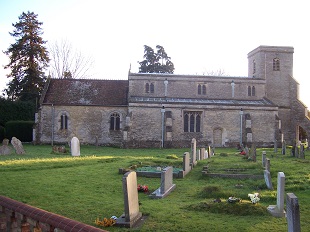 7.30pm in the evening. The following day it was recovered and weighed in at 2lbs, being roughly the size of a cricket ball. Today it resides in the Natural History Museum. The church was primarily build between the 12th and 13th century, although major alteration were made during the 15th century. The east window is a memorial to Bishop Skinner who retired here during the Civil War when he was ejected from the Bishopric of Oxford. He continued to take services and secretly ordained 300 clergymen. In the chancel are glass memorials, in rich colours, to Bishop Wilberforce and Bishop Grosseteste. A further window memorial commemorates a former Rector here, Dr J.C. Blomfield, who was later Bishop of London. His son, Sir Arthur Blomfield subsequently found fame as a distinguished church architect. The bells here are a pleasant ring of six, although the ringing chamber is
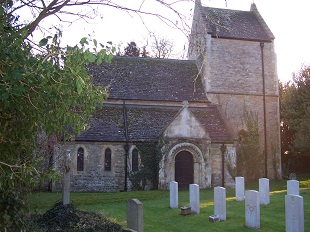 exceptionally cramped, with all six bells cast by Gillett & Johnston, 1907.
Caversfield The Roman Road between Alchester and Towcester skirts the eastern fringe of the village and denotes the parish boundary on that side. The name of Caversfield refers to open land once belonging to Cathere, but today is in imminent danger of becoming a suburb of Bicester. Before the Norman Conquest, the manor belonged to Edward, an appointed noble of Tostic Godwinson, Earl of Northumbria. After 1086 the village was one of several manors owned by William de Warenne, 1st Earl of Surrey, with his descendants retaining Caversfield until early in the 14th century. Until the Reform Act of 1832, this was an enclave of Buckinghamshire, with the Counties (Detached Parts) Act 1844 transferring Caversfield to Oxfordshire for all remaining purposes. Until the 20th century Caversfield had a small population, but the creation of Bicester Airfield in 1911 meant that accommodation needed to be provided for many RAF personnel. The church tower is Saxon in its origins, with nave and chancel rebuilt late in the 12th century. The 18th century saw Gothic Revival architect Henry Woodyer carried out major remodelling of the interior. The five bells are rung from the ground floor, the back two bells being the oldest, both by Taylor's of Loughborough, tenor (1874) and fourth (1876). The other three bells cast by Mears & Stainbank at Whitechapel. Third bell cast in 1927, and front two bells in 1949.
exceptionally cramped, with all six bells cast by Gillett & Johnston, 1907.
Caversfield The Roman Road between Alchester and Towcester skirts the eastern fringe of the village and denotes the parish boundary on that side. The name of Caversfield refers to open land once belonging to Cathere, but today is in imminent danger of becoming a suburb of Bicester. Before the Norman Conquest, the manor belonged to Edward, an appointed noble of Tostic Godwinson, Earl of Northumbria. After 1086 the village was one of several manors owned by William de Warenne, 1st Earl of Surrey, with his descendants retaining Caversfield until early in the 14th century. Until the Reform Act of 1832, this was an enclave of Buckinghamshire, with the Counties (Detached Parts) Act 1844 transferring Caversfield to Oxfordshire for all remaining purposes. Until the 20th century Caversfield had a small population, but the creation of Bicester Airfield in 1911 meant that accommodation needed to be provided for many RAF personnel. The church tower is Saxon in its origins, with nave and chancel rebuilt late in the 12th century. The 18th century saw Gothic Revival architect Henry Woodyer carried out major remodelling of the interior. The five bells are rung from the ground floor, the back two bells being the oldest, both by Taylor's of Loughborough, tenor (1874) and fourth (1876). The other three bells cast by Mears & Stainbank at Whitechapel. Third bell cast in 1927, and front two bells in 1949.
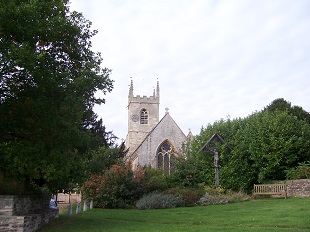 Islip Here, amidst the surrounding forest, once stood a favourite hunting residence of the Saxon kings, and in which Edward the Confessor was born in 1004. The village derives its name from the pre-English description for the river here, the land being quite swampy at that time. The Domesday Book recorded a water-mill being in Islip, with the system of common fields being entirely on the north side of the River Ray. Remains of a Romano-British settlement have been uncovered just south-east of the village. Early in the Civil War, Islip was a strategic outpost for the Royalist capital at Oxford. The village changed hands a number of times, until in 1646 during the third siege of Oxford, a force under Parliamentarian Colonel George Fleetwood occupied Islip. In the 18th century, Islip developed as a staging post on the coaching route between London and Worcester. In 1850 the railway station opened here as part of the Buckinghamshire Railway. Passenger services ceased in 1967 and the station was demolished, but the line was re-activated in 1987 and a new station built. Parts of the parish church date from 1200, with Edward the Confessor (1004 - 1066) thought to have been baptised in the previous church building here. Three centuries later, Simon Islip was born in the village and he would eventually serve as Archbishop of Canterbury (1349 - 1366). The chancel was rebuilt in 1780, and the church was generally restored in 1861 by Gothic Revival architect E.G. Bruton, who remodelled the chancel as well. In 1824 some medieval wall paintings were uncovered in the south aisle, but were then plastered over by Bruton. The bell-tower originally housed a ring of five bells cast in the 17th century. In 1859 Mears & Stainbank, Whitechapel, recast them into a ring of six, and in 1956 the same foundry cast the present front two bells.
Ludgershall · SMV
Wotton Underwood
Brill · All Saints
The windmill at Brill
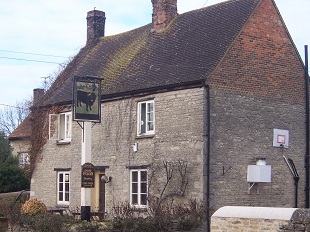
The Black Bull · Launton
Launton · ABVM
Caversfield · St Lawrence
Islip · St Nicholas
A record of outings 1997
by Hugh Deam
The Cotswolds
Saturday 12th April 1997
10.00am Coln St Dennis (Denys)
Gloucs · St James the Great (5) 6cwt
11.00am Barnsley
Gloucs · SMV (6) 4cwt
12.05am Hatherop
Gloucs · St Nicholas (6) 7cwt
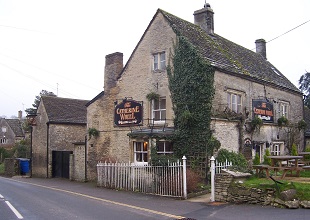
01.15pm The Catherine Wheel
Bibury
03.00pm Bibury
Gloucs · St Mary (6) 9cwt
04.00pm Windrush
Gloucs · St Peter (6) 7cwt
05.15pm Burford
Gloucs · St John (8) 17cwt
Justin Booth, Steve Davies, Hugh Deam, Roy Goodwin, Sally Harrison, Anthony Hughes,
Roy Jones, Nesta Long, Brian Lowe, Carol Lowe and Eddie Smith.
Roy Jones, Nesta Long, Brian Lowe, Carol Lowe and Eddie Smith.
Grandsire Triples, Plain Bob Minor, Stedman, St Simon's and Rev Canterbury.
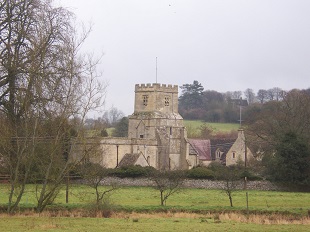
Coln St Dennis · St James Gt
Coln St Dennis (Denys) The name Dennis is a corruption of St Dionisius, the dedication of a large Parisian church to which the village was granted by King William in the wake of the Norman Conquest. As a result of the proximity of the River Coln and the church, the village was known as Colne Seint Denys by 1287, and remained in their keeping until 1414 when Henry V seized all such alien priories. The most northerly of the three Coln's (the others being St Aldwyns and St Rogers), this quiet village is replete with well maintained 17th and 18th century stone barns and cottages. The early Norman church stands on high ground overlooking the river, and retains its original plan of nave, chancel and central tower, the lower part of which is wider than the additional stage from the 15th century. Rather in keeping with the tower is the Norman font which rests on a 15th century pedestal.
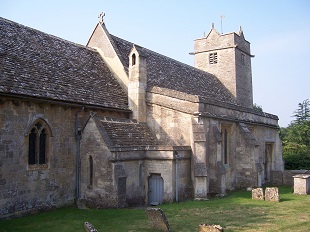 There are many marble and slate tablets throughout the interior of the church, and the churchyard contains several large 18th century chest tombs. The churchyard cross was restored during 1901. The bells here require confident and consistent handling, being supported by a wooden structure like Worcester Cathedral but on a smaller scale. This woodwork can get in the way of the ropes which must be pulled straight to avoid becoming tangled in the beams. All five bells were cast by Abraham II Rudhall, Gloucester, 1734.
Barnsley The early settlement here was first documented as Bearmodeslea (woodland clearing of Beornmod) around 802A.D. The village is on the path of the Welsh Way (now the B4425), once used by drovers. The Georgian manor, Barnsley Park, is noted for its extensive herb, vegetable and knot gardens, fruit trees, decorative shrubs and 18th century summer-houses. Warm
There are many marble and slate tablets throughout the interior of the church, and the churchyard contains several large 18th century chest tombs. The churchyard cross was restored during 1901. The bells here require confident and consistent handling, being supported by a wooden structure like Worcester Cathedral but on a smaller scale. This woodwork can get in the way of the ropes which must be pulled straight to avoid becoming tangled in the beams. All five bells were cast by Abraham II Rudhall, Gloucester, 1734.
Barnsley The early settlement here was first documented as Bearmodeslea (woodland clearing of Beornmod) around 802A.D. The village is on the path of the Welsh Way (now the B4425), once used by drovers. The Georgian manor, Barnsley Park, is noted for its extensive herb, vegetable and knot gardens, fruit trees, decorative shrubs and 18th century summer-houses. Warm
 Cotswold stone is much in evidence locally, lining cottage fronts, and to be seen in dry-stone walls with shades of soft grey and honeyed yellow. The church stands at the centre of the village and dates from Norman times, although with substantial alterations and additions in 1500, 1732 and 1842, when the Georgian amendments were removed and replaced with Victorian windows and stained glass. The oldest architectural feature is the 12th century horseshoe chancel arch. The bells are rung from the ground floor and are pleasingly fluent, having been re-cast at Whitechapel, and also re-hung in 1987. The fourth bell remains from 1677, cast by Edward Neale, Burford.
Hatherop This primarily "Model Village" of the 1850s is situated on the course of what was Akeman Street in the Leach Valley. The church is tucked away behind Hatherop Castle School. See Sunday 16th September 2012 for full details on Hatherop.
Cotswold stone is much in evidence locally, lining cottage fronts, and to be seen in dry-stone walls with shades of soft grey and honeyed yellow. The church stands at the centre of the village and dates from Norman times, although with substantial alterations and additions in 1500, 1732 and 1842, when the Georgian amendments were removed and replaced with Victorian windows and stained glass. The oldest architectural feature is the 12th century horseshoe chancel arch. The bells are rung from the ground floor and are pleasingly fluent, having been re-cast at Whitechapel, and also re-hung in 1987. The fourth bell remains from 1677, cast by Edward Neale, Burford.
Hatherop This primarily "Model Village" of the 1850s is situated on the course of what was Akeman Street in the Leach Valley. The church is tucked away behind Hatherop Castle School. See Sunday 16th September 2012 for full details on Hatherop.
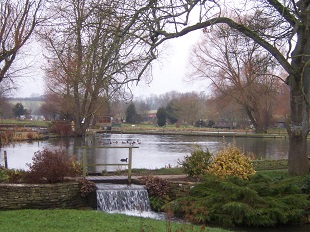
 Bibury One of the gems of the Cotswolds, Bibury nestles in the valley of the River Coln, and is one of the most idyllic spots in England. It boasts several old stone bridges, a fine 17th century mill, a much photographed row of cottages, and a world renowned trout farm. At some point during the 8th century the name was documented as Beaganbyrig (Beage's Stronghold). The hill that rises up behind Arlington Row is known as Awkward Hill, with the meadow next to the cottages known as Rock Isle. The cottages were built in 1380 as a monastic wool-store, and converted into weaver's cottages in the 17th century. The River Coln Coln flows alongside the main street and supplies the trout farm founded by Arthur Severn in 1902, which covers 16 acres, with its hatchery spawning up to six million brown trout ova every year. There are several florid waterfalls
 and water-features as tributaries of the clarified river wends its way through the estate. The famous Swan Hotel stands opposite the entrance to the trout farm, and has been a focal point of Bibury since 1700. Legend has it that an Oxford University student once offered to show the landlord how to draw strong and mild ale from the same cask. He drilled holes in either end of a cask and got the landlord to stop both ends with his hands, but instead of fetching plugs for the holes the student left the hostelry leaving the landlord in an embarrassing predicament. All was not gloom for the landlord as word of his gullibility spread and trade boomed, with people travelling to visit the scene of this absurdity. The artist and craftsman William Morris described Bibury as "the most beautiful village in England" after visiting here. The village has been used as a film location in movies such as
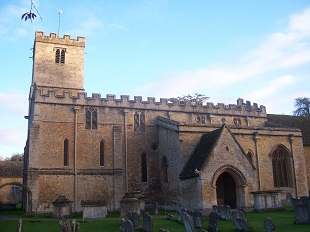
 Stardust and Bridget Jones Diary. Schoolchildren still dance around the maypole on May 1st. The parish church dates from Saxon times, although much carefully preserved work has latterly been transferred to the British Museum. From 1130 until the Reformation it was in the keep of Osney Abbey. A section of the churchyard has been known for several centuries as the "Bisley Piece", named after a village near Stroud whose priest drowned in a well in the churchyard there during the 13th century. Two centuries later there was a problem with fighting and drunkenness in Bisley and as a result the people of the village were barred from burying their dead within the Worcester Diocese. The nearest place outside the Diocese that would accept Bisley burials was Bibury. During the Norman era the nave of the church was lengthened
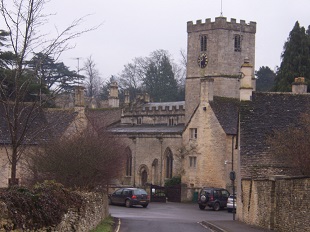 and aisles were added. The bells are rung from the ground floor, and were all cast in 1723 by Abraham II Rudhall of Gloucester.
Windrush Noted in 1086 as Wenric, the name of the village refers to the Celtic river-name meaning a meadow clearing. The River Windrush runs from Winchcombe to Standlake, where is feeds into the Thames. For several centuries Cotswold stone was extensively quarried in this area, and in 1839 the village was visited by members of the Royal Commission appointed to select the best stone for the rebuilding of the Houses of Parliament. Top quality stone from here was chosen due to its resistance to weathering. On the village green to the front of the parish church is the official war memorial, and alongside it is a memorial commemorating the selflessness of a young airman in World War II who was piloting an unarmed training plane when the nearby airfield
and aisles were added. The bells are rung from the ground floor, and were all cast in 1723 by Abraham II Rudhall of Gloucester.
Windrush Noted in 1086 as Wenric, the name of the village refers to the Celtic river-name meaning a meadow clearing. The River Windrush runs from Winchcombe to Standlake, where is feeds into the Thames. For several centuries Cotswold stone was extensively quarried in this area, and in 1839 the village was visited by members of the Royal Commission appointed to select the best stone for the rebuilding of the Houses of Parliament. Top quality stone from here was chosen due to its resistance to weathering. On the village green to the front of the parish church is the official war memorial, and alongside it is a memorial commemorating the selflessness of a young airman in World War II who was piloting an unarmed training plane when the nearby airfield
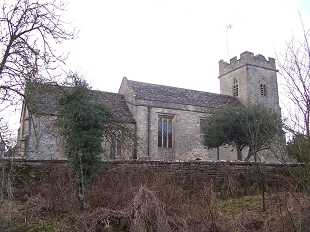 was being bombed. He gave up his own life by ramming a German bomber with his small plane. The Norman church, restored in 1874, is a classic of clean country simplicity, with numerous tombs contained within. The main door of the church has an unusual bird-beak ornamentation. The bells are a challenging anti-clockwise six that are rung from the ground floor. The front five bells are by Abraham I Rudhall of Gloucester, 1707, with the tenor by John Warner, London, 1863.
Burford Documented as Bureford (a ford by a fortified place) in 1086, this bustling market town is referred to as the "Gateway to the Cotswolds". The spine of Burford is its steeply sloping High Street, lined with elegant houses dating from the 15th century onwards. At its middle is "The Tolsey", originally used for collecting tolls, but which is now a museum. Burford Priory became a private dwelling at the Dissolution and later, Speaker of the "Long Parliament", William Lenthall lived here. With the restoration of the monarchy, Charles I and his mistress Eleanor "Nell" Gwynn used it as a clandestine location. From 1949 it housed the Society of the Salutation of Our Lady, a community of Anglican nuns. In the 1980s its numbers dwindled, so in 1987 it became a mixed community including Church of England Benedictine monks.
was being bombed. He gave up his own life by ramming a German bomber with his small plane. The Norman church, restored in 1874, is a classic of clean country simplicity, with numerous tombs contained within. The main door of the church has an unusual bird-beak ornamentation. The bells are a challenging anti-clockwise six that are rung from the ground floor. The front five bells are by Abraham I Rudhall of Gloucester, 1707, with the tenor by John Warner, London, 1863.
Burford Documented as Bureford (a ford by a fortified place) in 1086, this bustling market town is referred to as the "Gateway to the Cotswolds". The spine of Burford is its steeply sloping High Street, lined with elegant houses dating from the 15th century onwards. At its middle is "The Tolsey", originally used for collecting tolls, but which is now a museum. Burford Priory became a private dwelling at the Dissolution and later, Speaker of the "Long Parliament", William Lenthall lived here. With the restoration of the monarchy, Charles I and his mistress Eleanor "Nell" Gwynn used it as a clandestine location. From 1949 it housed the Society of the Salutation of Our Lady, a community of Anglican nuns. In the 1980s its numbers dwindled, so in 1987 it became a mixed community including Church of England Benedictine monks.
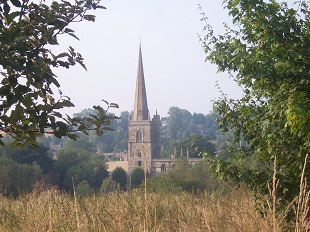 During 2008 the property was sold and it has returned to being a private residence. From the 14th century the town prospered due to its affiliation with the burgeoning wool trade. In 1649 the church was used as a prison during the Civil War, and some of the 340 prisoners left carvings and graffiti which are still visible inside. In April 2009, Burford was ranked sixth in Forbes Magazine's list of Europe's Most Idyllic Places to Live. The Blue Cross animal welfare charity is based in Burford and just to the south of the town is the Cotswold Wildlife Park, set in 160 acres of landscaped parkland, with the manor house dating from 1804. The parish church was already a sample of magnificence in the 12th century, but was added to in style during the 13th and 15th century. The great Victorian architect G.E. Street described the church as one of the most singularly rich and beautiful parish churches he had ever come across, the grandeur being matched by its architectural interest. The old clock mechanism of 1685, which is still in working order, now stands in the north transept. The superb bells here were re-hung in 1950 by Gillett & Johnson in a metal H-pattern frame, with the third and fourth bells cast by them in the previous year. Four of the bells were cast at the foundry in Burford, sixth and seventh, 1635, by Henry Neale, with second (1868) and fifth (1885) by Henry I Bond. Treble by Matthew III Bagley of Chacombe, and tenor from around 1330, by an unidentified bell-founder.
Barnsley · SMV
Hatherop · St Nicholas
The Catherine Wheel · Bibury
Bibury · St Mary
Bibury
Bibury · St Mary
Windrush · St Peter
Burford · St John
A record of outings 1996
by Hugh Deam
Vale of the White Horse
Saturday 20th April 1996
1.30pm Marcham
Oxon · All Saints (6) 8cwt
2.30pm West Hanney
Oxon · St James the Great (6) 18cwt
3.30pm Hinton Waldrist
Oxon · St Margaret (6) 6cwt
4.30pm Cumnor
Oxon · St Michael (8) 13cwt
Hugh Deam, Janet Farrow, Roy Goodwin, Sally Harrison, Anthony Hughes,
Roy Jones, Nesta Long, Brian Lowe, Nigel Pugh and Andrew Rycraft.
Roy Jones, Nesta Long, Brian Lowe, Nigel Pugh and Andrew Rycraft.
Plain Bob Minor, Stedman, Grandsire, Rev. Canterbury and Plain Bob Doubles.
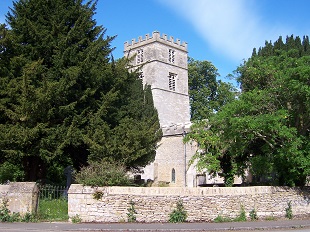
Marcham · All Saints
Marcham Noted as Merchamme in 900A.D., the village derives its name from an enclosure or river-meadow where wild celery known as smallage grew. An Iron Age villa existed here c. 600B.C., and later a Romano-British religious complex was built over it. This now extensive village lies close to the River Ock, just to the west of Abingdon, and has a strong agricultural heritage. Following a late enclosure, the parish soon cultivated barley, beans and root crops, whilst on pastures beside the river it was dairy-farming that predominated. Around 1538 the possession of Marcham Manor passed from Abingdon Abbey to the Crown, namely Henry VIII. The National Federation of Women's Institutes runs Denman College, its residential adult education college, here in Marcham. Established in 1948, it is centred on Marcham Park, in what was originally a grange of Abingdon Abbey. The present house dates from late in the 17th century, but was heavily remodelled for Thomas Duffield in 1820. The college is named after Lady Denman, the first chair-woman of the WI Federation. Course subject areas include: Arts, crafts, sport, languages, history and technology. Most famously, the college also operates its own cookery school. Although the main body of the parish church was rebuilt in 1837, the tower remains from early in the 13th century. The large churchyard is carefully tended so as to encourage some of the rarer native butterflies, and a wide mix of birdlife. The six bells are rung from the ground floor, with the back five bells all cast in 1816 by James Wells of Aldbourne. The treble dates to 1855, cast at Whitechapel.
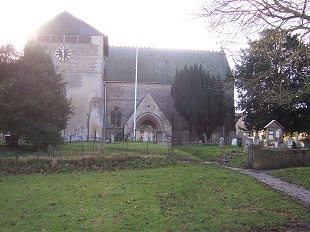 West Hanney East and West Hanney are two of the "Island" villages of the Vale of the White Horse, recalling that many settlements were regularly cut off from, each other during winter flooding. Today, Letcombe Brook usually no more than meanders through both villages. The settlement was noted in 956A.D. as Hannige (an island between streams visited by wild birds). Nearby villages possess similarly descriptive names, Goosey (goose island), Pusey (pea island), and Charney (island on the River Charn). A definitive book by Eleanor Haydon details this area at the early part of the 20th century. As the daughter of the vicar of West Hendred she was well versed and had many articles published in The Spectator and Country Life. West Hanney was the original home of the Fettiplace family, Adam Fettiplace being a Mayor of Oxford. The once enormous village green is now divided up into three sections. The parish church dates to 1160, with only two stone coffins in the north porch as evidence to the Saxon predecessor. The inner arch of this porch is a fine example of Norman carving of a chevron pattern. The chancel was rebuilt in the 15th century, but the 14th century east window was retained. The original central tower was demolished and replaced by the north transept chapel-cum-tower in the late 12th century. The upper section of the tower was rebuilt in the early part of the 20th century. Of this fine set of six bells, all bar the second were cast in 1702 by Abraham I Rudhall of Gloucester. The second is from 1856 by Charles & George Mears, Whitechapel. The bells were re-hung in a new frame by Taylor's of Loughborough in the 1950s.
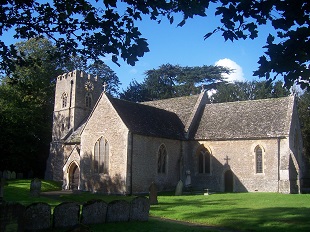 Hinton Waldrist The late 13th century church and tower were built just outside the old moat. The future King Henry V worshipped here with his mother Lady Margaret de Bohun. The bells are rung from the ground floor, and are extremely fluent. For full details on Hinton Waldrist, see Saturday 28th September 2013.
Cumnor In Saxon and medieval times the parish of Cumanoran was extremely large, incorporating Wytham, Seacourt, North and South Hinksey, and Wootton. Cumnor Wood formed part of a Royal gift to Abingdon Abbey at its foundation in 685A.D., and up until the Dissolution in 1539 the parish was in the hands of the monastery. In 1560 the mansion of Cumnor Place was the scene of the death, and suspected murder, of Amy Robsart, the wife of Lord Robert Dudley. The house was demolished in 1810, it is reputed in part because her ghost had given the locals sustained trouble.
Hinton Waldrist The late 13th century church and tower were built just outside the old moat. The future King Henry V worshipped here with his mother Lady Margaret de Bohun. The bells are rung from the ground floor, and are extremely fluent. For full details on Hinton Waldrist, see Saturday 28th September 2013.
Cumnor In Saxon and medieval times the parish of Cumanoran was extremely large, incorporating Wytham, Seacourt, North and South Hinksey, and Wootton. Cumnor Wood formed part of a Royal gift to Abingdon Abbey at its foundation in 685A.D., and up until the Dissolution in 1539 the parish was in the hands of the monastery. In 1560 the mansion of Cumnor Place was the scene of the death, and suspected murder, of Amy Robsart, the wife of Lord Robert Dudley. The house was demolished in 1810, it is reputed in part because her ghost had given the locals sustained trouble.
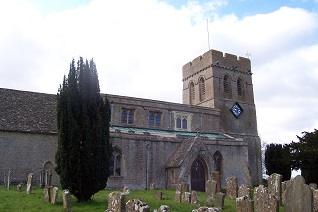 Cumnor was later the basis for the fictional village of Lumsdon in the Thomas Hardy novel, Jude the Obscure. Almost certainly the most noted resident of Cumnor in recent years is the world renowned novelist Phillip Pullman (His Dark Materials, Northern Lights). The parish church is a fine example of a near complete Norman building, including the broad tower. There is still part of the late 12th century frieze of grotesques under the eaves. Inside the church is a statue of Queen Elizabeth I, which originally stood in Cumnor Place. Behind the elegant medieval-style font of 1840 is a magnificent 17th century spiral staircase to the upper levels of the tower. The bells are rung from the ground floor, the two oldest being the fifth, 1621, and sixth, 1620, cast in Reading by Henry I Knight, and the seventh, 1623, by Ellis I Knight at the same foundry. The fourth bell is from 1666, by Richard Keene of Woodstock. The tenor, 1700, by Abraham I Rudhall of Gloucester. The third bell from 1932 by Mears & Stainbank, with the front two bells added in 1988, also at the foundry in Whitechapel.
West Hanney · St James Gt
Hinton Waldrist · St Margaret
Cumnor · St Michael
A record of outings 1994
by Hugh Deam
Essex Rodings
Saturday 17th July 1994
11.30am Pleshey
Essex Holy Trinity (5) 11cwt
01.30pm The White Horse
Pleshey
02.30pm Moreton
Essex SMV (6) 9cwt
03.30pm Fyfield
Essex St Nicholas (6) 6cwt
Ben Abbott, Tim Abbott, Hugh Deam, Roy Goodwin, Roy Jones and Neville Whittell.
Plain Bob Minor, Stedman, All Saints and Grandsire.
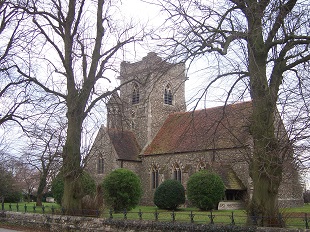
Pleshey · Holy Trinity
Pleshey During Saxon times the settlement was known as Tumblestown, but the Normans renamed it Plessels (an enclosed space). Around this time a wooden castle was built here on the orders of Geoffrey de Mandeville, but only the general idea of its location atop a 50ft mound to the north-east of the church now remains. The castle was, for over 200 years, the home to successive Lords High Constables of England before passing into the possession of Richard II's uncle, Thomas, Duke of Gloucester, who also founded a college of priests here in 1393. A small bridge, constructed of brick, was allowed to remain by Queen Elizabeth's commissioners, as many of the locals had taken to the habit of keeping their rabbits in the ruins. The pub here - The White Horse - is a 15th century coaching inn, with much original timbering still in place. The late 14th century parish church was restored in 1868 by the noted architect Frederic Chancellor of Chelmsford, becoming
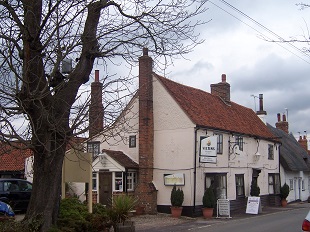 Grade 2 Listed in 1967. The original core of the church includes the north, south and west crossing arches, and the foundations of the north and south transepts, built to serve a college founded at that time. The church is constructed of flint pebbles and stone rubble, with stone dressings, built on a cruciform plan. The central tower contains five bells, the two oldest of which, second and fourth, were cast around 1400 by itinerant London bell-founder William Dawe. The treble was cast in 1620 by Miles I Graye of Colchester. The third bell dates to 1752 by Thomas Gardiner, also of Colchester. The fifth bell is the most recent, 1854, by John Warner & Sons. London.
Moreton This pretty village derives its name from the Anglo-Saxon description for a farmstead in marshy ground, with the topography of the area resulting in there being much sand and gravel extraction over the years. Just north of the village there is a magnificent example of a post-mill in exemplary condition, and of unusual design.
Grade 2 Listed in 1967. The original core of the church includes the north, south and west crossing arches, and the foundations of the north and south transepts, built to serve a college founded at that time. The church is constructed of flint pebbles and stone rubble, with stone dressings, built on a cruciform plan. The central tower contains five bells, the two oldest of which, second and fourth, were cast around 1400 by itinerant London bell-founder William Dawe. The treble was cast in 1620 by Miles I Graye of Colchester. The third bell dates to 1752 by Thomas Gardiner, also of Colchester. The fifth bell is the most recent, 1854, by John Warner & Sons. London.
Moreton This pretty village derives its name from the Anglo-Saxon description for a farmstead in marshy ground, with the topography of the area resulting in there being much sand and gravel extraction over the years. Just north of the village there is a magnificent example of a post-mill in exemplary condition, and of unusual design.
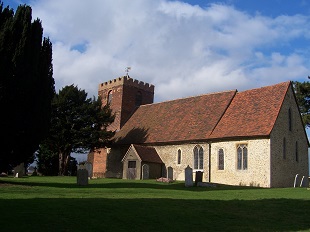 Probably the most notable house within the village is a 15th century timber-framed cottage with accompanying hall that is aptly named Guildhall. Moreton is widely known for its folk music festivals and mummers' plays. The handsome parish church is primarily 13th century, although partly restored in 1868/69, and set on elevated ground on the edge of the village. The Purbeck marble square font is also 13th century with a great similarity to the one in Fyfield church. The west tower, from 1787, is constructed of brick and has diagonal buttresses and battlements. The bells are rung from the ground floor and are particularly pleasing. The oldest bell is the tenor, 1632, by Miles I Graye of Colchester . The fifth, 1712, by Thomas Gardiner of Sudbury. The fourth, 1751, Thomas Lester, Whitechapel. The front three bells are of 1934 (treble) and 1928 (second and third), both by Gillett & Johnston.
Fyfield In the Domesday Survey (1086) the settlement here was
Probably the most notable house within the village is a 15th century timber-framed cottage with accompanying hall that is aptly named Guildhall. Moreton is widely known for its folk music festivals and mummers' plays. The handsome parish church is primarily 13th century, although partly restored in 1868/69, and set on elevated ground on the edge of the village. The Purbeck marble square font is also 13th century with a great similarity to the one in Fyfield church. The west tower, from 1787, is constructed of brick and has diagonal buttresses and battlements. The bells are rung from the ground floor and are particularly pleasing. The oldest bell is the tenor, 1632, by Miles I Graye of Colchester . The fifth, 1712, by Thomas Gardiner of Sudbury. The fourth, 1751, Thomas Lester, Whitechapel. The front three bells are of 1934 (treble) and 1928 (second and third), both by Gillett & Johnston.
Fyfield In the Domesday Survey (1086) the settlement here was
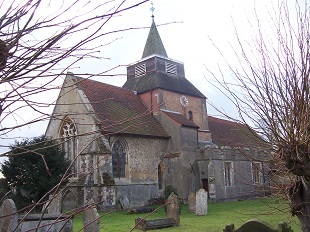 known as Fifnidan (an estate consisting of five hides of land). The mansion of Fyfield Hall is a later version of the original 14th century aisled hall, with only the octagonal oak pier remaining from that flint building. The village briefly hit the national headlines in 2001 when an invasion of marauding mink threatened to not only decimate the existing wildlife of the River Roding, but were also proving a danger to anyone foolhardy enough to approach them as they moved into residents gardens. The church was first built in 1120 using vast quantities of pebble rubble from the river-bed, and in the wake of the village population being ravaged by the Black Death, it was enlarged to its present size during the 14th century. The weather-boarded tower, and its short octagonal spire are highly distinctive in their form, dominating the central part of the building. The bells are a most reassuringly easy to handle ring of six, the back five of which are from 1862, cast by John Warner & Sons of London. The treble was added in 1950 by Mears & Stainbank, Whitechapel.
The White Horse · Pleshey
Moreton · SMV
Fyfield · St Nicholas
A record of outings 1992
by Hugh Deam
Shakespeare Country
Saturday 17th October 1992
11.00am Stratford upon Avon
Warks · Holy Trinity (10) 19cwt
12.30pm Alderminster
Warks · St Mary & Holy Cross (6) 12cwt
03.00pm Shipston on Stour
Warks · St Edmund (6) 9cwt
04.00pm Todenham
Gloucs · St Thomas of Canterbury (6) 12cwt
George Adams, Gwyneth Adams, Paul Bayes, Steve Davies, Richard Day,
Hugh Deam, Michael Durrant, Alec Gammon, Roy Goodwin,
Barry Greenaway, Anthony Hughes, Roy Jones, Nesta Long, Brian Lowe,
Carol Lowe, Eddie Smith, Andrew Wyatt and Serge Zvegintov.
Hugh Deam, Michael Durrant, Alec Gammon, Roy Goodwin,
Barry Greenaway, Anthony Hughes, Roy Jones, Nesta Long, Brian Lowe,
Carol Lowe, Eddie Smith, Andrew Wyatt and Serge Zvegintov.
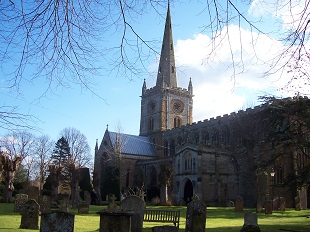
Stratford · Holy Trinity
Stratford upon Avon Probably England's most famous town, Stratford has often been described as "The Heart of England", with a wealth of fine timbered buildings, the medieval Clopton Bridge, streets imbued with a rich fragrance of times past, and a spectacular parish church. The settlement here around 700A.D. was described as Stretforde (a ford on a Roman road), with Avon being the Celtic description for a river. For all Stratford's numerous attractions there can be little doubt that it is the world of literature and theatre that takes centre-stage here. There are four houses in and around the town, all open to the public, which have direct association with William Shakespeare. Mary Arden's Farm was the childhood home of Shakespeare's mother and is now a Tudor style working farm. Anne Hathaway's Cottage is the most famous of the residences, being where Shakespeare courted his future wife at her family home. Nash's House was Shakespeare's final home and retains its Elizabethan Knot Garden. Hall's Croft is the Jacobean style property that was the home of Shakespeare's daughter, Susanna and her physician husband, Dr John Hall. The tranquil gardens are swathed in fragrant herbs similar to those used by the doctor in his remedies. In keeping with the Elizabethan Age there are theatrical performances held in the gardens during the summer months. The first theatre in the town was a temporary wooden affair built in 1769 by the actor David Garrick for jubilee celebrations of the Bard's birthday. To mark the tri-centenary of his birth in 1864 another temporary theatre was built in the gardens of the local brewery. In the 1870s Charles Flower, the brewery owner gave riverside land to the council on the understanding that a theatre be built. The Memorial Theatre of 1879 was a huge success, but burned down in 1926. A new theatre, adjoining what was left of the old theatre, was opened by the then Prince of Wales, later Edward VIII, in 1932. Situated on Swan's Nest Lane, Stratford Butterfly Farm is the largest dedicated butterfly collection in the country, housing many of the world's most beautiful butterflies in an exotic environment. The Collegiate Church of the Holy and Undivided Trinity is situated close to the banks of the river and is often referred to as "Shakespeare's Church", although recent research has posited that he was secretly a practising Catholic. Due to its fame as the place of baptism and burial of the author, around 200,000 tourists are reckoned to visit the church each year. The centrally situated tower, with soaring spire, houses a ring of ten bells whose origins are from around 1500, although they were recast and augmented by Taylor's of Loughborough in 1948.
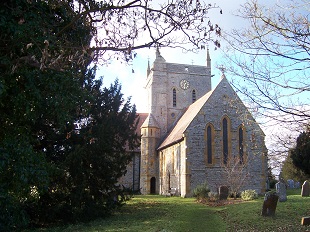 Alderminster Documented as Aldermanneston (farmstead of a chief or nobleman) in 1167, the village was part of Worcestershire until 1931. The entire population of the village was wiped out by the plague of 1349, and it was not resettled to any degree until the following century. The dignified church, with its tower of exceptional girth, externally dates from around 1200, replacing the 6th century original which stood on the other side of the village. Documents dating to 1193 show the church belonging to Pershore Abbey. Internally the northern half of the nave is Norman, with the southern end displaying 13th century work, although there was considerable restoration work carried out by Frederick Preedy from 1884. The greater portion of the churchyard is purposely kept in such a way so as to encourage wildlife to thrive. The bells are an excellent ring of six, the oldest of which are the third (1653), fourth (1658), and tenor (1676), all cast by Henry I Bagley of Chacombe. Abraham I Rudhall of Gloucester cast the second bell in 1714, and the fifth two years later in 1716. The present treble was added in 1939 by Taylor's of Loughborough.
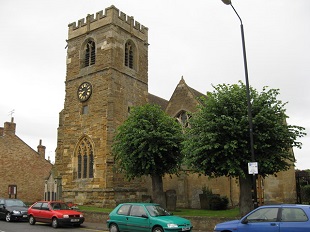 Shipston on Stour Shipston derives its name from the literal Anglo-Saxon description for "sheep-wash town", being noted as Scepuuareisctune. The river name literally denotes "the strong one", with hundreds of sheep being washed in the river at any one time during early summer. As a consequence of the sheep farming, spinning and weaving were also major local occupations. The Sheldon Tapestries in the nearby hamlet of Barcheston are a fine example of the history of local tapestry making, decorated with flowers and mythological motifs, highlighted with silk. Due to its location Shipston gained numerous coaching inns, several of which still trade as pubs today. From the 12th century, tradesmen and craftsmen helped shape the town, with eclectic skills such as clock restoration and jewellery making practised here. The town featured on Countryfile (BBC) in 2012 due to its hosting of the National Association of Young Farmers Club annual rally. The elegant parish church is located just off from the Market Square, with only the 15th century brown-stone tower surviving from the rebuilding of 1855 conducted by G.E. Street. The clock tower is the most prominent exterior feature as it faces on to the main street. The bells are a pleasing six, with the tenor being the oldest bell, 1754, by Matthew III Bagley of Chacombe. The other five bells are from 1979, by John Taylor & Co., Loughborough.
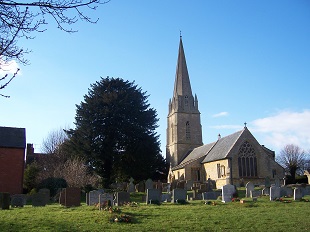 Todenham The name of village derives from the water-meadows that belonged to Teoda, the original settlement being sited on low lying ground to the north of the present parish. The northern boundary of the parish is formed by the Knee Brook, Leamington Brook and Wolford Brook. In 804A.D. Ethelric, son of Ethelmund, gave Todenham to Deerhurst Priory. At the Dissolution, the village reverted to possession by the Crown, and in 1545 it was granted to Sir William Petrie, Secretary of State to three Tudor monarchs. The earliest record of a church in Todenham dates to 1157, when it was in the possession of Westminster Abbey. In the late 1330s a new church was constructed, with additions made over the following years - south porch, north aisle, tower and spire. The 13th century font was removed at one point, but was restored by churchwardens in 1773 and has bears their names. For all the interesting facets of the church, it is undoubtedly the magnificent spire that garners the greatest attention, with it proving a boon to the many walkers in this area. The original 14th century spire had to be rebuilt in 1772 after suffering irreparable storm damage. The bells are rung from the ground floor, but ring far more easily that might be imagined. All six bells were cast in 1713 by Abraham I Rudhall, Gloucester.
Alderminster

Shipston · St Edmund
Todenham · St Thomas
A record of outings 1991
by Hugh Deam
City of Cambridge
Saturday 27th April 1991
11.00am Cambridge
Great St Mary (12) 27cwt
12.30pm Cambridge
St Andrew the Great (8) 10cwt
01.30pm Cambridge
St Bene't (6) 13cwt
03.00pm Chesterton
St Andrew (6) 16cwt
04.00pm Cherry Hinton
St Andrew (6) 10cwt
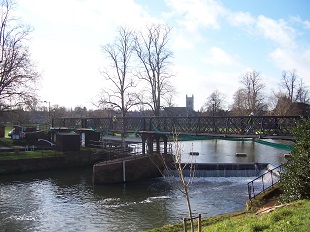
The river Cam
Cambridge First documented as Grontabrice in 745A.D., the name denoted the bridge on the River Granta, that being the Celtic river name. The change from Grant to Cam is due to the Norman influence, with the county of Cambridgeshire first being referred to in the 11th century. Archaeological evidence of a settlement in this area in Bronze Age and then Roman times has consistently been uncovered down the years. It was under Viking rule that Cambridge developed into a major trading centre and it was during this period that that the centre of the town shifted from Castle Hill on the left bank of the river to the right bank, on what is now known as Quayside. After the years of Danelaw, the Saxons returned to dominance, building merchant's houses, wharfs, churches and a mint. In 1068, William I ordered a castle constructed here, with the first town charter granted by Henry I in 1120, this giving Cambridge the monopoly of water-borne traffic. In 1209 the University was founded by students who had escaped from hostile townsfolk in Oxford. The oldest college still existing, Peterhouse, was founded in 1284. The Black Death wiped out virtually the whole population north of the river in 1349, with nearly half the scholars dying as well. A further epidemic in 1361 depopulated Cambridge even more, and Gonville, Trinity Hall, Corpus Christi and Clare Hall were established here to train new clergymen as most of the existing clergy had succumbed to the epidemic. One of the best known buildings in Cambridge, King's College Chapel, was ordered in 1446 by Henry VI and completed in 1515. During the Civil War, Cambridge was a Parliamentarian stronghold, Oliver Cromwell having been a student at Sidney Sussex College. Many of the colleges are reputed to be haunted, particularly Corpus Christi, with Dr Butts, a former master, haunting his old rooms after hanging himself in despair at the loss of so many undergraduates to the plague in 1632. Dr Wood, Master of St John's in 1839, inhabits Staircase O of the college. Merton Hall is reputedly haunted by a penguin. In the 19th century Cambridge expanded rapidly, with agricultural production and the opening of the London to Norwich railway leading to increased trade. The Varsity rivalry between Cambridge and Oxford has resulted in the city being widely known for its rowing, rugby and cricket in particular. Film & Television Location Credits (selected): The Glittering Prizes (1976), Chariots of Fire (1981), Porterhouse Blue (1987), Cambridge Spies (2003) and The History Boys (2006).
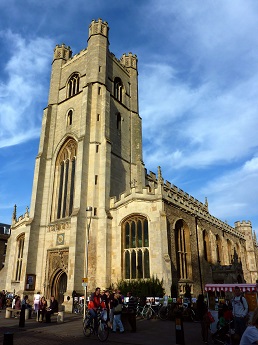 Great St Mary The University Church of Cambridge is known locally by many as simply GSM, and designated Grade 1 Listed. University officers are required to live within 20 miles of the church, and undergraduates within three. The first church was mostly destroyed by fire in 1290, with the present church being a second rebuilding, the construction taking place between 1478 and 1519. The tower was completed in the following century, 1608. Later restorations were overseen by James Essex (1766), George Gilbert Scott (1850/51), and Anthony Salvin (1857). The church is built in the Late Perpendicular style. The extensive stained-glass is the work of Hardman, 1869. The original bells here were hung in a wooden structure within the churchyard, but in 1515 they were moved to the tower despite its construction not having been completed. These bells were replaced in 1722, and in 1724 the Society of Cambridge Youths was formed in order to formalise the responsibility for ringing them. In 2009 the old ring of bells was replaced with a new ring cast at the foundry in Loughborough. The new ring in the key of D includes a flat 6th which provides a lighter ring of eight bells in G. Some of the previous set have been retained in order to continue sounding the "Cambridge Chimes".
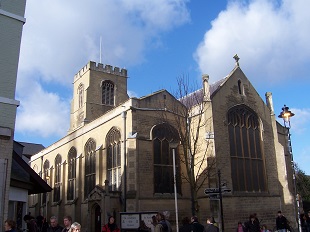 St Andrew the Great Originally known as St Andrew without Barnwell Gate in the days when central Cambridge was guarded by gates, the church still overlooks the entrance to Petty Cury and Sidney Street, the two main retail roads. The medieval building was demolished in 1842 and rebuilt to a plan by Ambrose Poyntor. The style is 15th century East Anglian, in what some locally describe as being "Wool Gothic". The exterior, the tower excepted, is a Victorian re-working. The church was declared redundant in 1984, and was in danger of being turned into a retail centre, but it is now managed by Christian Heritage. Most notable of the monuments and plaques inside the church is a memorial to the family of Captain James Cook, discoverer of Australia and New Zealand. It is located on the eastern side, and for obvious reasons there is a special service held once a year for the Australian and New Zealand Army Corps. Today the church is avowedly Evangelical and hence is thriving with a large congregation. The bells here are a supreme light eight which were all cast by Taylor's of Loughborough in 1956. This is the Guild's leading peal tower.
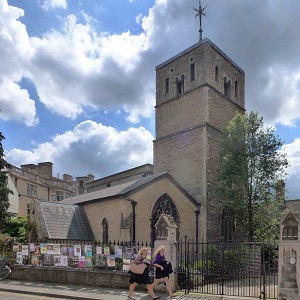 St Bene't This immensely historic church is situated at the heart of the city, almost hidden behind the shopping centre and office buildings that have penned it in since the 20th century. The dedication of the church lends its name to the thoroughfare, Bene't Street. The Eagle pub is on the north side of the street opposite the church. It was here in 1953 that Francis Crick announced publicly that he and James Watson had discovered the structure of Deoxyribonucleic Acid (DNA). Bene't is a contraction of Benedict, with part of the church being the oldest surviving structure in the city. The Anglo-Saxon tower was constructed between 1000 - 1050A.D. The nave arcades and roof are Perpendicular, with much of the rest of the church rebuilt during Victorian times. Fabian Stedman (1640 - 1713), the leading figure in the history of bell-ringing, was clerk of the parish. The tower houses six bells, the oldest being the second, cast in 1588 by an unknown founder. Both the third (1607) and the fifth (1610) were cast by Richard Holdfield at the Cambridge foundry. The tenor is from 1618 by John Draper of Thetford, and the treble (1663) also cast at that foundry by Robert Gurney. The fourth bell was cast in 1825 by William Dobson of Downham Market.
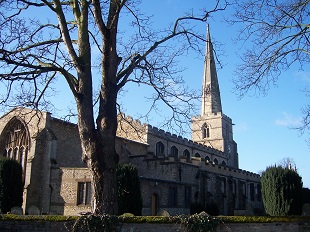 Chesterton Noted as Cestretone (a farmstead by a Roman town) in the Domesday Book, the village has now been subsumed into the city of Cambridge. The church is picturesquely situated close to the River Cam. In 1217, Cardinal Guala of Vercilli was sent to this area by the Pope, and as he was particularly devoted to St Andrew this dedication became popular in Cambridge. The church was rebuilt in cruciform design and Early English style around 1250. About 1330 a rebuilding of the nave and aisles took place, along with extensions to the south and north aisles, and the addition of the west tower and steeple. The following century saw the chancel rebuilt. Samuel Pepys visited Chesterton in May 1668 and noted in his diary that he attended the church and heard the bells ringing, reminding him of his student days in Cambridge. Four of the bells here date to the 17th century, the fourth being the oldest, 1606, by local founder, Richard Covington. Second and third, 1612, by Richard Holdfield, also in the city. The fifth is from 1665 by itinerant founder Christopher Graye. Tenor, 1825, by W & J Taylor, Oxford. Treble, 1909, Whitechapel.
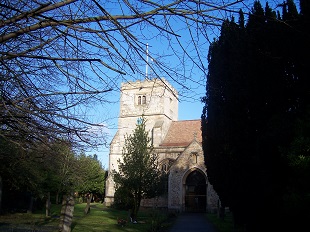 Cherry Hinton Recorded as being the Manor of Up Hall in 1201, and the property of the de Hinton family, the land was sold to the Bishop of Ely some tears later, the affix being documented in 1576 as Cheryhynton, denoting the proliferation of cherry trees here. A long established Group 2 horse race run over the July Course at Newmarket (Cherry Hinton Stakes) took its name from here, although it was renamed the Duchess of Cambridge Stakes from 2013. The boundaries of the city were extended in 1935 to include Cherry Hinton, Fen Ditton, Chesterton, Trumpington, and Grantchester. The elegant church is set a little north of the level-crossing amidst a spacious churchyard that is flanked by beech and cherry trees. The oldest part of the church is the base of the tower, the jambs of the tower arch reveal it to be Transitional. In the space underneath sits the Norman font, and built into the west wall, a coffin-shaped grave slab. Beyond the 15th century chancel screen is a superb Early English chancel that is considered a temple to light and proportion. The nave was largely rebuilt by George Gilbert Scott during the 1870s. The bells are rung from the ground floor, the oldest being the third by John Rufford of Toddington,1350. The fourth is by an unknown founder around 1600. Second, 1727, Henry Penn of Peterborough. Tenor 1828, Thomas II Mears, Whitechapel. Fifth, 1853, Taylor's of Loughborough, with the peal of six completed with the addition of the treble in 1976 by the same foundry and hung in a new frame.

Great St Mary
St Andrew the Great

St Bene't
Chesterton · St Andrew
Cherry Hinton · St Andrew
A record of outings 1990
by Hugh Deam
Constable Country
Saturday 21st April 1990
11.30am Colchester
Essex · St Peter (8) 21cwt
01.30pm Kersey
Suffolk · St Mary (8) 14cwt
02.45pm Lavenham
Suffolk · St Peter & St Paul (8) 21cwt
04.00pm Long Melford
Suffolk · Holy Trinity (8) 15cwt
John Beale, Justin Booth, Steve Davies, Hugh Deam, Roy Goodwin, Nesta Long, Brian Lowe, Carol Lowe, Marion Powell, Eddie Smith, Basil Townsend, Helen Wharton, Neville Whittell, Serge Zvegintzov and Andrew Wyatt.
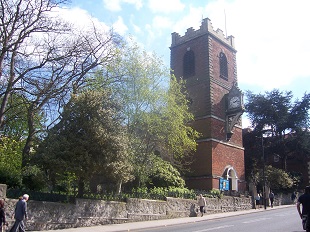
Colchester · St Peter
Colchester Britain's oldest recorded town, and capital of Roman Britain, Camulodunum was referred to by Pliny the Elder in 77A.D., and it is known to be have been the domain of King Cunobelin in the 1st century A.D. Colchester is steeped in ancient history, with stirring memories of Boadicea's revolt against Roman occupation. The name of the town today evidences the Roman era, denoting a Roman town on the River Colne. In 2004, remains of a Roman Circus (chariot race track) were discovered here. By 880A.D. Colchester was in an area assigned to the Danelaw, and remained in Viking hands until 917A.D. when it was captured by the army of Edward the Elder. Colchester Castle, which is an 11th century Norman keep, was built on top of the Roman Temple of Claudius vaults. The keep is the largest ever built in Britain and the largest surviving example in Europe. The castle was ordered by William the Conqueror and designed by Gundulf, Bishop of Rochester. In 1215 the castle was besieged and eventually captured by King John. During the 17th century it served as a prison, where the self-styled Witch-finder General, Matthew Hopkins, interrogated and imprisoned suspected witches. The castle and associated parkland were given to the town in 1922, with the castle now a public museum. Since the late 1990s Colchester Garrison has been the home of 16th Air Assault Brigade and the British Army's only military corrective training centre, colloquially known as "The Glasshouse". A church has stood on the present site since Anglo-Saxon times. During Norman times it was cruciform in plan, with a central tower. During the 15th century north and south aisles were added, with the successful local weaving industry helping toward the rich endowment of the church at this time. The church was slightly damaged by the earthquake that hit the town in 1692. The red brick tower was constructed in 1758 to replace the earlier central tower. The first record of bells here was in 1763 when Lester & Pack cast a ring of eight bells. These were in use until early in the 20th century when some developed cracks. They were subsequently recast in 1913 by Taylor's of Loughborough.
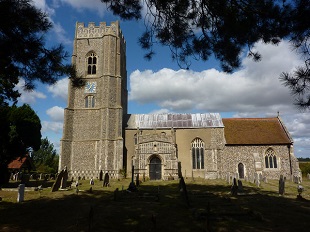 Kersey The first documentation of a settlement here in 955A.D. was as Caeresige (island of high ground where cress grows). The village is ostensibly one long street that runs from the church to the ruins of a priory, and is bisected by a water-splash which is fed by the River Brett. From the late Middle Ages the river provided the running water needed for washing the Kersey cloth produced here, this being a time when every house was either the home of a cloth merchant or a weaver's cottage in which there would have been a loom at work. Kersey is one of the most photographed, filmed and painted villages in England, the water-splash and its attendant bird-life being a centre of attention. The parish is made up of enchanting hamlets, Kersey Tye, Kersey Upland, Wicker Street Green and William's Green. There is scarcely a building without character, from the 14th century timber-framed Bell Inn all the way along to River House. Just beyond the 16th century White Horse Inn is the old village water-pump encased in wood. The mix of thatched, half-timbered and colour washed houses gives the village its unique character. Kersey has its own small pottery producing a range of distinctive stoneware. This pottery uses a blend of local materials to achieve a spectrum of glazes, with individual textures and flashes of iridescent colour. A church in Kersey is mentioned in the Domesday Book. although it has been greatly enlarged since that time. The nave is slender and high, a development of an earlier space during the 15th century, with the north aisle dating from a century earlier. The massive tower, constructed entirely of flint, was completed in 1481, with the walls at the base being 5ft thick. The superb bells here are rung from the ground floor and are not a challenging to ring as might appear from the long draught. The oldest bell is the fifth, cast in 1576 by Stephen II Tonne of Bury St Edmunds, The seventh dates to 1662 by John Hodson of London, with the sixth by Christopher Hodson. The third and fourth bells were cast in 1716 by Thomas Gardiner, Sudbury. The other three bells were cast by Taylor's of Loughborough, tenor in 1969, and front two bells in 1985.
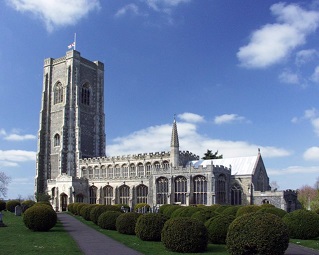 Lavenham The medieval settlement of Lauenham grew rich as a direct result of the woollen cloth trade between the 12th and 16th century, subsequently becoming awash with elegant half-timbered cottages. The Market Cross has stood at the centre of Lavenham since 1501. The Swan Inn now incorporates the old Wool Hall and a large collection of World War II memorabilia is on display here due to this having been a favourite haunt of American airmen of the 487th Bomber Group. At the heart of this remarkably well preserved medieval town is the early 16th century timber-framed Guildhall of Corpus Christi which overlooks the market place. There is an attractive walled garden with dye plants, plus a 19th century lock-up and mortuary. Many of the older houses have exposed timbers, with the upper floors often jutting out on both sides. The town provided one of the most regular locations for the popular television series Lovejoy starring Ian McShane as the roguish antique dealer during the 1980s and 90s. The spectacular parish church, constructed of flint and pebble rubble, dominates Lavenham, having been built at the height of the wool trade years. The architect is generally thought to have been John Wastell, who designed the church of Great St Mary in Cambridge which has many similarities. The church here is closely connected with the merchant families of the area who paid for its construction and upkeep, principally the Spryng and de Vere families. Consequently there are numerous monuments to members of these families throughout the church. For all the benefaction bestowed upon the church by the Spryng dynasty, it is the ostentatious tastes of John de Vere, 13th Earl of Oxford that dominate the interior and external additions. The massive tower contains eight sublime bells, the oldest being the fourth and sixth, 1603, cast by Richard Bowler of Colchester. The tenor is from 1625 by Miles I Graye, also at Colchester. The third (1702) and fifth (1703) were cast by Henry Pleasant of Sudbury. The front two bells date to 1811 by William Dobson of Downham Market. The seventh is the most recent bell, 1846, by Charles & George Mears, Whitechapel.
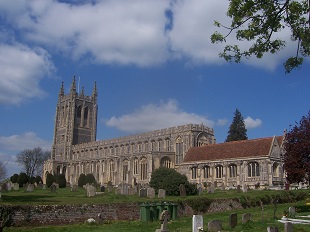 Long Melford As with many towns and large villages in Suffolk, Long Melford came to prominence as a result of its cloth merchants, the name deriving from a ford by a mill, being noted in the Domesday Book as Melaforda. There is an enviable array of 15th century buildings throughout the town. The preeminent mansion is Melford Hall, a house that has changed little externally since 1578, when Queen Elizabeth I was entertained there on the invitation of Sir William Cordell, who showed her around the county whilst accompanied by 300 young noblemen in white velvet coats, 300 in black velvet, as well as 1,500 retainers on horseback. regularly filmed The original panelled banqueting-hall still exists today, along with a Regency library, extensive collections of furniture and porcelain, and a display of items connected with Beatrix Potter who was related to the Hyde-Parker family, owners of the house since 1786. The garden contains an array of specimen trees and tree-lined paths. This is another prime centre for antiques, with the television series Lovejoy regularly filmed here. The enormous "Wool Church" is situated on high ground and dates primarily from the late 15th century. The scale of the building vies with Lavenham in all its aspects as to which is the most stunning on the eye. The original tower was irreparably damaged by lightning in 1710, and the replacement of 1772 was consequently not considered to be in keeping with the rest of the church, so between 1899 and 1903 the present tower was constructed to a higher specification. The bells are an unarguably memorable ring of eight, the oldest being the treble and fourth (1744) by Thomas Lester, Whitechapel. Third, 1833, Thomas II Mears, and fifth, 1845, Charles & George Mears. Tenor, 1865, by John Warner & Sons. The other three bells (2, 6, 7) are by Taylor's of Loughborough, 1924.

Kersey · St Mary

Lavenham · St Peter & St Paul
Long Melford · Holy Trinity
A record of outings 1989
by Hugh Deam
London East & City
Saturday 28th October 1989
10.15am Whitechapel
Bell Foundry
12.30pm Bow in the Road
St Mary & Holy Trinity (8) 13cwt
01.30pm Spitalfields
Christ Church (8) 17cwt
03.00pm Aldgate
St Botolph Without (8) 25cwt
05.45pm Lane End
Bucks · Holy Trinity (6) 5cwt
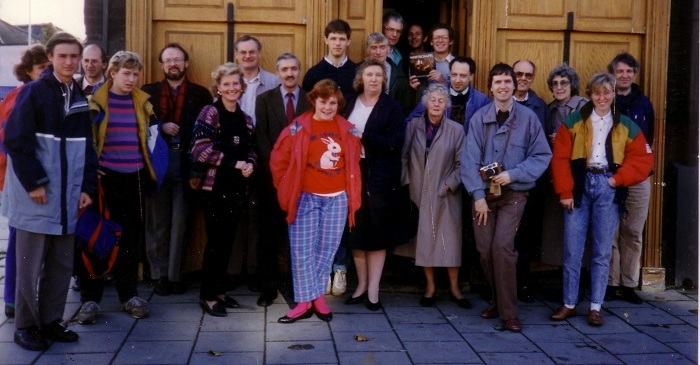
At the door to the Whitechapel Bell Foundry
John Beale, Jus0tin Booth, Ralph Bullock, Steve Davies, Hugh Deam, Roy Goodwin, Barry Greenway, Mike Hensher, David Lane, Katie Lane, Nesta Long, Brian Lowe, Carol Lowe, Len Porter, Marion Powell, John Pusey, Eddie Smith, Basil Townsend, Sonia Tucker, Helen Wharton and Serge Zvegintzov.
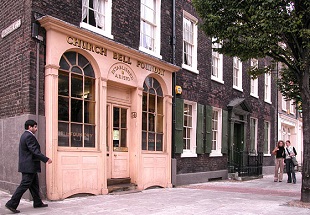
Whitechapel
Whitechapel Bell Foundry Whitechapel Foundry is Britain's oldest manufacturing company still in operation, having been established in 1570 during the reign of Elizabeth I. The main business is the manufacture of church bells and their fittings, although it also produces single tolling bells, carillon bells and hand-bells. These historic premises were converted from a coaching inn that was known as "The Artichoke" in 1670. The original foundry was situated at Aldgate, and then on the north side of the Whitechapel Road before moving to this site. The foundry has traditionally been known by the name of the Master Founder and owner, but since 1968 it has operated under the name of its location. The original Liberty Bell was cast here in 1752, with a replacement cast in 1976 to celebrate the bi-centenary of American independence. Big Ben, in the tower of the Palace of Westminster, was cast here in 1858 and like the Liberty Bell developed a crack due to the hammer being too heavy. The crack and the subsequent re-tuning has given Big Ben its distinctive tone. The original moulding gauge is retained near the foundry's furnaces. Many famous churches across the world have bells that were cast here, including Westminster Abbey, Liverpool Cathedral, the Armenian Church in Chennai, and St James Church in Sydney. In 2012 the Royal Jubilee bells were cast here, and after their high profile role leading the Thames Pageant they were subsequently installed in the tower of St James, Garlickhythe. Tours of the foundry can be booked on selected Saturdays.
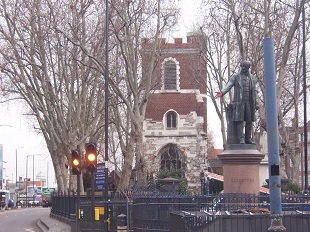 Bow in the Road Formerly known as Bromley by Bow, Stratford le Bow and Stratford ate Bow, the name reveals that this was a ford on a Roman road, and a bridge was built over the river here early in the 12th century. During the 17th and 18th century the Bow China Works employed some 300 artists and ancillary staff until production moved to Derby in 1776. In 1888 the "Match Girls Strike" took place at the Bryant & May match factory in Fairfield Road. This was a forerunner of the suffragette movement and also the trade union movement. The church is located on an island site in Bow Road, with a church having stood on the same site for around 700 years, originally having been a chapel of ease for St Dunstan's at Stepney. The present church building is a 14th century structure of Kentish rag-stone and brick additions, with the tower added in the following century. In 1896 the chancel roof collapsed, prompting a major restoration overseen by the architect Osborn C. Hills. The church suffered considerable bomb damage during the London Blitz in World War II, with repair work carried out by H.S. Goodhart-Rendel. The Gothic-style iron-railings around the churchyard were reinstated in 1984. Many of the stained-glass windows in the church are in the late Perpendicular style. All eight bells were cast in 1952 at Whitechapel.
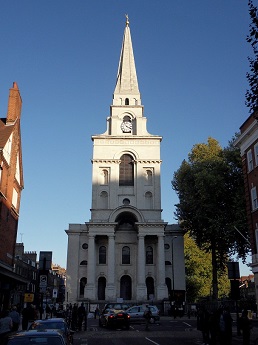 Spitalfields This famous area of London is located near to Liverpool Street Station and Brick Lane, the Liberty of the Old Artillery Ground having been merged into Spitalfields in 1921. The area straddles Commercial Street, and is home to many markets, including the historic Spitalfields Market founded in the 17th century. Petticoat Lane Market is on the area's south-western fringe. The name Spitalfields is a contraction of "Hospital Fields", referring to the open land which lay behind the priory hospital late in the 12th century. Before this time the area was known as Lolesworth. The historic association with the silk industry was established by French Huguenot refugees who settled here in 1685. Within a few years well appointed houses had been built in order to accommodate the master-weavers, with Irish weavers later moving into the area. By the Victorian era the silk industry was in marked decline and even continued furniture and brick-making failed to prevent Spitalfields becoming the area of London synonymous with robbery and prostitution. From this time on tailoring became the primary trade. An Act of Parliament in 1711 decreed that 50 new churches were needed to cater for the rapidly rising population, so Nicholas Hawksmoor was commissioned to design and oversee the building of the present church. A peal of ten bells was installed in 1730 and later augmented to a twelve. The bells fell into disuse during the 20th century, so in 1971 the eight bells from Clapham Park were transferred to Spitalfields, these all having been cast in 1919 by Gillett & Johnston.
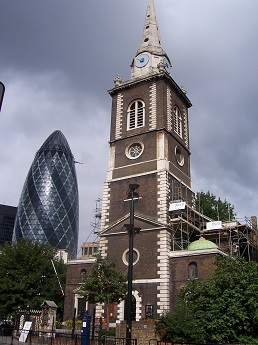 Aldgate was once the eastern-most gateway through the Roman-built London wall leading from the City to Whitechapel. Today, the ward of Aldgate takes in Leadenhall Market and Fenchurch Street. The Augustinian Priory of Holy Trinity was founded in 1108 by Matilda, wife of Henry I, on ground just inside the gate. A Jewish community settled here from 1181, but they were expelled by Edward I in 1290, the area becoming known as Old Jewry. In the wake of the Civil War, Oliver Cromwell decreed that the Jews should be allowed to return here if they so wished. Whilst he was employed as a customs official, from 1374 to 1386, Geoffrey Chaucer occupied apartments above the city gate. The area today is dominated by the insurance industry, with several brokers and underwriters based here, including Lloyds Register, the London Metal Exchange, 30 St Mary Axe (better known as the Gherkin), 122 Leadenhall Street (better known as the Cheese-grater), and 20 Fenchurch Street (the Walkie-Talkie), which hit the headlines in Summer 2013 when it was briefly renamed "the Walkie-Scorchie" after reflections of sunlight bounced off the building's curved windows and converged on a narrow area below and consequently melted parts of a car and shop fascias. The first record of a church here was in 1115, when it was received by the Holy Trinity Priory, although the foundations may well be pre-1066. The church was rebuilt in the 16th century and then again between 1741 - 44 to the designs of George Dance, being comprised of brick with stone quoins and window casings. The interior was restored by J.F. Bentley, architect of Westminster Cathedral. St Botolph is the patron saint of travellers and itinerants. The church was extensively damaged by bombing during World War II and then by fire in 1965. It was re-hallowed in 1966 and is Grade I Listed. The organ is possibly the oldest working church organ in the country. The bells were cast at Whitechapel, front four, 1744, by Thomas Lester, fifth and back two bells, 1764, by Lester & Pack, and the sixth, 1966, by Mears & Stainbank.
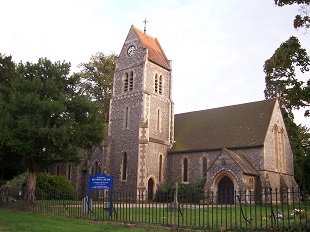 Lane End in Buckinghamshire The Ecclesiastical parish of Lane End was only formed in 1867, incorporating the hamlets of Cadmore End, Ditchfield, Moor Common and Moor End. Lane End is some 650ft above sea level on the southern fringes of the Chilterns. Set amidst rolling hills of farmland, beech-woods and footpaths, it is a popular spot for beginning or ending hill walks due to its location and profusion of pubs. In addition to working the land to provide wheat and barley to breweries in Marlow and Henley, the inhabitants traditionally manufactured chairs or worked in a local iron foundry. During the Second World War, King Zog of Albania lived at Parmoor House, with a large contingent of Albanians living in and around Lane End. In the early 1990s a small number of red kites from Spain were released in this area and soon became a familiar sight over Stokenchurch Cutting. Today red kites have extended over a wide radius from here. The oldest church in Lane End is the Methodist church which started as a Congregational church on Marlow Road in 1801. The Anglican church of 1878, by John Oldrid Scott, is situated on Ditchfield Common, being a replacement for the original building of 1832. The tower clock is one of the finest 20th century examples, installed in 1925, and striking the hour and half-hour using the third bell of the ring. The six bells are rung from the ground floor and were all cast in 1878 by Whitechapel Bell Foundry.
Bow in the Road
Spitalfields
Aldgate in the City
Lane End
St Albans
Saturday 8th April 1989
11.00am St Albans
Herts · Cathedral & Abbey Church of St Alban (12) 21cwt
02.00pm St Albans
Herts · St Peter (10) 24cwt
03.45pm St Albans
Herts · St Michael (8) 12cwt
05.30pm Kings Langley
Herts · All Saints (8) 11cwt
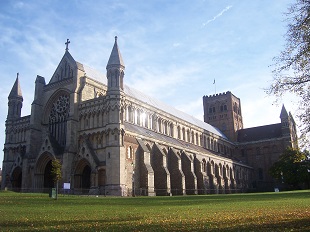
The cathedral from the west
Documented as Sancte Albanes Stow (holy place of St Alban) in 1007, from the saint martyred here in 209A.D., by the time of the Domesday Book, St Albans was noted as Villa Sancti Albani. Originally a Roman soldier in Verulamium, Alban became the first Christian martyr in Britain, being executed on a small hill just outside the city walls. The Roman city, with its temples and forums, covered some 200 acres, and today the Verulamium Museum houses an extensive collection of Roman artefacts. Pope Adrian IV (formerly Nicholas Breakspear) personally decreed that the Abbot of St Albans held precedence over all other English abbots. The city today is situated on the banks of the River Ver, not far from to the east of what remains of the original city. Amongst the notable buildings in St Albans is the 15th century flint and rubble 5-storey clock tower by Thomas Wolvey - le Clokkehouse - based on the design of the clock house at Westminster Palace which was had been designed by Henry Yevele (Wolvey's mentor). During the Napoleonic Wars it was used as a semaphore station. The Gothic spire and parapets were added by Sir George Gilbert Scott in 1865/66. Also of note in St Albans is Gorhambury House, which was once the home of Sir Francis Bacon. Many of the pubs here were originally coaching inns, with the "Fighting Cocks" alongside the river reputed to be the oldest inhabited licensed house in England. The growth of St Albans was generally slow before the 20th century, reflecting its status as a rural market town, a Christian pilgrimage site, and the first coaching stop on the route from London. Amongst the famous figures to have been educated at St Albans School are Stephen Hawking and Sir Tim Rice. St Albans has been popular as movie and television location since the 1960s, serving as a backdrop for Inspector Morse, Foyle's War (doubling as Hastings), Johnny English, and the infamous 1957, April 1st edition of Panorama on the fictitious Swiss spaghetti harvest filmed in part at the Pasta factory here.
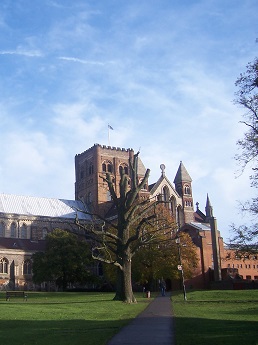 The Cathedral & Abbey Church of St Alban The imposing Abbey church of what was once a Benedictine monastery stands over the place where Alban, the first English martyr, was buried more than 200 years before St Augustine arrived at Canterbury. The present magnificent building was constructed around 1077, having been commissioned by Abbot Paul de Caen, with the work undertaken by Robert the Mason, with clear influences from the French work at Cluny or Caen, and it shares a similar floor plan to St Etienne. The mighty tower was a particular triumph, being the only 11th century crossing tower still standing in England. In the current structure the Norman arches survive under the central tower and the north side of the nave. The arches in the rest of the building are Gothic, following medieval rebuilding and Victorian restoration. A new gateway was built to the Abbey grounds in 1365, later to be used as a prison, and now St Albans School. The restoration of 1856 - 77 was overseen by G.G. Scott as moves were made to gain the abbey status as a cathedral. Robert Runcie, later Archbishop of Canterbury, was Bishop here between 1970 and 1980 and returned to live in the city after retiring, with his grave to be found in the churchyard. All of the bells, including the second, were either cast or recast in 2010 at Whitechapel.
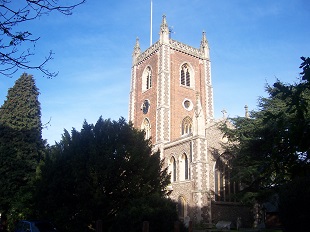 St Peter The original wooden Anglo-Saxon church here is thought to have been founded in 948A.D. by Abbot Ulsinus, this based upon the writing of Matthew Paris, chronicler, cartographer and Benedictine monk, although he had a reputation for a degree of inaccuracy with dates in his writing. Nothing now remains of this structure, as by the 13th century the church assumed the form which it retained until the early 19th century - a cruciform building with a central tower. The nave arcades and the aisle walls were rebuilt in the 15th century, although the 13th century west and south doorways were preserved. By 1799 the tower had become so unsafe that it had to be taken down to the level of the crossing arches, and finally in 1801 the belfry floor fell in. A new tower was subsequently erected in brick. After overseeing the restoration of the Abbey, Lord Grimthorpe took it upon himself to restore St Peter's at his own expense, with the chancel and nave lengthened by one bay each. In more recent years East Enders filmed the wedding of Ricky and Bianca here. All ten bells were recast in 1993 at Whitechapel Foundry.
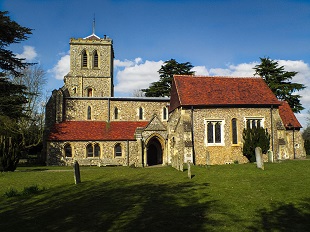 St Michael The church of St Michael is one of the three St Albans churches built during the 11th century in order to receive pilgrims and prepare them for their visit to the shrine of St Alban. The church stands amidst the foundations of the old Basilica (law-court) of Verulamium and is constructed of flint and brick taken from the ruins of the Roman city. In the 13th century the need for more space within the church led to the building of the Lady Chapel. Sir Francis Bacon worshipped here and the Bacon Monument was erected to his memory in 1630. Also here is the elegant Elizabethan oak pulpit, with its tester and hour-glass, which is thought have been removed from the chapel at Old Gorhambury. Lord Grimthorpe also paid for much enhancement at this church too, with the extension of the nave, the addition of a choir-vestry, work on the north-west tower, and a new clock that possesses a mechanism similar to the one for the clock in the Palace of Westminster. The middle four bells date to 1739, cast by Samuel Knight of Reading. The back two bells are of 1897 by John Taylor & Co of Loughborough. The front two bells were added in 1953 by Gillett & Johnston, Croydon.
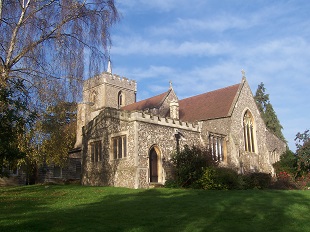 King's Langley Originally described as Langalege (a long clearing in woodland), the royal affix from 1436 refers to the early possession by the monarch. This was the location of King's Langley Palace, a royal residence of the Plantagenet kings of England. Around 1276 the Manor was purchased by Queen Eleanor, and the palace was built on a hill above the village to the west, with a deer-park extending to the south. A Dominican priory was founded next to the palace, and remains of this can still be seen. A Roman villa long pre-dating this has been excavated just to the south of the village. The famous bedtime drink Ovaltine was long made in King's Langley, the factory now having been converted into apartments, and the egg-farm converted into energy-efficient offices. The 14th century parish church houses the tomb of Edmund of Langley (1341 - 1402), 1st Duke of York. The body of Richard II was buried here for a time after his probable murder at Pontefract Castle in 1400, although he was later re-buried at Westminster Abbey. Act IV, Scene 1 of Shakespeare's Richard II is set in the garden of the palace. Many centuries later, Queen Victoria provided the funds for the stained-glass heraldic window that was added in 1878. All of the current bells were cast in 1958 by Taylor's of Loughborough.
The crossing tower
St Peter

St Michael
Kings Langley · All Saints
A record of outings 1988
by Hugh Deam
Greater Birmingham
Saturday 9th April 1988
11.00am Shirley
St James the Great (8) 6cwt
02.00pm Solihull
St Alphege (12) 21cwt
03.45pm King's Norton
St Nicolas (10) 17cwt
05.00pm Harborne
St Peter (8) 12cwt
06.30pm Selly Oak
St Mary (8) 12cwt
Stedman Caters & Triples, Cambridge Major, London Major, Erin Caters, Kent Major and Plain Bob Royal.
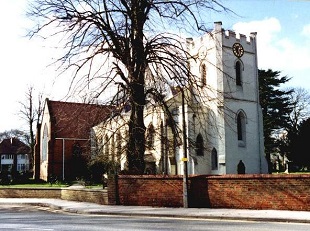
Shirley · St James the Great
The name Birmingham derives from this area being the primary settlement of a 6th century Anglian tribal grouping known as the Beormingas. The development of Birmingham into a major urban and commercial centre began in 1166, when the Lord of the Manor, Peter de Birmingham obtained a charter to hold a market at his castle. He followed this with the creation of a planned market town and seigneurial borough within his demesne that is now the site of the famous Bull Ring. By 1791 Birmingham was becoming known as the "first manufacturing town" in the world. The arrival of the canal and rail network hastened the expansion of the city, this status being bestowed on Birmingham by Queen Victoria in 1889. Birmingham suffered extensive damage from German bombing raids during the early part of World War II, so nuclear and jet engine research here was taken to the United States in 1940 by the Tizard Mission, in what was later described as the most valuable cargo ever. The formidable extent of the canal network was something of a hidden treasure until recent years.
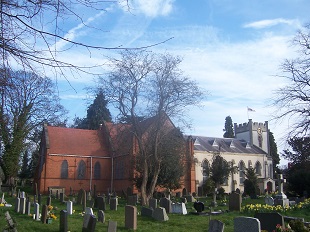 Shirley The earliest known settlement here was an Iron Age hill fort protected by earth banks. Shirley was part of the manor of Ulverlei (Olton) until the establishment of Solihull. Development as a village took place on the Stratford Road, on what became known as Shirley Street. Rapid growth came about late in the 19th century as people looked to move from the centre of Birmingham. What had been a rather remote area, the road having been turnpike 1725 - 1872, expanded still further with the opening of a railway line through here in 1908. After a hiatus during the Second World War, building has continued at a swift pace in the years since. The large retail hub of Shirley has undergone massive redevelopment in recent years and is still being expanded. The church, dedicated to St James, was built from 1831, partly in response to a lack of godliness in the area that saw bull-baiting, cock-fighting and bare-knuckle fighting rife for some years preceding this. The church was subsequently enlarged in 1882. Nine years later (1893) Shirley became an ecclesiastical parish in its own right. The tower houses eight surprisingly light bells, the back five bells having been cast at the foundry in Whitechapel by Charles & George Mears in 1854 (fifth to tenor) and 1855 (fourth). The front three bells are by Taylor's of Loughborough, third, 1929, and the front two bells from 1946.
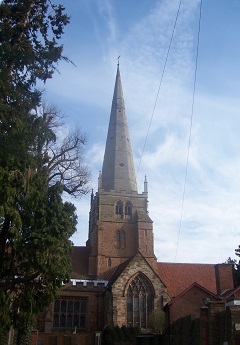 Solihull Starting out over a thousand years ago as a clearing in a forest, Solihull (a muddy hill) became known as a trading centre as it constantly grew around the junction of integral Roman roads. In 1417 Henry V claimed ownership of the town and derived considerable income by way of taxation. Residents of Solihull, and those born in the town, are known as "Silhillians", the motto being "Urbs in Rure" (town in country). The Industrial Revolution largely passed Solihull by, and until the 20th century it remained a small market town. The development of the Rover car factory and Elmdon Airport (now Birmingham International Airport) led to rapid expansion of residential housing. Today, the National Exhibition Centre is within the borough. Despite relentless urbanisation Solihull still retains a number of parks and nature reserves, with the River Blythe, a tributary of the River Trent passing through the Malvern & Tudor Grange parks. The distinctive red sandstone parish church of St Alphege is an opulent example of English Gothic architecture, with a dominating spire (168ft). Founded in or around 1220 by Hugh de Oddingsell, a chantry chapel was also founded that century (1277) by Sir William de Oddingsell. The church is located at the head of the High Street and is a Grade I Listed building. All twelve bells were cast by Taylor's of Loughborough, the back ten in 1932 and the front two added in 1968.
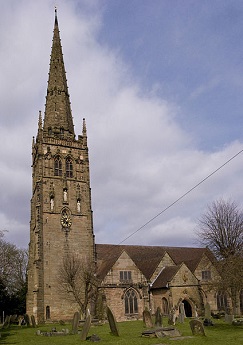 King's Norton Described as Nortone (a northern farmstead) in the Domesday Book, the settlement had gained a royal affix by 1221 when it was known as Kinges Norton. The Manor remained the property of the monarch until the 16th century, and a "mop-fair" has long been held here annually. King's Norton was the scene of a major skirmish in 1642 during the Civil War when a three-hundred strong force led by Prince Rupert, who were resting here, found themselves surprised by a smaller group led by Lord Willoughby of Parham. The Royalists suffered fifty dead and twenty wounded with the Parliamentarians losing but twenty soldiers. A church has been located on this site since at least the 11th century, when the Normans built a small rectangular chapel. The current church dates from the early 13th century, with the spire added between 1446 and 1475. During the 17th century almost the whole of the south aisle was rebuilt, the chancel re-roofed, and the low-pitched roof that covered the nave from the 15th century was replaced by a much steeper version. The church was restored in 1863 by Ewan Christian, and again in 1871 by William Jeffrey Hopkins, the Worcester Diocesan Architect. The Rev W.V Awdry, creator of Thomas the Tank Engine served as curate here from 1940 to 1946. The church nestles behind what was long the Saracen's Head, a medieval inn, but which is now used as the Parish Offices. All of the bells were cast by Taylor's of Loughborough at various times. The sixth bell is the oldest, cast in 1905. The rest of the back eight bells date to 1924, with the front two bells added two years later, 1926.
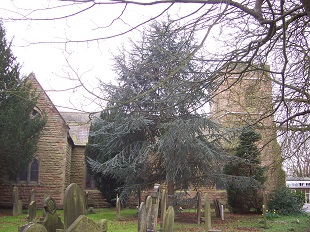 Harborne Although a settlement long pre-dated this, a village here was not documented until the Domesday Book when it was known as Horeborne, the name describing a dirty or muddy stream. There has been evidence uncovered of a sizeable Roman fort at Metchley Park adjoining Harborne. The town occupies the southern tongue of what was known as Offlow Hundred, and with the Industrial Revolution became known for iron and glass manufacture. During Victorian times Harborne became a thriving and prosperous suburb, the oldest part of which is known locally as "Harborne Village" and is centred around the church. The most famous resident of Harborne was the Pulitzer Prize winning poet Wystan Hugh Auden. St Peter's church dates from Saxon times, with St Chad of Mercia, the prominent 7th century Anglo-Saxon churchman having preached here. The church was renovated and enlarged in 1827 by Yeoville Thomasan, with the tower having been reconstructed during the 14th century. The sanctuary was rebuilt 1974/75 after a fire. All eight bells were cast in 1923 by John Taylor & Co. of Loughborough.
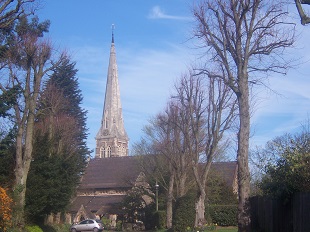 Selly Oak The Domesday Survey noted the settlement here at that time as Escelie (a woodland clearing on a shelf or ledge), with the later amendment (1204) as Selevele, and then at some point in time the proliferation of oak trees here was recognised in the name. Inhabited since Roman times, Selly Oak grew around Ryknild Street, later renamed Icknield Street, which linked Fosse Way and Watling Street. The most prominent oak tree here historically stood at the crossroads of the Bristol Road and Harborne Lane, with the spot commemorated by a street sign - Oak Tree Place - above one of the shops on the north side. The tree was finally felled in 1909 amid fears of damage to its roots caused by the building of houses nearby. In March 1985 a new "Selly Oak" was planted on the north side of Bristol Road, with a second new oak planted on the south side in October 2000. The years of the Industrial Revolution saw the emergence of local factories such as the Birmingham Battery & Metal Company, the first transatlantic cable being made here. The BBC Drama Village is situated in Selly Oak, on part of the University of Birmingham campus. The parish of St Mary's was formed in 1862, with the new church designed by Edward Holmes in the Gothic Revival style and constructed using sandstone from a quarry at Weoley Castle on the south-west side of Birmingham. All eight bells were cast by Gillett & Johnston, 1932. Film & Television Location Credits: Dalziel & Pascoe (1996 - 2007), Doctors (2000 onwards).
St James the Great
Solihull · St Alphege

Kings Norton
Harborne · St Peter
Selly Oak · St Mary
A record of outings 1987
by Hugh Deam
Aylesbury Vale
Saturday 28th November 1987
3.30pm Cuddington
Bucks · St Nicholas (8) 7cwt
4.30pm Dinton
Bucks · St Peter & St Paul (6) 16cwt
5.30pm Haddenham
Bucks · St Mary (8) 17cwt
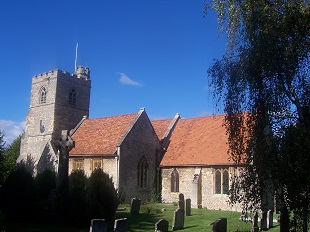
Cuddington · St Nicholas
Cuddington Described in the 12th century as Cudintuna (Cudda's Estate), this compact village lies close to the River Thame and has a wealth of exquisite old cottages near the lower green. This is a fine example of a vibrant community, with the school and church set close together. One of the most notable members of the Boddington brewing family, Henry Boddington was born in nearby Thame, but spent his childhood in Cuddington. The family owned Mill Farm, and when he was twenty, Henry moved to Manchester and worked as a clerk for the Strangeways Brewery. He was highly successful, first becoming a partner and then sole proprietor of the brewery that bears his name. However he did not forget Cuddington, latterly penning memoirs of his years in the village. Only the font remains from the 12th century within the primarily 13th century parish church. The Perpendicular west tower dates from 1350. The church received a notable gift from Henry Boddington with his commissioning of six bells for the tower. These six bells of 1884 were cast by John Warner & Sons of London. In 1999 an additional two bells were cast by Whitechapel Foundry, and hung by White's of Appleton, thus completing the octave peal. In 1996 a meeting-room and small kitchen were installed on the ground floor of the tower, with an upper platform built for the bell-ringers. The back two bells were recast by Whitechapel in 2003.
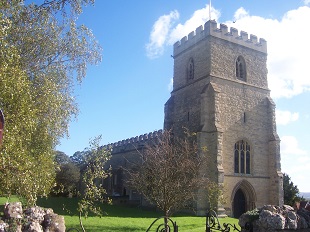 Dinton Descriptive of an estate associated with a man called Dunn during the Anglo-Saxon period, the name is noted as Danitone in the Domesday Survey (1086), with a notation in 1208 as Duninton. The village is also known as Dinton with Ford due to there being a dispersed settlement of ends and hamlets that were once separate manors. At the height of the Civil War, Oliver Cromwell is said to have come here soon after a decisive victory at the Battle of Naseby. At that time Dinton Hall was the home of Simon Mayne, who would later sign the death warrant of Charles I, and as a result was himself sent to the Tower of London in the wake of the Restoration. The house was originally constructed for Archbishop Warham in 1500. Just north of the Hall is Dinton Castle, a folly built in 1769 for Sir John Vanhatten, who used it to store his vast collection of fossils within the limestone walls. The church has much of interest from various periods, retaining its elaborate Norman south doorway as well as a 13th century chancel, Jacobean pulpit, and brasses from the 15th century which are set into the chancel floor. The bells are a weighty counter-clockwise set of six which thoroughly reward the effort. The back five bells all date to the 17th century, the second, third and fourth from 1656 by Ellis II, Francis & Henry III Knight of Reading, with the tenor from two years later, 1658, at the same foundry. The fifth is of 1682 by Richard III Chandler of Drayton Parslow. The treble was added in 1897 by Henry I Bond of Burford.
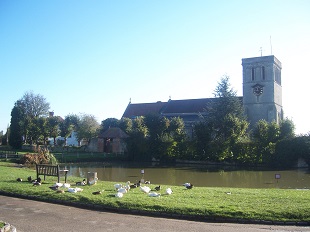 Haddenham Deriving its name from the Anglo-Saxon for "Haeda's Homestead", an early description of the settlement was as Hedreham. In times past it was jokingly referred to as "Silly Haddenham" because the villagers were reputed to have thatched the village pond in order to protect the ducks from the rain. There are no less than three village greens in Haddenham, but they are still outnumbered by the number of ponds, four in total. The main road through the village follows the course of the carefully culverted stream, with many of the houses composed of wychert, a method of construction that uses a white clay mixed with straw to make walls and building, which are then thatched or topped with red clay tiles. The village had a Royal Charter as a market town between 1294 and 1301. This market was short lived due to the influence exerted by the manor of Thame which lodged an objection on the grounds of loss of trade. Formally constituted in February 1983 by Les Stocker, Tiggywinkles, named after Beatrix Potter's "The Tale of Mrs Tiggy-Winkle", is one of Britain's best known wildlife hospitals. The veterinary hospital specialises in the rescue and treatment of wild animals, as well as teaching wild animal practice to veterinary surgeons and nurses. The astronomer William Rutter Dawes had his home and private observatory in the village from 1857 to 1868. Dawes was a clergyman, but became an authority on astronomical matters. He made extensive measurements of double-stars as well as observations of planets. One of his telescopes, an eight-inch refractor, is now housed in Cambridge Observatory. The parish church is 13th century, built on the site of a Saxon place of worship, of which a small fragment is thought to survive in the south wall. Chancel, nave and west tower are of c.1215. The north and south aisles were added some fifty years later, and they were widened during the 14th century. There was a wide-ranging restoration of the church in the 19th century. The church looks out upon one of the village ponds and a green. The tower clock has a wooden dial. Six of the eight bells are from 1809, cast by John Briant of Hertford foundry. What is now the seventh bell was cast in 1894 by John Warner & Sons, London. The fifth is from 1987 by Taylor's, Loughborough. Film & Television Location Credits: Midsomer Murders (1997 onwards), Wild Animal ER (2008).
Dinton · St Peter & St Paul
Haddenham · St Mary
The Cotswolds
Saturday 2nd May 1987
4.30pm Bourton on the Water
Gloucs · St Lawrence (8) 12cwt
6.30pm Stow on the Wold
Gloucs · St Edward (8) 27cwt
7.45pm Shipton under Wychwood
Oxon · SMV (8) 15cwt
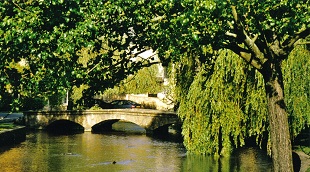
The River Windrush
Bourton on the Water The River Windrush wends its way through this now large village that lives up to its reputation as the "Venice of the Cotswolds", the river flowing alongside the main street and passing under numerous low foot-bridges built without parapets, and bordered by trees and lawns. The oldest bridge dates back to the reign of George III in 1706. The first form of Bourton's present name appears after the building of a Norman village, the name literally signifying "the village by the camp", with "water" later used as a distinguishing affix - Burton sup Aqua. Within the parish boundary once stood a prehistoric camp known as Salmondsbury. This camp was excavated during the 20th century, with discoveries including flints and pottery. Bourton on the Water is a hugely popular all year round, but when the sun shines the numbers sky-rocket, with seemingly every blade of grass along the exemplary main street commandeered for sunbathing. There is a wealth of tea-rooms, jewellers, gift-shops, hotels and hostelries to choose from. Amongst the long-standing attractions is a model village built of Cotswold stone, at the rear of the Old New Inn, that is a one-tenth scale replica of the village that took six men over four years to construct.
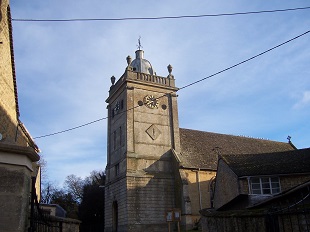 Miniaturised local landmarks include a running river, bridges, houses, trees and notable village features. On the southern edge of Bourton is the world renowned zoological park founded by Leonard Hill during the 1950s. It moved to its present site in 1989, the current location formerly having been a trout-farm and poplar-tree plantation for Bryant & May match-stick production. There are still hundreds of trees creating a canopy for the river and enclosures. This natural setting is inhabited by over 500 birds, with pelicans, cranes, storks, cassowary, and most famously, penguins and flamingos. There are over 50 aviaries of parrots, toucans, ibis, rhea, and macaw. Also here is the 2.5 acre Marshmouth Nature Reserve. The Cotswold Motoring Museum & Toy Collection nestles in one of the narrow roads leading off from the main street. There are seven galleries in all, displaying a wide-ranging collection of vintage cars, a unique toy collection and the TV super-hero car - Brum. The parish church is built on the site of a Roman temple, with records showing that a wooden Saxon church occupied the site in 708A.D.
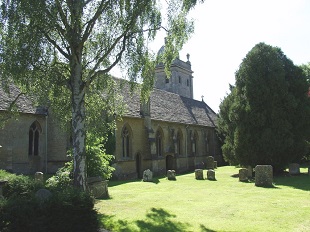 The present building is a combination of remnants from a late Norman replacement, 14th century chancel, a Georgian tower and a wide nave of the Victorian era. The stained-glass work is by Kempe, with the George Frederick Moore window showing six saints - Paul, Gregory, Columba, Augustine of Canterbury, Hieronymus, and David. The Italianate tower houses eight bells, all of which were cast, 1957, Taylor's of Loughborough. Film & Television Location Credits: The Baron (1966), Brum (1991 - 2002), Die Another Day (2002).
Stow on the Wold This busy market town is situated over 700ft above sea level, with the large market-place lined with historic houses, inns and shops, all in a variety of styles, plus there is an old market cross. The settlement here at the time of the Domesday Book, 1086, was known as Eduuardesstou (St Edward's Holy Place), with the town later renamed merely Stoua, and the eventual affix stemming from the Anglo-Saxon "Wald", meaning high ground cleared of forest. For several centuries Stow was supplied with water from springs below the town. Stow witnessed a particularly vicious Civil War battle in 1645 that saw the larger Royalist forces so comprehensively beaten that the main street is reputed to have run red with blood. The town, like so many in and around the Cotswolds, owed much of its prosperity to the wool trade, with Stow Fair remaining a huge draw every year, with as many as 20,000 sheep traded at any one time in years gone by. As the importance of sheep declined so the character of the fair changed to recognise the rise in horse dealing by farmers, huntsmen, and gipsies.
The present building is a combination of remnants from a late Norman replacement, 14th century chancel, a Georgian tower and a wide nave of the Victorian era. The stained-glass work is by Kempe, with the George Frederick Moore window showing six saints - Paul, Gregory, Columba, Augustine of Canterbury, Hieronymus, and David. The Italianate tower houses eight bells, all of which were cast, 1957, Taylor's of Loughborough. Film & Television Location Credits: The Baron (1966), Brum (1991 - 2002), Die Another Day (2002).
Stow on the Wold This busy market town is situated over 700ft above sea level, with the large market-place lined with historic houses, inns and shops, all in a variety of styles, plus there is an old market cross. The settlement here at the time of the Domesday Book, 1086, was known as Eduuardesstou (St Edward's Holy Place), with the town later renamed merely Stoua, and the eventual affix stemming from the Anglo-Saxon "Wald", meaning high ground cleared of forest. For several centuries Stow was supplied with water from springs below the town. Stow witnessed a particularly vicious Civil War battle in 1645 that saw the larger Royalist forces so comprehensively beaten that the main street is reputed to have run red with blood. The town, like so many in and around the Cotswolds, owed much of its prosperity to the wool trade, with Stow Fair remaining a huge draw every year, with as many as 20,000 sheep traded at any one time in years gone by. As the importance of sheep declined so the character of the fair changed to recognise the rise in horse dealing by farmers, huntsmen, and gipsies.
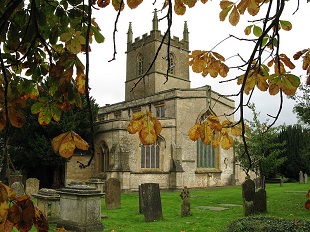 The houses of the town were traditionally built with the mellow Cotswold limestone from local quarries, some having massive internal oak beams. One of the oldest abodes is the "Crooked House" on the west side of the square, dating to around 1450. The King's Arms is a classic example of a coaching inn where the main entrance was through the arch leading to the stables. Charles I stayed here around the time of the Battle of Naseby in 1645. On Digbeth Street stands the Royalist Hotel, possibly England's oldest inn, having been a hostelry since 947A.D. The parish church, dedicated to St Edward, was built between the 11th and 15th century, with the mighty tower being the last part to be completed in 1447. The depiction of the Crucifixion in the south aisle was painted by Gaspar de Craeyer (1582 - 1669), who was a contemporary of Rubens and Van Dyck.
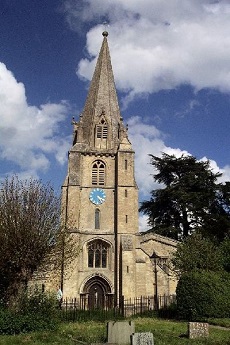 The lavish features of this outstanding Cotswold church can be attributed to the town's prosperity as a centre of the wool trade. At some 88ft high, the tower houses the heaviest peal of eight bells in Gloucestershire. The bells sound every bit as superb as they are to ring, with the oldest two bells, third and sixth, dating to 1620 by Henry Farmer of Evesham. The fourth was cast by Abraham I Rudhall, Gloucester, 1717. Film & Television Location Credits: Emma (1996), The Wyvern Mystery (2000).
Shipton under Wychwood The village is noted in the Domesday Book as having a Royal Manor, at the time when it was known as Sciptone (a sheep farm). The old forest name was added some centuries later. Barely 2% of the once huge Wychwood Forest now remains, and of that some 15,000 acres were enclosed in 1862 and consequently passed into the possession of Cornbury Park. The well maintained village green is actually a relatively recent creation, dating as it does from the mid 1960s. A gabled fountain obelisk in the centre of the village commemorates four unfortunate families from Shipton who emigrated to New Zealand in 1874, only for the ship, named the Cospatrick, to catch fire just off Tristan da Cunah, with the result of them all perishing. Shipton Court is an Elizabethan house that has been completely rebuilt inside, and stands close to what remains of the 15th century chapel and tithe barn of the old Prebendal House. These remains may well date from the period when the church came under the auspices of Salisbury Cathedral. The tower of St Mary's church was built between 1200 and 1250, being finely detailed, with a distinctive octagonal spire. The ring of eight bells trip round very nicely, the oldest bell being the fifth, cast in 1628 by James Keene of Woodstock. The tenor is from six years later, 1634, cast by Henry I Bagley of Chacombe. The seventh, 1726, cast at the Gloucester foundry of Abraham II Rudhall. The other bells were cast in 1893 by Mears & Stainbank, Whitechapel.
The lavish features of this outstanding Cotswold church can be attributed to the town's prosperity as a centre of the wool trade. At some 88ft high, the tower houses the heaviest peal of eight bells in Gloucestershire. The bells sound every bit as superb as they are to ring, with the oldest two bells, third and sixth, dating to 1620 by Henry Farmer of Evesham. The fourth was cast by Abraham I Rudhall, Gloucester, 1717. Film & Television Location Credits: Emma (1996), The Wyvern Mystery (2000).
Shipton under Wychwood The village is noted in the Domesday Book as having a Royal Manor, at the time when it was known as Sciptone (a sheep farm). The old forest name was added some centuries later. Barely 2% of the once huge Wychwood Forest now remains, and of that some 15,000 acres were enclosed in 1862 and consequently passed into the possession of Cornbury Park. The well maintained village green is actually a relatively recent creation, dating as it does from the mid 1960s. A gabled fountain obelisk in the centre of the village commemorates four unfortunate families from Shipton who emigrated to New Zealand in 1874, only for the ship, named the Cospatrick, to catch fire just off Tristan da Cunah, with the result of them all perishing. Shipton Court is an Elizabethan house that has been completely rebuilt inside, and stands close to what remains of the 15th century chapel and tithe barn of the old Prebendal House. These remains may well date from the period when the church came under the auspices of Salisbury Cathedral. The tower of St Mary's church was built between 1200 and 1250, being finely detailed, with a distinctive octagonal spire. The ring of eight bells trip round very nicely, the oldest bell being the fifth, cast in 1628 by James Keene of Woodstock. The tenor is from six years later, 1634, cast by Henry I Bagley of Chacombe. The seventh, 1726, cast at the Gloucester foundry of Abraham II Rudhall. The other bells were cast in 1893 by Mears & Stainbank, Whitechapel.
St Lawrence
Bourton on the Water

Stow on the Wold · St Edward

Shipton
Sussex by the Sea
Saturday 11th April 1987
11.45am Barcombe
Sussex · SMV (6) 9cwt
01.15pm Brighton
Sussex · St Nicholas of Myra (10) 18cwt
04.45pm Lewes
Sussex · St John the Baptist (10) 17cwt
Plain Bob Royal, Stedman Caters, Grandsire Caters, London and Cambridge.
Suzanne Agerbak, Emilie Amt, James Argyle, John Beale, Hugh Deam, Charlotte Everett, Kate Everett, Steve Everett, Katie Fiennes, Alec Gammon, Reg Gander, Ruth Godden, Mary Godwin, Wilf Godwin, Roy Goodwin, Carol Green, Barry Greenway, Trevor Greenway, Susan Hughes, Nesta Long, Brian Lowe, Carol Lowe, David Marples, Rachel Pepper, Julia Phipps, Lindsay Poole, Garth Porter, Len Porter, John Pusey, Rachel Pusey, Barbra Redshaw, Nicola Redshaw, Aaron Richardson, Daniel Rule, Eddie Smith, Christine Taylor, Kevin Taylor, Basil Townsend, Melanie Tribble, Peter Tribble, Andrew Ward and Stephen Wyatt.
At the back of the coach
Barcombe The village is split into three distinct parts, stemming from the abandoning of the houses that used to exist around the church during the ravages of the Black Death. Originally the settlement went by the name of Bercham, a reference to the local barley-fields. Sitting on what was the Roman road between London and Newhaven (Ermine Street), the parish also includes the hamlets of Spithurst and Littleworth. Remains have been found of a Roman villa and an earlier Iron Age round-house on the same site. The "Barcombe Bonfire" is held two weeks after the famous Lewes celebration, and is closely modelled on their event. There are four processions, including the dedicated children's procession, with various societies visiting. The village was also widely known for its mills, none of which now survive. The 16th century Barcombe Mill closed in 1918 and burned to the ground in 1939. Barcombe Oil Mill of the mid 19th century closed down and was demolished in 1917, with a sluice gate being all that now remains. The 12th century parish church is picturesquely situated, with stunning views of the South Downs. A 13th century south chapel was converted into an aisle in the latter part of the 14th century, but was rebuilt, along with the chancel, in the 19th century.
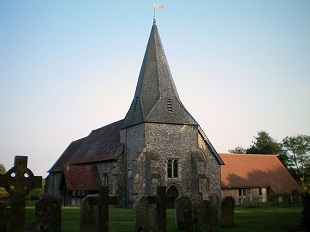 The plain tower, lower than the height of the nave, is dwarfed by the shingled broach spire, which contains bell-louvres. The 14th century font and doorways were retained amidst the restoration work of 1878/80. The superb stained-glass is all Victorian, bar one window from c.1657. The bells here are sublime ring of six, the front five dating to 1912, cast by Gillett & Johnston, Croydon. The tenor was added in 1947 by the same foundry.
Brighton Documented in the Domesday Book (1086) as Bristelmestune, the name referencing a farmstead belonging to Beorhthelm. Unarguably one of England's premier seaside resorts, Brighton boasts a history as colourful as its more contemporary reputation. In June 1514 the town was burnt to the ground by French raiders during the War of the Holy League. Only a small part of St Nicholas' church and the street pattern of the area, now known as "The Lanes", survived this insurgency. During the 1740s and 1750s, Dr Richard Russell of Lewes began prescribing sea-water at Brighton as a cure for glandular fever, and within thirty years the development of Georgian terraces had begun. What had been primarily a fishing port developed steadily as a fashionable resort, with leading figures of the day (Dickens, Thackeray, Conan Doyle) making a bee-line for the town. Growth was further encouraged by the patronage of the Prince Regent (later King George IV), after his first visit in 1783. He famously, and often infamously, spent much of his leisure time in Brighton, and was responsible for the construction of the Royal Pavilion. Built in the Indo-Saracenic style, the Pavilion quickly gained iconic status. Its extravagant Chinoiserie interiors are still the most stunning and magnificent ever executed in the British Isles. This was the discreet location, away from the Royal Court in London, for the Prince to carry on his liaisons with Mrs FitzHerbert. Between 1815 and 1822 the famed designer John Nash greatly extended the Pavilion.
The plain tower, lower than the height of the nave, is dwarfed by the shingled broach spire, which contains bell-louvres. The 14th century font and doorways were retained amidst the restoration work of 1878/80. The superb stained-glass is all Victorian, bar one window from c.1657. The bells here are sublime ring of six, the front five dating to 1912, cast by Gillett & Johnston, Croydon. The tenor was added in 1947 by the same foundry.
Brighton Documented in the Domesday Book (1086) as Bristelmestune, the name referencing a farmstead belonging to Beorhthelm. Unarguably one of England's premier seaside resorts, Brighton boasts a history as colourful as its more contemporary reputation. In June 1514 the town was burnt to the ground by French raiders during the War of the Holy League. Only a small part of St Nicholas' church and the street pattern of the area, now known as "The Lanes", survived this insurgency. During the 1740s and 1750s, Dr Richard Russell of Lewes began prescribing sea-water at Brighton as a cure for glandular fever, and within thirty years the development of Georgian terraces had begun. What had been primarily a fishing port developed steadily as a fashionable resort, with leading figures of the day (Dickens, Thackeray, Conan Doyle) making a bee-line for the town. Growth was further encouraged by the patronage of the Prince Regent (later King George IV), after his first visit in 1783. He famously, and often infamously, spent much of his leisure time in Brighton, and was responsible for the construction of the Royal Pavilion. Built in the Indo-Saracenic style, the Pavilion quickly gained iconic status. Its extravagant Chinoiserie interiors are still the most stunning and magnificent ever executed in the British Isles. This was the discreet location, away from the Royal Court in London, for the Prince to carry on his liaisons with Mrs FitzHerbert. Between 1815 and 1822 the famed designer John Nash greatly extended the Pavilion.
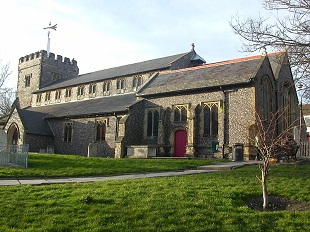 After the death of George IV in 1830, his successor William IV also stayed here. Queen Victoria disliked Brighton and the lack of privacy it afforded her, as by this time the town was booming with the access by rail and losing its exclusive nature. Hence Osborne House on the Isle of Wight was built. During World War I the Pavilion was temporarily acted as a military hospital. The Monarch's Way footpath heads west along the sea-front above the beach. Since the demolition of the Black Rock Lido, the area has been re-developed and now features one of Europe's largest marinas. Brighton and Hove gained city status in 2000. The 14th century church, dedicated to St Nicholas of Myra, is both the original parish church of Brighton and the oldest surviving building. Although it is not certain, it is possible that the original church stood on the same site, as the fishing village was marshy and would have necessitated construction inland. The tower of the present church is thought to have used some stones of Norman origin, and also a font from that period. The church was largely rebuilt in 1853/54 thanks in the most part to a fund set up as a memorial to Arthur Wellesley, Duke of Wellington who attended services here, and whose children were taught at the nearby academy. Work included a new roof, widened aisles, installation of stained-glass windows, and a stone cross commemorating the Duke. The bells are rung from the ground floor, the original eight having been re-cast and augmented to a ten in 1922 by Gillett & Johnston, Croydon.
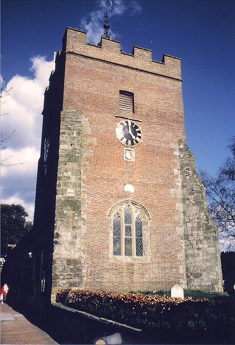 Lewes Known as Laewas (burial mounds) in 961A.D., by the time of the Domesday Survey (1086) the settlement was documented as it is today. Lewes has a history as a bridging point and as a market town. A welter of archaeological evidence points to prehistoric dwellers in the area, and it is thought that the Roman settlement of Mutuantonis was sited here, as relevant artefacts have been unearthed locally. After the Norman invasion, William the Conqueror rewarded William de Warenne, 1st Earl of Surrey with a swathe of land along the River Ouse, from the coast to the Surrey boundary. He was responsible for the building of Lewes Castle, and he and is wife Gundrada also founded St Pancras Priory in 1081. Lewes was the site of a mint during the late Anglo-Saxon era and for some years after the Norman Conquest. In 1148 the town was granted a charter by King Stephen and latterly became a port, with docks along the river. Lewes was the site of a clash between the forces of Henry III and Simon de Monfort in the 2nd Barons' War in 1264, at the end of which the latter's forces were victorious. The town is situated on the Greenwich Meridian, in a gap in the South Downs, cut through by the River Ouse. On the east bank is a large chalk cliff (Cliffe Hill). On 27 December 1836, the worst avalanche ever recorded in England occurred here when a large build-up of snow on the cliff slid down onto a row of cottages called Boulters Row (now South Street), killing eight people. The Snowdrop public house was named in memory of this event. On 21 August 1864, Lewes suffered an earthquake shock which measured 3.1 on the Richter Scale, and October 2000 saw the town suffer major flooding to its commercial centre and many residential areas. The town is most famous for the annual Lewes Bonfire celebrations, the largest and most elaborate in the country. This recalls, not only the uncovering of the Gunpowder Plot, but also commemorates the memory of the 17 Protestant martyrs burnt at the stake during the Marian Persecutions. A number of large effigies are drawn through the streets before being burnt. Located in the Southover district of the town, on the High Street, the 12th century church was built primarily as a hospice for the priory. It became a parish church during the following century. The hospice provided hospitality for travellers and the poor, with the expanded hospital of St James nearby thought to have latterly taken over the functions of the hospice. The north side of the church dates to the 14th century, and the south aisle is mid 16th century. The chancel contains the 12th century tombstone of Gundrada de Warenne. Opposite the church is the house given to Anne of Cleves by King Henry VIII on their divorce. The tower is early 18th century, being a rebuilding in brick after the original collapsed in 1698. The tower walls, in their upper stages, are of chalk inside the building. The weather-vane atop the tower is in the form of a basking shark, recalling one which was caught and exhibited in Brighton (1813). The original four bells were destroyed in the tower collapse, with the replacement eight bells re-cast in 1839. Two more bells were added in 1906.

Barcombe · SMV

Brighton · St Nicholas
Lewes · St John
A record of outings 1986
by Hugh Deam
Vale of the White Horse
Saturday 6th December 1986
4.30pm Faringdon
Oxon · All Saints (8) 17cwt
5.45pm Buckland
Oxon · SMV (8) 17cwt
7.00pm Shrivenham
Oxon · St Andrew (8) 14cwt
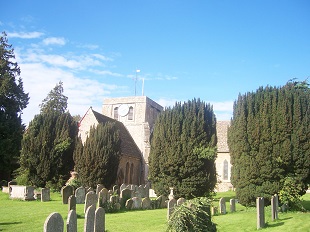
Faringdon · All Saints
Faringdon This elegant market town is situated on a golden limestone ridge between the River Ock and the River Thames, on what was once a junction of ancient roads. The name of the town derives from the Anglo-Saxon description of a fern-covered hill. In 1216 King John granted Faringdon a royal charter. The town was the first capital of Wessex, and the Saxon kings had a palace here, in which Edward the Elder died in 925A.D. A castle was built to guard the river crossing, but soon after its completion King Stephen ordered its dismantling. The Civil War saw several local skirmishes, with at one point, Roundhead commander Sir Robert Pye finding himself in the awkward position of having to besiege his own home, Faringdon House. During this period a poorly aimed cannon-ball knocked the spire off the church tower. The 17th century town hall is surrounded by Georgian-fronted inns and hotels that imbue Faringdon with its special character. The town was granted a weekly market in 1218, and it still continues on the same basis today. King John also established an abbey here in 1202 (probably on the site of what is now Portwell House), but it soon moved to Beaulieu in Hampshire. On 1 February 2004, Faringdon was granted status as a "Fairtrade Town", becoming the second such town in southern England. Faringdon is home to the Faringdon Sponge Gravel, which is extracted from Wicklesham Quarry. This Cretaceous unit is filled with fossil sponges, other invertebrates, vertebrate bones & teeth, and examples of bio-erosion. Formed around 115 million years ago, the sponge gravel makes excellent building sand and is also used for gravel paths. Just east of the town is Folly (Faringdon) Hill, with an ancient ditched defensive ring. The Pye family had scots pine trees planted around the summit at the time that Faringdon House was rebuilt in the late 18th century.
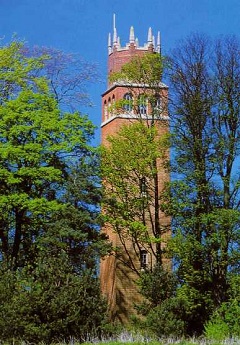 The folly at the top of the hill was designed by Gerald Wellesley, Marquess of Douro for Lord Berners, and built in 1935. At 140ft in height it affords panoramic views of the Vale of the White Horse. During World War II the Home Guard used it as an observation post. In 1982 Robert Heber-Percy restored it and presented it to the town in trust. Faringdon House was, for many years, also owned by Lord Berners, and is famous for its colour-dyed pigeons, a custom which was started by the highly eccentric lord. Gerald Hugh Tyrwhitt-Wilson, 14th Baron Berners, was a composer of classical music, a novelist, printer and aesthete. Besides dyeing the pigeons in shockingly vibrant colours, he also kept a giraffe as a pet and afternoon tea companion. His Rolls-Royce contained a small clavichord keyboard which could be stored beneath the front seat. The oldest parts of All Saints church date to the 12th century, with the clerestory and west end of the nave from this period. A Norman doorway also survives, although not in its original position. The chancel and north transept are 13th century, and the west chapel a century later. The north chapel is a late Perpendicular Gothic addition, with 15th century windows. The church oversees the western side of the market-place, and provides a handy reference for those seeking the time courtesy of its superb clock. The churchyard is reputedly haunted by the headless apparition of17th century naval officer Hampden Pye who was decapitated by a cannon-ball. The central tower rises only marginally above the height of the nave and chancel, and houses eight bells all cast by John Taylor & Co. of Loughborough in 1926. These are a fine set of bells, but a couple of the ropes require tidy handling to avoid clashing with the clock wires.
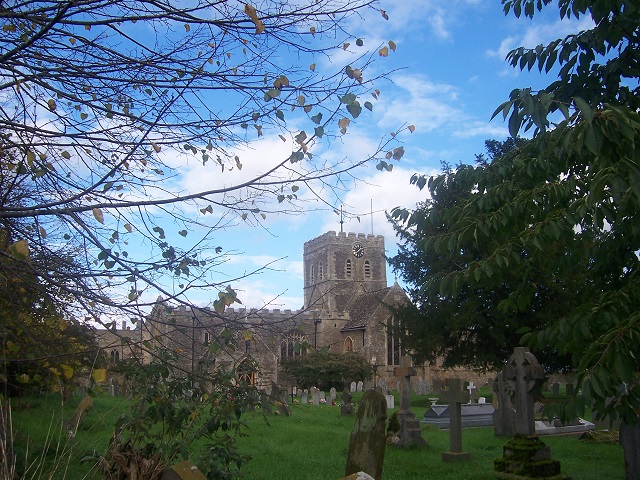 Buckland The name Buckland is widespread across southern England, deriving from the Anglo-Saxon for "charter-land", this being an estate with rights and privileges created by a royal charter. At the turn of the 18th century, Lord of the Manor at the time, Sir John Throckmorton owned a 500-strong flock of South Down sheep, a breed noted for providing the finest quality wool and their ease of shearing. One day in 1811 at Newbury a crowd of some 5,000 locals gathered to watch Sir John win a 1,000 guinea wager that he could have a coat made in one day. Buckland House is a large Georgian mansion that is a masterpiece of Palladian architecture constructed by John Wood the Younger for Sir Robert Throckmorton in 1757. The previous manor house was converted into stables. The parish church of St Mary is largely 12th century, with 13th century chancel, tower and transepts. The main north & south nave doors are unusual in having a matching pair of Norman arches. Within the chancel is a triangular locker containing the heart-burial (1575) of William Holcott of Barcote Manor, a 12th century manor house that was subsequently demolished and rebuilt as a Tudor Revival house in 1876. The church contains a number of 14th century tomb recesses and an octagonal font of the same century, plus a 12th century crusader-chest. The Barcote Chapel is famed for its decorative mosaic work (1890 - 92) to the memory of Clara Jane, wife of William West, who had bought the manor in 1881. Three of the bells (4, 5, & 6) date to 1636, cast by Roger I Purdue of Bristol foundry. The tenor is of 1721 by Abraham II Rudhall, Gloucester. The other four bells are of various dates, all cast at Whitechapel foundry. Third (1898), front two bells (1915), and seventh (1960).
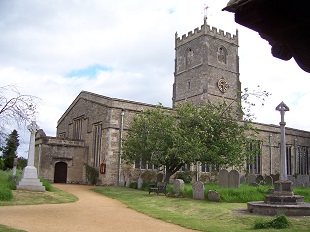 Shrivenham The village has an unusual derivation for its name, being noted around 950 A.D. as Scrifenanhamme (a river-meadow allotted by decree to the church). The Domesday Book notes it as Seriveham in 1086. There has been a settlement here since at least 400BC, and the remains of a Roman villa have been uncovered nearby. The main country estate here is the Beckett Estate, which in the 17th century was the home of Henry Marten, who was one of the most prominent commissioners to sign the death warrant for Charles I in 1649. Later the Barrington family owned the estate. At the end of World War II in Europe, the U.S. Army's Information & Education Branch established an overseas university campus for demobilised American service personnel on the Beckett Estate. The grounds of Beckett Hall have been the site of a U.K. military college since 1946. Today the Defence Academy provides higher education for personnel in the British armed forces, civil service, other Government departments, and service personnel from various other nations, with the majority of training being post-graduate. Shrivenham had a church by 1117, when Henry I granted its advowson to the Augustinian Cirencester Abbey. Little survives from the church of that time save for part of the west wall of the nave, which is late 12th century, and the font carved from Purbeck marble. By the 15th century the church building was cruciform, with a central Perpendicular Gothic tower that was built around 1400. The church was comprehensively rebuilt in 1638, the funding largely provided by the Earl of Craven. The end walls of the nave, chancel and two transepts were extended to form a rectangle. The nave is of three bays with round arches on Tuscan columns, a chancel of two bays, plus north and south aisles running the length of the nave. The back six bells date to 1908, cast by Mears & Stainbank, Whitechapel. Third and fourth by Gillett & Johnson, 1948, and the present trebles added in 2003 by Whitechapel Foundry.
Folly Tower
Buckland · SMV
Shrivenham · St Andrew
Augmentation Tour
Saturday 20th September 1986
10.15am Steeple Barton
Oxon · St Mary (5) 10cwt
11.15am North Aston
Oxon · St Mary (6) 6cwt
12.15pm Bodicote
Oxon · St John the Baptist (8) 8cwt
02.30pm Mollington
Oxon · All Saints (6) 4cwt
04.00pm Quainton
Bucks · St Mary & Holy Cross (8) 17cwt
05.15pm Aylesbury
Bucks · St Mary (8) 21cwt
07.15pm Aston Rowant
Oxon · St Peter & St Paul (6) 12cwt
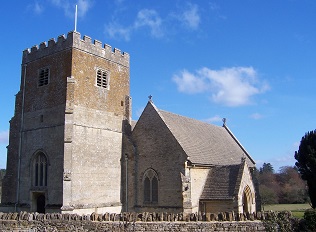
Steeple Barton · St Mary
Steeple Barton The name of the village recalls a barley farm having been here. The 1086 Domesday Survey records that a Manor of 10 hides at Barton were under the feudal overlordship of Odo, Bishop of Bayeux. Late in the 12th century Thomas St John had a set of fish-ponds constructed that were fed by the River Dorn, the remains being visible just north of the church. Near Barton Lodge are two hoar-stones that are the remains of Neolithic chamber-tombs. The former manor house at Sesswell's Barton was built around 1570 for John Dormer, and altered for the recusant Ralph Sheldon in 1678/79. The house was remodelled 1849 - 62 to Tudor Revival designs by the architect Samuel Sanders Teulon. In 1860 it was renamed Barton Abbey on the false assumption that the Augustinian Osney Abbey once had a cell here. The house was altered again early in the 20th century. Little of the original church built in the 12th century is now recognisable, except for the Norman font. The south aisle was added in the 14th century. The south porch and 5-bay arcade are both of the Decorated Gothic period. The chancel was rebuilt, and the nave and south aisle drastically restored 1850/51 under the direction of Gothic Revival architect John Chessell Buckler. St Mary's was a dependent chapelry of Sandford St Martin until late in the 16th century. The broad Perpendicular Gothic west tower was added during the 15th century and houses a set of five bells which are rung from the ground floor and are testing of ones bell-handling. Richard Keene of Woodstock cast the front two bells in 1698. Charles & George Mears of Whitechapel Foundry cast the remainder in 1851.
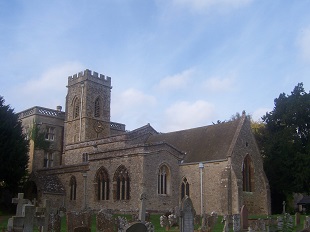 North Aston The Aston villages (Steeple, Middle & North) have stood on the western slopes of the Cherwell Valley for over a thousand years. The Domesday Book records that in 1086 Edward of Salisbury, High Sheriff of Wiltshire, held the overlordship of the Manor of North Aston. By the late 14th century the Earls of March held an estate here as part of the barony of Clifford Castle. The present North Aston Manor House is an H-shaped building of which the central part was probably the hall of a 15th century house. After the dissolution of the monasteries in 1539 the larger Jacobean North Aston Hall became the primary home of the Lords of the Manor. The Oxford Canal, completed in 1787, forms part of the eastern boundary of the parish. The Domesday Book records a water-mill within the parish on the River Cherwell. Although the mill closed commercially in 1938, grain continued to be milled for local use throughout the Second World War, and for a brief time afterwards. By 1955 it had been converted into a private residence, but its machinery has subsequently been restored. The parish church is known to have existed by 1151, when William of Aston gave it to the Augustinian Bradenstoke Priory in Wiltshire. The present building is mostly Decorated Gothic with early 14th century windows and north & south arcades. The south aisle ends in a chapel that has a 15th century Perpendicular Gothic east window, and the nave has a C15th or C16th clerestory. In 1867 the building was restored and enlarged to designs by Sir George Gilbert Scott, who had the north aisle extended. The baptismal font is in an unusual style, probably carved in the 14th century. The tower, standing almost within touching distance of the manor house, contains a ring of six bells. Henry III Bagley, who had foundries in Chacombe and Witney, cast the tenor in 1741. John Warner & Sons of London cast the fourth and fifth bells in 1866, and Taylor's of Loughborough cast the front three bells in 1979.
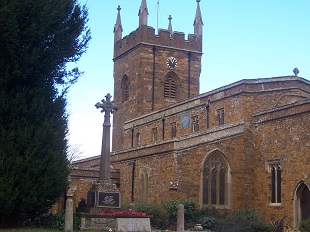 Bodicote The village name denotes "Boda's cottages", and is unusual in that it appears to have remained unaltered in its spelling since its inception as a settlement some 1000 years ago. It is situated on the "Salt Way", a road that pre-dated the Roman invasion. The Domesday Book (1086) records that a windmill stood next to the grove at the top of the settlement. Sor Brook, which forms the southern boundary of the parish, itself has a water-mill. The extensive Georgian manor of Bodicote House now serves as the main administrative office for Cherwell District Council, and contains a number of vibrant Victorian additions. John Kersey, the distinguished 17th century mathematician was baptised in Bodicote in 1616. He gained wide recognition and reputation as a teacher of the subject, and was tutor to the sons of Sir Alexander Denton, owner of Hillesden House. Kersey later dedicated his most important work to his pupils and the Denton family, this being entitled "The Elements of Mathematical Art". Today Bodicote finds itself getting ever closer to its imposing neighbour Banbury, a town which has been expanding relentlessly since the 20th century. The parish church has existed here since at least the 13th century, with its chancel arch dating from that time. The building has north & south aisles linked to the nave by 14th century arcades of three bays each, and there used to be a tower over the north aisle. During 1844 the architects John Plowman and Henry Jones Underwood effected an almost total rebuilding of the church, demolishing the old tower and replacing it with the current west tower. The back five bells were cast by Thomas II Mears of Whitechapel Foundry during 1843, with the front three bells added by the same foundry in 1974.
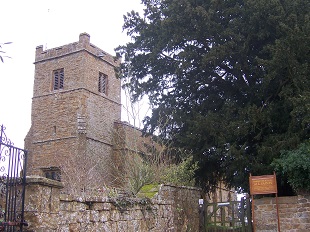 Mollington This secluded village, set on high ground, derives its name from "an estate associated with a man called Moll", being documented around 1015 as Mollintune, later in the Domesday Survey (1086) as Mollitone. The Grade II Listed parish church dates back to Norman times, when it consisted of merely of a nave, although it is now predominantly 14th century in structure. The font survives from the 13th century, with the tower having been added in the 16th century. The parish is now part of the Benefice of Shire's Edge, along with Claydon, Cropredy, Great Bourton and Wardington. The Gothic Revival architect William White restored the church building in 1856. The tower has a ring of six bells, plus a Sanctus bell cast by John Conyers of Yorkshire around 1630. Conyers had two bell-foundries, one in Kingston-Upon-Hull and the other in New Malton. Henry I Bagley of Chacombe cast the fifth bell in 1631. John Briant of Hertford cast the fourth bell in 1789. Mears & Stainbank of Whitechapel Foundry cast the third and tenor in 1875, with the same foundry more recently casting the treble and second in 1981.
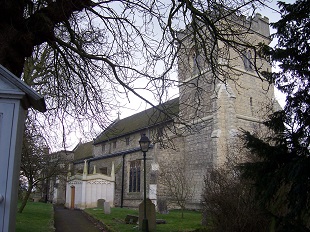 Quainton Malet This is now a large village with many classic elements still in place at present, a shop, pub, windmill, many fine Georgian houses, a row of 17th century alms-houses near the green, and a church set on high ground. Quainton is an ancient village with a Roman road serving as the parish boundary, and taking its name from Cwen (a queen) and Tun (a farm). In 613A.D. it was in the gift of Edith, a queen consort of Edward the Confessor. Along the side of the Roman road known as Gypsy Lane, a stone dated to 1641, marks the spot where Edward Boswell "King of the Gypsies" is thought to have been buried, having been executed in Aylesbury. The village has one of the finest examples of a tower-mill in England. Built in 1830 using local bricks, only half a century later, 1881, it had been abandoned and then stood derelict for nearly 100 years until its painstaking restoration began in 1975. After some twenty years of hard work it was finally restored to working order in 1997 and wheat was ground once again. Now owned by a descendant of the original owner it is open to the public, at a small charge, on Sundays. The Winwood Alms-houses, still inhabited, were built in a Gothic style of architecture, belying the construction date of 1687. They are a terrace of eight small cottages, one storey high with a row of dormers in the attics. The terrace is decorated by two porches, with a plaque above, and further adorned by diagonally placed chimney stacks. The Buckinghamshire Railway Centre is operated from Quainton Road railway station, the site being divided into two halves connected by tow foot-bridges. Each side has a demonstration line with workshop and museum buildings. Although the BRC's trains are run on the former station sidings, the station still has a working Network Rail line passing through it. The number of locomotives, carriages and assorted rolling stock housed here is now approaching the 200 mark. The parish church is a 14th century building in the Decorated Gothic style, and contains many memorial brasses and sculpture, including the tomb of Thomas Stayner (1689). Stone effigies depict the deceased lying in full armour, whilst his widow rests beside him. In the chancel are a reredos and sedilia by William White who was also responsible for the rebuilding of the chancel in 1877. The 15th century west tower contains eight bells which are rung from the ground floor. The oldest bells are the fifth & sixth, 1621, cast by Henry I Knight of Reading. The tenor, 1745, is by Thomas Lester, Whitechapel Foundry. The other bells are by Taylors of Loughborough: fourth (1957); third & seventh (1983); and the front two bells (1985). Film & Television Location Credits: Doctor Who - Black Orchid (1981), Jewel in the Crown (1984), Midsomer Murders (1997 onwards).
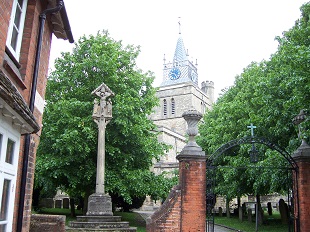 Aylesbury The county town of Buckinghamshire lies at the heart of the vale and is widely known for its Anglo-Saxon origins, although recent excavations have revealed that an Iron Age hill-fort existed here circa 650 B.C. During the 6th century Aylesbury acted as a major stronghold against the Saxons, and some 350 years later it was taken by an army of invading Danes. A documentation in the 9th century saw the town's notation as Aegelesberg (Aegl's Stronghold), with the Domesday Book recording it as Eilesberia. Once wars abated, Aylesbury grew as a trading centre, passing into the private ownership of Thomas Bullen, father of Anne Boleyn, with county town status having been conferred upon Aylesbury by King Henry VIII in 1529. In common with much of the county, Aylesbury was seriously affected by the Civil War, becoming a stronghold for the Parliamentarian forces, and in November 1642 the Battle of Aylesbury was fought and won by their troops. The town's proximity to Great Hampden, the home of John Hampden made him a local hero, with his silhouette appearing on the emblem now used by the Aylesbury Vale District Council as well as a statue standing prominently in the town centre. The Jacobean mansion of Hartwell, adjoining the south-west of the town, was the residence of the exiled future king of France, Louis XVIII. The king signed the document accepting the French crown in the library of the house after the defeat of Napoleon. Louis' wife, Marie Josephine of Savoy, died at Hartwell House in 1810 and is buried in the churchyard, the only French queen to be buried on English soil. Being established on the route of Akeman Street, the town became a commercial centre on the trade route linking London to the west. By 1477 flour was ground in substantial quantities for the surrounding parishes. The last mill in Aylesbury closed in the 1990s. In common with numerous other towns and villages in the county, lace-making had become of great importance for employment by late in the 17th century. Many women and children from poor families learned to make lace as a way of working their way out of poverty. Aylesbury's heraldic crest is centred on the world famous Aylesbury Duck, a distinctive breed of domesticated duck with pure white plumage, a pink bill, orange legs and feet. Duck rearing became a major industry in the town from the 18th century owing to the demand for white feathers as a filler for quilts. The Early English parish church has a crypt beneath the Lady Chapel. The setting of the church is in effect similar to that of a cathedral close, only on a smaller scale. The variety of housing lining the sides of St Mary's Square, including the museum and prebendal house, provides an architectural background of considerable interest and importance. Constructed on a cruciform plan, the fabric of the church is primarily 13th century, built on the site of a previous Saxon church, with this being the burial place of St Osyth. Between 1850 and 1869 the church was restored under the direction of Sir George Gilbert Scott. Although he Victorianized many parts of the building, this was a necessary renovation as at this time the church had fallen into a dilapidated state, with a leaky roof, undermined foundations, three fire engines housed in one of the chapels, and the local regiment storing their gunpowder here. The church briefly hit the national news headlines in 2013 with the discovery of an ear in the churchyard. The area was cordoned off, but subsequent forensic examination confirmed it to be a pig's ear. The tower contains a set of eight superb bells, the front four, sixth and seventh of which were cast by Pack & Chapman of Whitchapel Foundry in 1773. The fifth (1854) and tenor (1850) are both by Charles & George Mears at the same foundry. Film and Television Location Credits: EastEnders (2013).
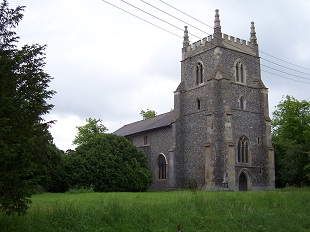 Aston Rowant The village takes its name from Rowand de Eston, an important landowner here in the mid 13th century, when the settlement was documented as Aston Roaud. The village extends across the Chilterns escarpment, from the National Trust owned Aston Wood up to Beacon Hill. Much of the land here is managed by the National Trust or Nature Conservancy, with some 70 acres designated as a nature reserve. Adjacent to the village are the grounds of the Aston Park Stud, with bridleways leading to and from forest offering superb views of chalk grassland and beech-wood, with over 100 species of plant open to view. The close grazing of sheep and rabbits maintains the area and produces typical down-land plants such as horseshoe vetch, oxeye daisy, salad burnet and marjoram orchid. Like all the settlements along the foot of the Chilterns it borders the course of a small stream, in this instance Holbrook. The majority of the older housing is a mixture of brock and flint, with a manor house having stood here since 1352, the original mansion being replaced during the 17th century, and owned by the Dashwood family until 1950. The house burned down in 1956 and now bungalows stand on what were extensive grounds. The one and a half acre village green is enhanced by an array of trees and daffodils in blossom and bloom in Spring. Around the green are cottages which were mainly built during the 18th and 19th century. Although a place of worship has stood on the same elevated site since Saxon times, the oldest parts of the present church are the Norman north and south walls of the nave from around 1100. The chancel was rebuilt late in the 13th century in the Decorated Gothic style. The north and south aisles, and the tower were added in the 14th century in the same style. The tower had a spire until 1811, when it was removed in order to carry out repairs on the tower, but then never rebuilt. E.G. Bruton restored the church in 1884. The bells are a testing six which are rung from the ground floor. The oldest bell, the fourth, was cast in 1450 by Roger Landen of Wokingham foundry. Ellis I Knight of Reading cast the second, third and tenor in 1625. The fifth, 1873, cast by John Warner, Cripplegate. Treble added, 1975, by Whitechapel foundry. Film & Television Location Credits: Midsomer Murders (1997 onwards).
North Aston · St Mary
Bodicote · St John
Mollington · All Saints
Quainton · St Mary
Aylesbury · St Mary
Aston Rowant
River Thames
Saturday 12th April 1986
10.30am Hambleden
Bucks · SMV (6) 11cwt
11.30am Henley on Thames
Oxon · St Mary (8) 21cwt
02.00pm Wallingford
Oxon · St Mary le More (now a 10) 18cwt
03.00pm Brightwell cum Sotwell
Oxon · St Agatha (8) 10cwt
04.00pm Nettlebed
Oxon · St Bartholomew (6) 6cwt
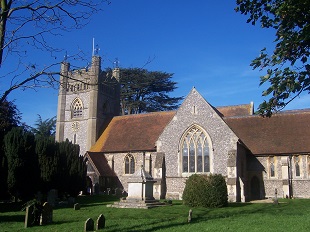
Hambleden · SMV
Hambleden Originally known as Hamelan Dene (an undulating valley) in 1015, the settlement here is documented as Hambledene in the Domesday Book (1086). The village has often been confused with Hambledon in Hampshire, where cricket is considered to have been first played. Highly eclectic, like its near neighbour Turville, the village is a veritable magnet for film and television productions due to the epicentre which is little changed since early in the 10th century. Long owned by the Smith family, of the W.H. Smith newsagents dynasty, the village was bought by an American billionaire in 2008 who initially imposed a ban on all location filming, but has since partially relented. The parish also includes Fingest, Frieth, and the hamlets of Colstrope, Mill End, Moor End, Parmoor, Pheasant's Hill and Skirmett. Built around the Hamble stream, the village is most recognised by its parish church, with its meticulously maintained churchyard, the village shop, brick & flint cottages, and an historic country pub, all of which are to be found within a few hundred yards of each other. The strikingly large church is often referred to as "The Cathedral of the Chilterns", dating primarily from the 14th century, although it has been modified over the years, the original Norman building having been cruciform in shape. The first tower collapsed in 1703, with its replacement constructed of flint and completed in 1721, with an additional stage added in 1833. The chancel arch and chapels are entirely Victorian, with a Norman font and a 14th century sedilia and piscina. In the churchyard is the Grade II Listed Kendrick Mausoleum of 1750, built by Clayton Kendrick for his father John and sister Elizabeth. The bells were augmented to an eight in 2007 as part of a general refurbishment. The oldest bell here is the tenor, 1420, Wokingham Foundry. Fourth & fifth, 1634, by Ellis I Knight of Reading. Seventh, 1778, Pack & Chapman, Whitechapel. Sixth, 1857, John Warner & Sons, London. Third, 1954, Mears & Stainbank. The treble & second were added by Hayward Mills Associates, Nottingham, 2007. Film & Television Location Credits (selected): Chitty Chitty Bang Bang (1968), Death on the Nile (1978), Still Crazy Like a Fox (1987), Poirot (1989 onwards), Midsomer Murders (1997 onwards), 101 Dalmations (1996), Sleepy Hollow (1999), Band of Brothers (2001), Nanny McPhee 2 (2010), New Tricks (2013).
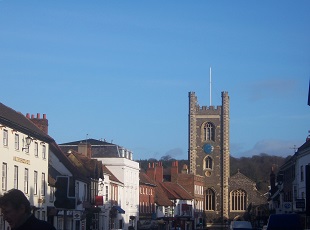 Henley on Thames Occupying a beautiful natural situation beside the River Thames, Henley is easily one of the finest riverside towns in the country, being known the world over for the yearly regatta held in early July that attracts top class rowers from many countries. The rowing events in the 1908 & 1948 London Olympics were actually held on the river here. Reputed to be the oldest settlement in the county, the name is Saxon in origin, with an early account noting that Henley was a hamlet attached to the Manor of Bensington. Its position on a road from London to Oxford saw sustained growth from the 12th century due to the river crossing here. The present bridge dates to 1786, but it is known that a previous bridge spanned the river as early as 1514. The main industry of the burgeoning town was malting, although trading in timber and corn by river to London was also of note. The propensity of coaching inns around the town attests to the welter of trade in the 18th century. In the wake of recent British success in the Olympics there is now a River & Rowing Museum by Mill Meadows adjacent to the river on the western side of the town. In 1829 the first Varsity Boat Race was contested on the river here, with the first Regatta being held ten years later. The town is also noted for its Literary Festival and the Kenton Theatre which is the fourth oldest surviving theatre in England. The town is also notable for returning high-profile MP's to Westminster over the years, such as Michael Heseltine and Boris Johnson. The primarily 15th century parish church of St Mary dominates the southern end of the High Street, situated as it is overlooking the bridge that spans the Thames as it serves as the boundary between counties. The main body of the church is externally of chequered flint and stone, with an interior that has been extensively restored. The nave and chancel are Victorian in character, the oldest feature being an effigy, dated 1621, that depicts Lady Elizabeth Periam, who the local Blue-Coat school was named after. Bordering the churchyard are the 16th & 17th century alms-houses that were also subject to considerable rebuilding during Victorian times. Directly across the road from the church is the Speaker's House, which is a superb 16th century building that was the birthplace of William Lenthall, Speaker of Parliament during the reign of Charles I. The imposing checkerboard tower has tall corner turrets, building work that was specifically ordered by John Longland, Bishop of Lincoln (1521 -47). There are extensive views up and down the River Thames from atop the tower. Of the eight bells here, six were cast in 1813 (second. fourth, fifth, sixth, seventh and tenor) by Thomas II Mears of Whitechapel. The treble (1928) and the third (1977) were cast at the same foundry. Film & Television Credits (selected): The Living Daylights (1987), Howards End (1992), Midsomer Murders (1997 onwards), Downton Abbey (2010 onwards).
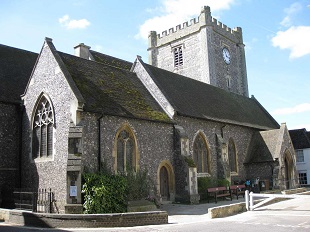 Wallingford Documented as Wallingford (ford of the Wealh tribe) around 895 A.D., the town has long held an important place in history, due largely to its situation at a particularly convenient ford where the River Thames is shallower and flows over a hard bed. Converging upon this ford were several ancient roads, and Roman, Saxon and Norman fortresses have defended the crossing at various times. By the Saxon era had become a place of pivotal importance, and for over 300 years, from the reign of King Athelstan, it possessed a Royal Mint. With the coming of the Norman Conquest it was here that William crossed the Thames. In 1142 the Empress Maud sought refuge here, and in 1155 the town received its first charter from Henry II, who had concluded a treaty with Stephen which ended the war and secured his succession. In later centuries the town played a significant role in matters concerning nobility, especially through its Governors. During the Civil War the town supported the Royalists and as a result its castle was destroyed by Cromwell's victorious army in the 1650s.
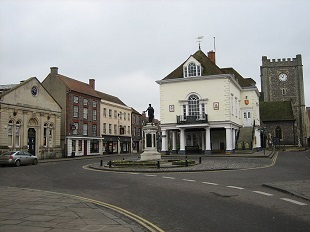 The following century the church was restored to a great extent, thanks in part to Judge William Blackstone who wrote the first major commentary on the Laws of England and which later formed the inspiration for the American Constitution. The town's museum is based in a 16th century house which is on the site of the former Benedictine Priory. Wallingford Museum includes "The Wallingford Story" an exhibition that consists of a walk through time, from the Saxons onwards, including a model of the town's royal castle, a Victorian street scene with walk-in shop, a pub, a workshop and recent archaeological finds. The theatre (oft seen in Midsomer Murders) is a conversion from the 19th century Corn Exchange. Although not as well known as Henley Regatta, there was a form of organised boating in Wallingford as far back as 1861. By 1949 it had expanded into what was known as "Wallingford Skiff Regatta". The regatta was held on the same reach in the town for most of its existence, but river conditions caused problems, and in 2001 the regatta moved to its current course on Dorney Lake. The church of St Mary le More stands at the centre of the town, almost directly behind the town hall, overlooking the market square. The church existed by 1077, when the advowson belonged to St Albans Abbey. The nave and aisle were originally built in the 13th & 14th century and the chancel slightly later, but all were rebuilt in 1854 to designs by the Gothic Revival architect David Brandon. The west window of the north aisle has stained glass made in 1856 by Thomas Willement, and the pulpit was made in 1888 by celebrated sculptor Edward Onslow Ford. The lower part of the broad west tower is 12th century, with the upper stages rebuilt 1653 in the Perpendicular Gothic style. A ring of eight bells was cast in 1738 by Richard Phelps & Thomas Lester of Whitechapel Foundry. Mears & Stainbank, of the same foundry, re-cast what is now the fourth bell in 1887. The front two bells were added in 2003, also by Whitechapel. Film & Television Credits: Midsomer Murders (1997 onwards).
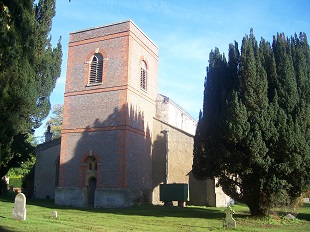 Brightwell cum Sotwell Until as recently 1948 the two parishes (Brightwell & Sotwell), inhabited since Saxon times, were still separate from one another. Today the village is noted for its plethora of black & white cottages. The various flowers to be found in the gardens of Mount Vernon were developed by Dr Edward Bach as a tincture for homeopathic remedies. To animal lovers the village is known as being the home of the Island Farm Donkey Sanctuary that has been rescuing and looking after donkeys for several years. Brightwell also has a vineyard and one of the country's leading producers of honey and beeswax candles. The church stands within the confines of what was once a castle-moat, the castle having been destroyed in 1153 after the peace between King Stephen and Henry, Duke of Anjou (later Henry II) broke down. Parts of Brightwell House, the replacement for the castle, date from 1605. Also at this end of the village is the elegant Victorian clock-tower of the village hall, which formerly served as the school. The first church here was built in 1135 on the site occupied by the present building. An on-going course of rebuilding and enlargement had begun by 1200, with a south aisle added and an arcade pierced through the Norman wall. The tower was re-modelled and heightened as the chancel was rebuilt. In the 14th century the north aisle was added, followed by a porch, then the nave was heightened and clerestory constructed. After the restoration relatively little was altered until the tower collapsed in 1796. The somewhat incongruent brick tower we see today was erected in 1808 at the expense of the parish. The last significant restoration of the church was in 1858, overseen by Benjamin Ferrey, with much re-arrangement to the interior and Bath-stone facing added to the south aisle. The bells are rung from the ground floor and require a certain amount of deft handling. The oldest bells (3, 4, 5, 6, 7) were cast in 1808 by Thomas Mears, Whitechapel Foundry. Tenor (1908) and front two bells (1968) all from the same foundry.
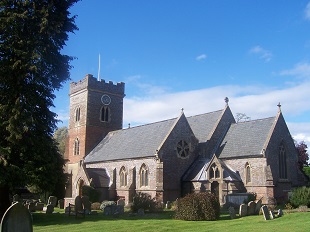 Nettlebed The name of the village derives from the proliferation of nettles in this area in centuries past, with a degree of local employment resulting from the nettles yielding a thread that could be made into linen cloth. Although the settlement was not mentioned in the Domesday Book it is known that there was a Roman encampment here, with their soldiers thought to have rubbed nettles on their limbs as a way of keeping warm. Numerous Stone-Age tools found in local earthworks are now in the Ashmolean Museum, Oxford. Nettlebed stood on what was long a main coaching route between London and Oxford. Some 800 years ago is part of the Chilterns was recognised to be rich in the type of clay suitable for potters and brick-makers. Nettlebed thus developed as a brick-making centre and expanded rapidly during the 18th century as the demand for clay-ware grew across the country. Bricks continued to be made here up until the 1930s, with the remaining 18th century kiln later adapted for burning lime. The famed Ravenscroft lead crystal table-glass made in Henley from 1674 onwards was only able to come into existence in the form we now know due to the specific sand sent from Nettlebed which enabled Ravenscroft to change his formula. There has been a church in Nettlebed for some 1000 years, the present parish church being the third building here, dating from 1846 - 56. It is set amidst Georgian houses along the High Street, and is constructed of grey brick with stone dressings. The organ chamber was added in 1872, with the stained-glass in the east window as recent as 1970. One of Britain's most celebrated stage and screen stars, Dame Celia Johnson (Brief Encounter, This Happy Breed, In Which We Serve) is buried in the churchyard here. The bells are an excellent six, cast at Whitechapel in 1846, with no foibles since being re-hung in a steel frame in 2000, and the clock mechanism having been updated so as not to need the wires in the ringing chamber that were apt to catch on the ropes. Film & Television Location Credits: Midsomer Murders (1997 onwards).
Henley · St Mary
Wallingford · St Mary

Wallingford
Brightwell cum Sotwell
Nettlebed · St Bartholomew
A record of outings 1984
by Hugh Deam
Buckinghamshire
Saturday 13th October 1984
1.30pm Buckingham
St Peter & St Paul (8) 22cwt
2.45pm Stony Stratford
St Mary & St Giles (8) 12cwt
3.45pm Shenley
St Mary (6) 17cwt
5.00pm Bletchley
St Mary (8) 15cwt
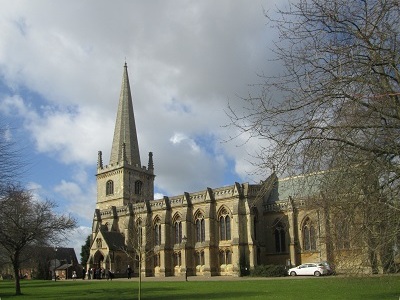
Buckingham · St Peter
Buckingham The earliest known settlement here was located around the top of a loop in the River Great Ouse, now the site of the campus for the University of Buckingham. Between the 7th and 11th century the town regularly changed hands between the Saxons and the Danes. Buckingham received its town charter in 1554 with the creation of a Free Borough. A massive fire raged through the town centre on March 25th 1725, with the consequence that many of the main streets were destroyed. The plenitude of Georgian architecture in the centre of this county town is the result of the rebuilding programme. The 18th century Old Gaol at the heart of Buckingham now serves as the town's museum. Buckingham has had some high profile Members of Parliament such as Robert Maxwell and John Bercow, Speaker of the House of Commons since 2009.
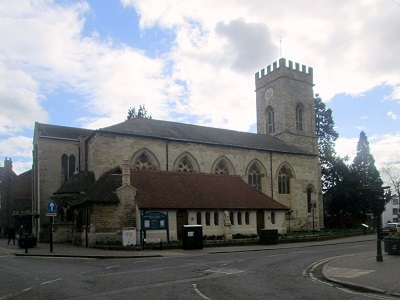 The parish church stands on Castle Hill, this being a late 18th century replacement for the original church, which had an unfortunate history of either tower or spire collapsing. The collapse of 1776 proved the final straw, and this slightly less ambitiously designed building at a different site was consecrated on 6 December 1780. All of the bells, with the exception of the second, date to 1782, cast by Chapman & Mears of Whitechapel, the second being cast there in 1956.
Stony Stratford Since at least Roman times, there has been a settlement here at what was the ford of Watling Street over the Great Ouse. Due to the juxtaposition of the pubs in the town (The Cock and The Bull), it is believed that the phrase “a cock and bull story” derived from these former coaching inns. Also amongst local legend is that Richard III secured the uncrowned Edward V in a house here prior to sealing his fate in the Tower of London, and that highwayman Dick Turpin and his horse were winched to an upper storey of a pub here in order to evade the law.
The parish church stands on Castle Hill, this being a late 18th century replacement for the original church, which had an unfortunate history of either tower or spire collapsing. The collapse of 1776 proved the final straw, and this slightly less ambitiously designed building at a different site was consecrated on 6 December 1780. All of the bells, with the exception of the second, date to 1782, cast by Chapman & Mears of Whitechapel, the second being cast there in 1956.
Stony Stratford Since at least Roman times, there has been a settlement here at what was the ford of Watling Street over the Great Ouse. Due to the juxtaposition of the pubs in the town (The Cock and The Bull), it is believed that the phrase “a cock and bull story” derived from these former coaching inns. Also amongst local legend is that Richard III secured the uncrowned Edward V in a house here prior to sealing his fate in the Tower of London, and that highwayman Dick Turpin and his horse were winched to an upper storey of a pub here in order to evade the law.
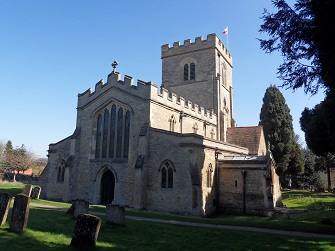 What is indisputable is that the town became an important resting and exchange point during the stage-coach era. Great notaries such as Pepys, Johnson, Defoe and Dickens all spent time in the town. The church was originally built in the 15th century as a chantry chapel, but having become dilapidated by the late 18th century it was, with the exception of the tower, entirely rebuilt in Gothic style, 1776. Of the eight bells in the tower, the back six were cast in 1838 at Taylor's then foundry in Oxford. The front two bells were added in 1923, cast at their new foundry in Loughborough.
Shenley See Saturday 19th March 2011 for details.
Bletchley Having long been little more than a hamlet on the road from Fenny Stratford to Buckingham, urban growth came from the arrival of the London & North Western Railway in 1845, and its subsequent junction with the Oxford to Cambridge “Varsity Line”.
What is indisputable is that the town became an important resting and exchange point during the stage-coach era. Great notaries such as Pepys, Johnson, Defoe and Dickens all spent time in the town. The church was originally built in the 15th century as a chantry chapel, but having become dilapidated by the late 18th century it was, with the exception of the tower, entirely rebuilt in Gothic style, 1776. Of the eight bells in the tower, the back six were cast in 1838 at Taylor's then foundry in Oxford. The front two bells were added in 1923, cast at their new foundry in Loughborough.
Shenley See Saturday 19th March 2011 for details.
Bletchley Having long been little more than a hamlet on the road from Fenny Stratford to Buckingham, urban growth came from the arrival of the London & North Western Railway in 1845, and its subsequent junction with the Oxford to Cambridge “Varsity Line”.
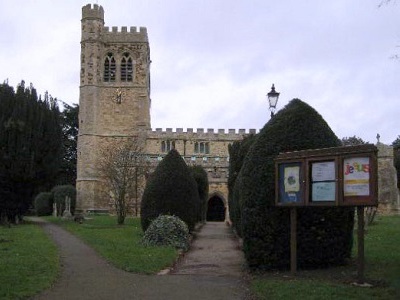 The town is undoubtedly most widely known for Bletchley Park, estate land which covered nearly 600 acres. The mansion began life as a large farmhouse, latterly being expanded to incorporate Victorian Gothic, Tudor, and Dutch Baroque designs. In 1938 the mansion was due to be demolished, but before this could take place the Director of Naval Intelligence, Admiral Sir Hugh Sinclair, commandeered the site, and the first wave of the Government Code and Cypher School moved in a year later. The intelligence produced from de-crypts here (code-named Ultra) contributed greatly to the Allied success in the Battle of the North Atlantic, North Africa and the D-Day landings. The site is now administered by a Trust, and housed here is the National Museum of Computing. The parish church dates in its oldest parts to Norman times, with the west tower from the 15th century. Rather unusually, the front four bells are the oldest, cast during the early part of the 18th century by Rudhall of Gloucester. The back four bells were all cast at different foundries; Loughborough (5), Whitechapel (6), Oxford (7) and Croydon (tenor).
Stony Stratford · St Mary
Shenley · St Mary

Bletchley · St Mary