Outings 2003 - 2000
by Hugh Deam
South Oxfordshire
Saturday 29th November 2003
09.25am Sunningwell
Oxon · St Leonard (6) 8cwt
10.20am Marcham
Oxon · All Saints (6) 8cwt
11.20am Milton
Oxon · St Blaise (8) 9cwt
12.25pm Chilton
Oxon · All Saints (6) 8cwt
01.15pm The Rose & Crown
Chilton
Heather Banyard, Jonathan Beale, Jane Burgess, Ron Burgess, Jonathan Cresshull, Hugh Deam, Andrew Dunn, Simon Edwards, Keith Godfrey, Adrian Gray, Anthony Hughes, Steve Jeffrey, Roy Jones, Susan King, Janice Knowles, Peter Lloyd, Susan Morrison, Roy Peach, Sue Reynolds, Charles Smith, Leon Thompson and Serge Zvegintzov.
Grandsire Triples, Cambridge, St Clements, Double Oxford & Stedman.
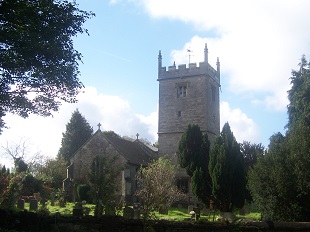
Sunningwell · St Leonard
Sunningwell A settlement was documented as being here in the 9th century, when it was known as Sunninguuille (a spring or stream belonging to the followers of Sunna). As with dozens of villages to the south of Oxford, Sunningwell was in the county of Berkshire until the boundary reorganisation of 1974. The Sunningwell School of Art is based in the Old School opposite the church. The centre is most notable for its purpose-built pottery. The Flowing Well pub is a widely known and well used destination for walkers and bikers, situated as it is on a sharp bend at the eastern entrance to the village. The earliest parts of the parish church date to the 13th century, the nave and chancel being from this time. Late in the 15th century the south transept and north tower were constructed, and the nave was given Perpendicular Gothic windows and an embattled parapet. The Elizabethan polygonal west porch, with Ionic columns, was given by John Jewel, Bishop of Salisbury, who had been rector here in 1551. The church was restored by J.P. Seddon in 1877, with the stained-glass designed by William Morris. The bells are rung from a room that is in a well below the level of the entrance. The oldest bell is the tenor, 1653, cast by Henry II Knight of Reading. The middle four bells are all from Whitechapel, 1857, by Charles and George Mears. The treble was added in 1933.
Marcham See Saturday 20th April 1996 for details.
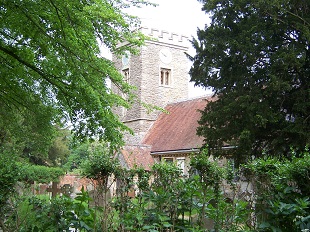 Milton The village is now somewhat boxed in by the major roads north of Didcot, but thankfully retains a relatively rural idyll at its core. Milton was among a number of estates that Henry VII granted to Baron Wriothesley, 1st Earl of Southampton, in 1546, with Wriothesley selling it that same year to Thomas Calton, a London goldsmith. In 1709, Paul Calton married Catherine, daughter of Admiral Benbow, one of England’s most successful naval commanders. Milton House, constructed of yellow and red brick, was built for the Calton family in the 17th century. The original part of the house is of five bays and three storeys high. Peter the Great, Tsar Peter I of Russia, is said to have stayed here whilst consulting Admiral Benbow on naval matters. The parish church is located adjacent to the entrance to the manor house, and is dedicated to St Blaise, patron saint of the wool trades, that having been a major part of the mediaeval economy here.
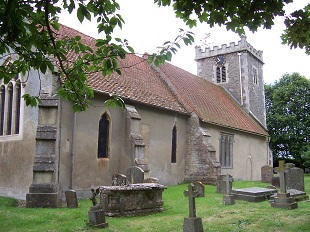 The church was originally built in the 14th century, but only the porch, lower part of the tower and part of the nave survive from this time. The upper part of the tower was rebuilt in the 18th century, with the nave, chancel and 4-bay north aisle being rebuilt by the Gothic Revival architect Henry Woodyer in 1849 – 51. The tower has a ring of eight bells, all cast in 2001 at Whitechapel. Five of the old bells were sold to St Michael’s church, Hackthorn, Lincolnshire. One of Richard Keene’s 1682 bells has been retained in the tower.
Chilton The village was noted as Cylda tun around 895 A.D., with a Domesday Book (1086) notation as Cilletone. A section of Grim’s Ditch, an Iron Age earthwork from 300 B.C., forms part of the southern boundary of the parish. The name "Grim" was one of several used to describe the Anglo-Saxon God Woden, literally meaning "the masked one".
The church was originally built in the 14th century, but only the porch, lower part of the tower and part of the nave survive from this time. The upper part of the tower was rebuilt in the 18th century, with the nave, chancel and 4-bay north aisle being rebuilt by the Gothic Revival architect Henry Woodyer in 1849 – 51. The tower has a ring of eight bells, all cast in 2001 at Whitechapel. Five of the old bells were sold to St Michael’s church, Hackthorn, Lincolnshire. One of Richard Keene’s 1682 bells has been retained in the tower.
Chilton The village was noted as Cylda tun around 895 A.D., with a Domesday Book (1086) notation as Cilletone. A section of Grim’s Ditch, an Iron Age earthwork from 300 B.C., forms part of the southern boundary of the parish. The name "Grim" was one of several used to describe the Anglo-Saxon God Woden, literally meaning "the masked one".
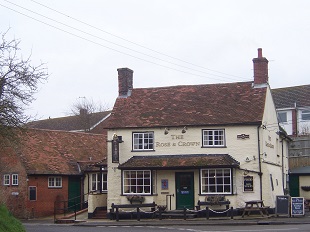 The pre-historic Ridgeway passes close to the southern fringe of the village. Today the southern part of the Harwell Science & Innovation campus, including the Rutherford Appleton Laboratory, lies within the parish. This pretty village belies its proximity to the busy A34, retaining its ambience of down-land tranquillity.
The village pub, the Rose & Crown, is one we have used on several occasions during our excursions. The parish church at the other end of the village retains its 12th century nave and 14th century chancel. The stone tower is Victorian, with bells that date from 1623 to 1892. The fourth bell is the oldest, cast by Ellis I Knight of Reading. The fifth is from the same foundry by Ellis II & Henry III Knight, 1665. William & Robert Cor of Aldbourne cast the third bell in 1710. The other bells were cast by Mears & Stainbank, Whitechapel. The bells were silent for some time (1959 – 2000) due to severe structural problems, but were restored around the Millennium, along with the clock. The ringing room is cleverly designed so as to maximise the use of the space available, with the bells being as flawless as you can hope to find.
The pre-historic Ridgeway passes close to the southern fringe of the village. Today the southern part of the Harwell Science & Innovation campus, including the Rutherford Appleton Laboratory, lies within the parish. This pretty village belies its proximity to the busy A34, retaining its ambience of down-land tranquillity.
The village pub, the Rose & Crown, is one we have used on several occasions during our excursions. The parish church at the other end of the village retains its 12th century nave and 14th century chancel. The stone tower is Victorian, with bells that date from 1623 to 1892. The fourth bell is the oldest, cast by Ellis I Knight of Reading. The fifth is from the same foundry by Ellis II & Henry III Knight, 1665. William & Robert Cor of Aldbourne cast the third bell in 1710. The other bells were cast by Mears & Stainbank, Whitechapel. The bells were silent for some time (1959 – 2000) due to severe structural problems, but were restored around the Millennium, along with the clock. The ringing room is cleverly designed so as to maximise the use of the space available, with the bells being as flawless as you can hope to find.
Milton · St Blaise
Chilton · All Saints
The Rose & Crown · Chilton
Buckinghamshire
Saturday 15th November 2003
10.15am Ludgershall
SMV (5) 9cwt
10.45am Wotton Underwood
All Saints (6) 10cwt
12.30pm Bledlow
Holy Trinity (8) 12cwt
01.30pm The Lions of Bledlow
Bledlow
Steve Davies, Hugh Deam, Simon Edwards, Clare Fairbairn, Nicholas Hartley, Steve Jeffrey, Roy Jones, Susan King, Janice Knowles, Peter Lloyd, Bernard Masterman, Leon Thompson and Richard Verrall.
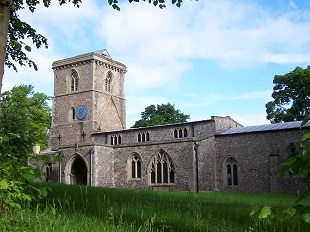
Bledlow · Holy Trinity
Ludgershall & Wotton Underwood See Saturday 28th March 1998 for details.
Bledlow A quintessential Chilterns village, Bledlow is probably most famous for the ridge to the east, with the name deriving from the burial mound of Bledda. The ancient road known as the Icknield Way existed on what is now the general course of the village. There are several springs here which form a pool called The Lyde, with the brook that runs from the pool into the nearby valley having provided the water power for two mills in years gone by. The surviving water-mill is now a popular tourist attraction. The well-known 16th century pub The Lions of Bledlow is very extensive due to its being the result of three cottages having been converted into just one. The hostelry is replete with low-beamed ceilings, inglenooks and a generously proportioned fireplace, so it should come as no surprise that this is one of the most famous in the Chilterns, featuring in any self-respecting Good Pub Guide or Pub Walks Guide. The pub and the church have been chosen regularly as locations for ITV’s Midsomer Murders. The Grade 1 Listed 12th/13th century Romanesque church stands on high ground overlooking the Vale of Aylesbury, and is built of flint with dressings of limestone, and designed on an unusual plan. There are two aisles and the nave arcades include capitals of about 1200. The nave has six huge pillars, each with different foliage patterns at the top, and the south porch contains the oldest surviving doors in the county. The building was subject to a general restoration during 1909. The excellent bells here are rung from the ground floor and were augmented by Whitechapel in 1983, the front three bells dating from this time. The tenor is of 1842, cast by William & John Taylor of Oxford, and the other bells are from 1683, cast by Richard Keene of Woodstock.
South Warwickshire
Saturday 11th October 2003
10.30am Church Lawford
Warks · St Peter (6) 7cwt
11.30am Ryton on Dunsmore
Warks · St Leonard (8) 9cwt
12.30pm Stoneleigh
Warks · St Mary (6) 10cwt
01.30pm The Malt Shovel
Bubbenhall
03.00pm Bubbenhall
Warks · St Giles (6) 5cwt
04.00pm Radford Semele
Warks · St Nicholas (6) 9cwt
St Mary · Stoneleigh
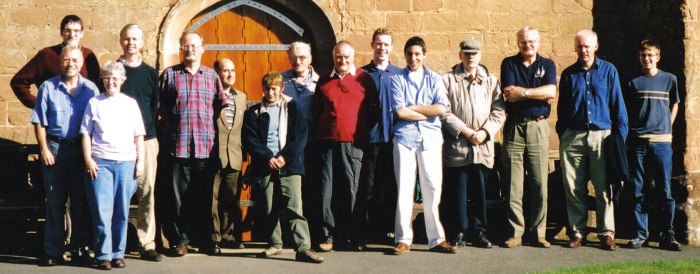
Ron Burgess, Jonathan Beale, Bob Benstead, Jane Burgess, Jonathan Cresshull, Hugh Deam, Andrew Dunn, Simon Edwards, Nicholas Hartley, Steve Jeffrey, Roy Jones, Susan King, Janice Knowles, David Lane, Peter Lloyd, John Lonsborough, Bernard Masterman, John Pusey, Leon Thompson and Richard Verrall.
Yorkshire Major, Cambridge Major, Double Norwich, Stedman Triples, Grandsire Triples, London, Ipswich, Double Oxford, St Clements & Plain Bob Minor.
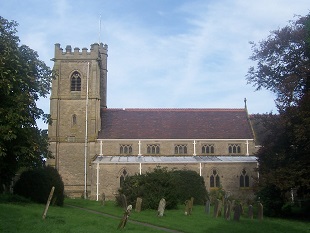
Church Lawford · St Peter
Church Lawford The Lawford villages were given their affixes in 1235, Chirche Lalleford and Long Lalleford. The first church here was constructed in the 13th century, with its replacement dating to 1872 – 74. Remains of its predecessor are to be found in the fields surrounding the current building. We were given the warmest of welcomes here on this day, with tea, coffee, biscuits and cake laid on, thus making for a fine start to the day. The tower, which rises in three stages divided by string-courses, has buttresses at each angle, and a battlemented parapet with gargoyles at each angle. On the north side is the tower staircase splayed to an octagonal battlemented turret. All of the bells are from the Taylors foundry at Loughborough, with the back three from 1872 and the front three from 1937.
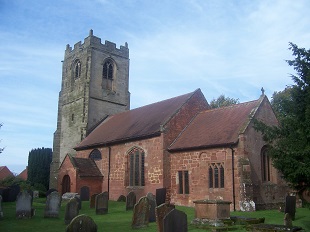 Ryton on Dunsmore First noted as Ruyton (a farm where rye is grown) in 1045, the addition of Dunsmore came about during the 12th century, this being the old district name. Lady Godiva’s husband, Earl Leofric, gifted the parish to Coventry Priory in 1043. Lady Godiva most famously rode naked on horseback through Coventry in protest against high taxes. In 2012, a 6metre high puppet depiction of her, powered by 100 cyclists, paraded through Ryton on its way from Coventry to London as part of the London 2012 Festival prior to the Olympic Games. For nearly sixty years motor cars were manufactured in Ryton, originally constructed by the Rootes Group in 1940 to build aircraft engines. After the war the site was converted to car making, being taken over by Chrysler in the 1960s. They too ran into financial problems and sold out to Peugeot, the car plant finally ceasing production in 2006. Nowadays Coventry City F.C. having their training ground in Ryton. The parish church is early Norman and situated on high ground on the other side of the A45 from the greater part of the village. The main entrance is through a fine Norman doorway. The church is constructed of distinctive red sandstone and contains 18th century lunette windows, Jacobean pulpit, and turned-oak balustrade altar rails from the 17th century. The 14th century tower contains a fine set of eight bells, the front five being late 20th century additions by Taylors of Loughborough. The oldest bell is the seventh, cast in 1590 by William Watts of Leicester. Tenor is from 1653 by John Martin of Worcester. Sixth is from 1864, George Mears, Whitechapel.
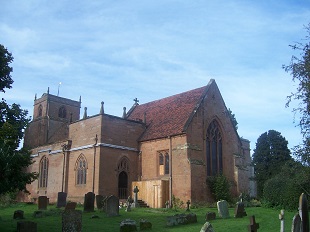 Stoneleigh The first sighting of Stoneleigh (a stony woodland clearing) on crossing the elegant bridge over the River Sowe has long been recorded as having no peer in the rest of the county, with picturesque riverside meadows surrounding the village; also on view are late 16th century almshouses. Stoneleigh Abbey was founded in 1154 by the Cistercian Order, and from 1561 to 1990 it was the home of the Leigh family. In 1996 ownership of the Abbey and its 690acre grounds was transferred to a charitable trust. Stoneleigh Park (previously known as the National Agricultural Centre) hosted the Royal Show until 2009. England’s biggest annual agricultural show was held from 1839 to 2009 (at Stoneleigh from 1968 to 2009), but the diminution of farming led to its cessation, a fate which has befallen many such shows in recent years. Stoneleigh has not had a public house for over a century, and the reason has nothing to do with the modern-day travails of the pub trade.
 All three pubs here in late Victorian times were forced to close by Lord Leigh after his daughter was laughed at by drunks when she was going to church on a tricycle. The parish church is constructed of red sandstone, dating from Norman to Perpendicular period. The interior includes a 12th century font and high quality 20th century tapestry work. The bells are a sublime ring of six that make you want to re-visit. The oldest bell is the third (1525) by John Wooley of Nottingham. The fourth and tenor (1622) are by Hugh Watts of Leicester. The second (1752) was cast by Thomas I Eayre of Kettering. The fifth (1792) is by John Briant of Hertford, and the current treble was added in 1962 by Taylors of Loughborough.
Bubbenhall The village derives its name from the Anglo-Saxon "Bubba’s Hill", being situated along the boundary formed by the River Avon between the Forest of
All three pubs here in late Victorian times were forced to close by Lord Leigh after his daughter was laughed at by drunks when she was going to church on a tricycle. The parish church is constructed of red sandstone, dating from Norman to Perpendicular period. The interior includes a 12th century font and high quality 20th century tapestry work. The bells are a sublime ring of six that make you want to re-visit. The oldest bell is the third (1525) by John Wooley of Nottingham. The fourth and tenor (1622) are by Hugh Watts of Leicester. The second (1752) was cast by Thomas I Eayre of Kettering. The fifth (1792) is by John Briant of Hertford, and the current treble was added in 1962 by Taylors of Loughborough.
Bubbenhall The village derives its name from the Anglo-Saxon "Bubba’s Hill", being situated along the boundary formed by the River Avon between the Forest of
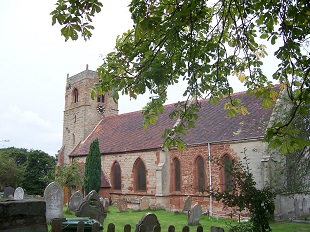
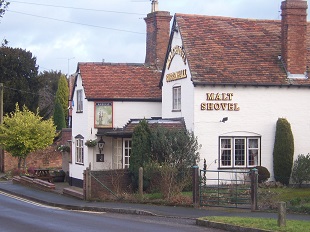 Arden and the more open area of Feldon. For several centuries there were a goodly number of smithies in the village, but none now exist, the last one having been situated opposite the Malt Shovel pub. The medieval parish church stands at the end of a chestnut-tree lined lane and was restored in the 1860s, with new pews installed and the addition of a vestry. There is a fine triple chancel, and quality stained-glass from 1901 by Kempe. In the early 19th century the original three bells were rung every year to commemorate the uncovering of the Gunpowder Plot and the anniversary of George III’s coronation. Four new bells were cast in 2000 by Taylors of Loughborough. The old second bell is now the tenor, having been cast in 1670 by Henry I Bagley of Chacombe. The fifth bell is the oldest, 1600, cast by Newcombe of Leicester. The old treble, also by Newcombe, was retained as the clock bell.
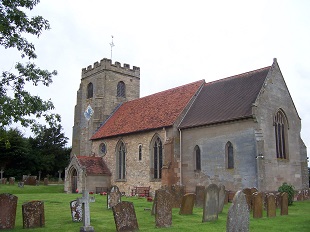 Radford Semele The settlement here at the time of the Domesday Survey was known as Redeford (a place of red soil), the manorial affix dating to 1314 (Radeford Symely) and denoting the Saint Pierre de Semilly family, Lords of the Manor from the 12th century. A poorly preserved Roman villa was excavated in 1974 near Pounce Hill Farm just to the south of the village. The Weedon to Leamington railway line used to run through the heart of the village and has been turned into a cycleway that is part of the National Cycle Network. The 14th century parish church was extensively rebuilt in 1889, with the bells proving an eclectic ring of six. Since this time a fire on 16 March 2008 left the church as just a shell of a building. Initially the cause of the blaze was not thought deliberate, but on closer analysis it was found to be arson. The church’s records and silverware were saved as they were in a fire-proof vault, but nonetheless the estimated cost for repair was £2miillion. The building has been cocooned in scaffolding for several years, with the re-construction due to be completed by 2014. Although the tower mostly survived the ravages, the bells had to be removed and were due for re-installation by 2013/14, with the ringing chamber having been totally overhauled.
Ryton on Dunsmore
Stoneleigh · St Mary
Bubbenhall · St Giles
The Malt Shovel · Bubbenhall
Radford Semele · St Nicholas
Pang Valley, Berkshire
Saturday 31st August 2003
10.15am Stanford Dingley
St Denys (6) 6cwt
11.30am Hampstead Norreys
St Mary (6) 10cwt
12.30pm Yattendon
St Peter & St Paul (6) 6cwt
01.10pm The Pot Kiln
Frilsham
02.10pm Aldworth
St Mary (3) 10cwt
Jonathan Beale, Hugh Deam, Adrian Gray, Steve Jeffrey, Roy Jones, Janice Knowles, Peter Lloyd, Ailsa Reid, Charles Smith & Leon Thompson.
Stanford Dingley Known merely as Stanworde (a stony ford) in the Domesday Book (1086), it is thought that the Romans had an encampment here. The relatively late manorial affix dates to 1535 in recognition of the Dyngley family, in residence here during the 15th century.
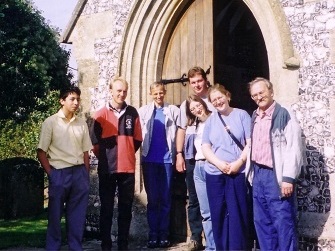
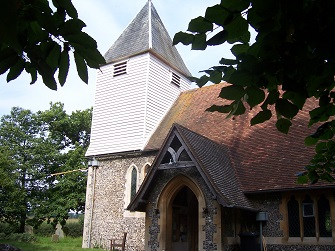 The village is located in the valley of the River Pang, the parish consisting primarily of farmland, with some woodland in the upland regions. The pond complex around the "Blue Pool", containing artesian aquifers, though adjacent to the village, is actually just across the parish boundary in Bradfield. The 12th century parish church retains remnants of the original Saxon church within its inner walls, and the font remains from the Norman era. The superb nave wall frescoes are medieval, with relatively recent conservation work undertaken on them completed in 2008.
 The white wooden bell tower, which undoubtedly makes the church so distinctive, was built in the 15th century. The churchyard is garlanded by an array of sweet chestnut trees (castanea sativa). The four bells here are rung from the ground floor, with treble and second cast by Henry I Knight of Reading (1609 & 1607). The tenor is by Samuel Knight, 1684, at the same foundry. The third bell is a late 15th century casting from the Wokingham foundry of John Mitchel.
Hampstead Norreys, Yattendon and Aldworth See Sunday 29th September 2002 for details of these three locations.
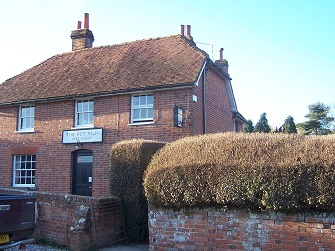
The Pot Kiln, Frilsham The pub is situated on high ground away from the village, and takes its name from the kiln on this site which was converted into a brewery. The brick walls that line the garden and entrance were fired in the kiln with clay dug from the entrance. Since this time it has become the epitome of a gastro-pub.
The white wooden bell tower, which undoubtedly makes the church so distinctive, was built in the 15th century. The churchyard is garlanded by an array of sweet chestnut trees (castanea sativa). The four bells here are rung from the ground floor, with treble and second cast by Henry I Knight of Reading (1609 & 1607). The tenor is by Samuel Knight, 1684, at the same foundry. The third bell is a late 15th century casting from the Wokingham foundry of John Mitchel.
Hampstead Norreys, Yattendon and Aldworth See Sunday 29th September 2002 for details of these three locations.
The Pot Kiln, Frilsham The pub is situated on high ground away from the village, and takes its name from the kiln on this site which was converted into a brewery. The brick walls that line the garden and entrance were fired in the kiln with clay dug from the entrance. Since this time it has become the epitome of a gastro-pub.
St Mary · Aldworth
Stanford Dingley · St Denys
The Pot Kiln · Frilsham
Southampton
Saturday 14th June 2003
10.00am Portswood
Hants · St Barnabas (6) 3cwt
10.45am South Stoneham
Hants · St Mary (3) 8cwt
11.30am Bitterne Park
Hants · Ascension (8) 8cwt
12.45pm Botley
Hants · All Saints (6) 5cwt
01.30pm The Brewery Bar
Botley
Jonathan Beale, Hugh Deam, Andrew Dunn, Steve Jeffrey,
Roy Jones, Janice Knowles, Peter Lloyd, Bernard Masterman,
Leon Thompson and Sonia Tucker.
Roy Jones, Janice Knowles, Peter Lloyd, Bernard Masterman,
Leon Thompson and Sonia Tucker.
Cambridge, St Clements, Winchendon Place and St Nicholas.
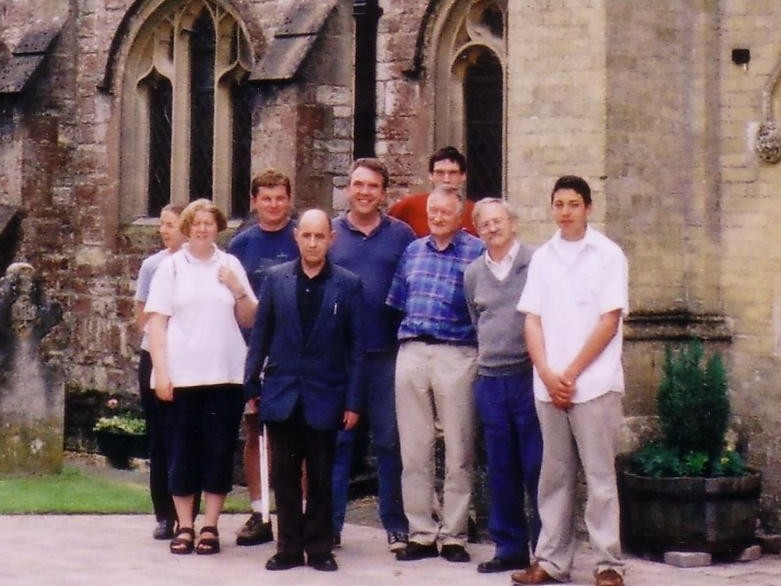
Botley
Southampton The city is situated on a peninsula which is bounded on the east by the River Test and on the south and west by an estuary formed by the confluence of the River Itchen with the Test. The Anglo-Saxon prefix differentiated the town from Northampton. After Canute became king he made Southampton his occasional residence, and then the Normans used it as a port for Winchester, enabling trading with Normandy, Venice and Bordeaux. Richard II enlarged the castle and strengthened fortifications around the town, thus Southampton has the longest stretch of medieval walls in England. It was here that Henry V discovered the conspiracy formed against him by his cousin Richard Plantagenet. Southampton has long been the premier passenger port in the country, due to ample depth of water and double tides that allow ships to berth and depart at any hour. The port is synonymous with famed shipping lines such as P&O, Cunard, White Star Line, and Union Castle. The shores of Southampton Water are still well wooded, alternating with villages, mansions and villas, being two miles wide at the entrance near Calshot Castle. In 1620 the Mayflower and Speedwell departed the port, taking the Pilgrim Fathers to America. The city was heavily bombed during the Second World War due to its handling of military cargo and the building of Mulberry Harbour components.
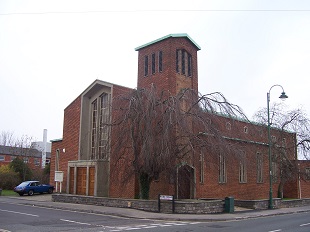 Portswood Documented as Porteswuda (a wood belonging to the market town) in 1045, what was once a village is now a suburb of Southampton and encompasses the main campus of the city's University. The two most notable residents of Portswood were R.J. Mitchell, the chief designer of the Supermarine Spitfire, and Capt. Edward J. Smith, captain of the ill-fated RMS Titanic. The late 19th century church is built on the site of an original place of worship that was constructed of nothing more than corrugated iron. The light set of bells that hang here are rung from the ground floor, directly inside the main doorway to the church. The fourth and tenor date to 1949, cast by Gillett & Johnston of Croydon. The fifth was cast by Taylor's of Loughborough in 1952. The front three bells are all from Whitechapel, treble (2002), second (2001), and third (2000).
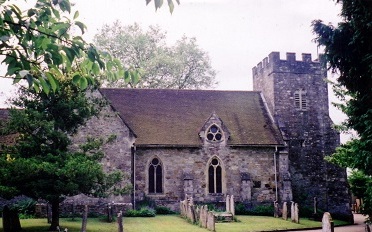 South Stoneham Located some 3 miles north-east of Southampton city centre, South Stoneham is situated on the western flank of the River Itchen. As a result of the expansion of the city, what was once a large scattered parish with fertile land is now heavily urbanised. South Stoneham House, once the seat of the Barons Swaythling, is now owned by the university, having been used as a Hall of Residence since 1920. During World War II the college operated a school of navigation from the communal rooms. The original 18th century mansion is attributed to Nicholas Hawksmoor, with gardens and landscaping by Lancelot "Capability" Brown. St Mary's is one of only two remaining medieval churches in the city, with parts dating from the Norman period, and the chancel arch being 12th century. The church nestles in a secluded position amidst the university accommodation campus, and consists of a chancel, nave, two aisles, two transepts and a west tower of the 15th century. Above the belfry window on the south face of the tower is a sundial, bearing the motto "so flies life away 1738". The three bells are rung from the ground floor and were all cast in 1880 by Gillett & Bland. The ropes fall in a straight line, in the sequence 1, 3, 2.
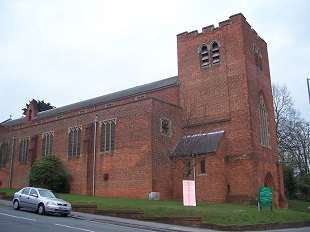 Bitterne Park Bitterne stands on the site of what was once a Roman military station known as Clauentum, and this was succeeded by the Anglo-Saxon town of Hantune. The area is now largely residential, with Bitterne Park Triangle as its focal point. Cobden Bridge links the area to St Denys on the western bank of the Itchen. The southern section of Riverside Park is located in Bitterne Park and contains a miniature railway. The church, designed by Sir Charles Nicholson, was consecrated in 1926 and fortunately possesses an arresting interior to make up for the utilitarian exterior. Since our visit the bells have been augmented to a twelve, the front four bells cast in 2008 by Hayward Mills Associates of Nottingham. The oldest bells are the ninth and eleventh, cast in 1380 and 1420 respectively, Wokingham. The tenth is of 1603 by John Wallis of Salisbury. The seventh and eighth are from 1919 by Gillett & Johnston, London. The fifth, sixth and tenor all from Whitechapel, cast in 1957.
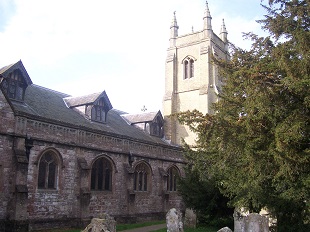 Botley The name Botley describes a settlement from where timber is obtained, the area having been settled since at least the 10th century. Flour mills have existed here for over 1000 years, with the surviving Botley Mill situated at the end of High Street. Between 1806 and 1820, Botley was the home of journalist and radical politician, William Cobbett. There is a memorial stone commemorating him in the market square, with the Market Hall of 1848 and several interesting houses spread along the High Street. Botley grew around a ford over the River Hamble where an inn was built for travellers to stay in overnight on the occasions when the tide was in. At high tide, small boats such as canoes and kayaks can still navigate up the river as it runs through Botley. The early church here, dedicated to St Bartholomew, was largely destroyed by a large poplar tree falling onto the nave. The present church, built on a different site, dates to 1835/36. Recent fund-raising has taken place to pay for an extension, with a large choral society based here. Up until 2002 there were only three bells here, but after a course of strengthening work on the tower there is now a highly pleasing ring of six. The fourth and tenor are both from c.1420, having been cast at a foundry in Wokingham. The fifth is from 1920, cast by John Warner & Sons, London. The front three bells are all from Whitechapel, 2000.
Portswood · St Barnabas
South Stoneham · St Mary
Bitterne Park · Ascension
Botley · All Saints
The Cotswolds
Saturday 10th May 2003
09.45am Colesborne
Gloucs · St James (5) 6cwt
10.45am Withington
Gloucs · St Michael (6) 11cwt
11.45am Chedworth
Gloucs · St Andrew (6) 10cwt
12.30pm The Seven Tuns
Chedworth
Robert Chadburn, Hugh Deam, Andrew Dunn, Simon Edwards, Keith Godfrey, Nicholas Hartley, Steve Jeffery, Roy Jones, Susan King, Peter Lloyd, Bernard Masterman, Susan Morrison, Hilary Nex, Roy Peach, June Steele, Hillary Stevens, Leon Thompson, Richard Verrall and Serge Zvegintzov.
London, Cambridge, Plain Bob Minor & Stedman.
Colesborne
Colesbourne The village, situated on the road between Cheltenham and Cirencester, takes its name from "Coll's Stream", being notes as Collesburnan in the 9th century. Vestiges of a Roman villa have been uncovered in recent years. The pub in the village, The Colesbourne Inn, is one of the most unique in the country, being built in 1827 using quartz and tufa, the latter being a stone cherished by aquarists for its lightness.
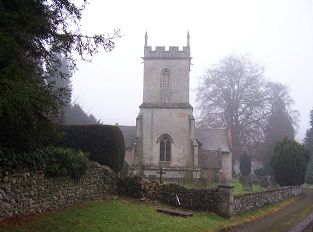 This fine early Perpendicular parish church to the south-east of the village undoubtedly enjoys one of the most verdant settings for any place of worship in the country, nestling as it does within the western edge of Chedworth Wood. The woodland tapers down to the gently flowing River Churn as it meanders past the church. The Victorian horticulturalist Henry Elwes set out his collection of snowdrops here, with 200 variants on show. The church is cruciform, but probably started out as a Norman chapel, with transepts added in the 14th century. Inside there is a chalice shaped pulpit and superb stained-glass east window by William Kempe. The bells were originally hung counter-clockwise, and after a spell of being classified as unringable they were rehung in a clockwise configuration at the Millennium. All five bells were cast in 1719 by Abraham II Rudhall of Gloucester.
Withington A host of pretty limestone cottages flank the grandiose13th century parish church, which was described by famed journalist and pamphleteer William Cobbett in 1826 as being like a small cathedral.
This fine early Perpendicular parish church to the south-east of the village undoubtedly enjoys one of the most verdant settings for any place of worship in the country, nestling as it does within the western edge of Chedworth Wood. The woodland tapers down to the gently flowing River Churn as it meanders past the church. The Victorian horticulturalist Henry Elwes set out his collection of snowdrops here, with 200 variants on show. The church is cruciform, but probably started out as a Norman chapel, with transepts added in the 14th century. Inside there is a chalice shaped pulpit and superb stained-glass east window by William Kempe. The bells were originally hung counter-clockwise, and after a spell of being classified as unringable they were rehung in a clockwise configuration at the Millennium. All five bells were cast in 1719 by Abraham II Rudhall of Gloucester.
Withington A host of pretty limestone cottages flank the grandiose13th century parish church, which was described by famed journalist and pamphleteer William Cobbett in 1826 as being like a small cathedral.
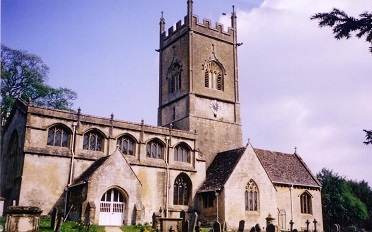 The imposing tower contains a sublime ring of six bells, although the tenor is exceptionally fine set. Of the six bells, all bar the fifth date to 1738, the fifth being of 1747, all cast by Abel Rudhall at the Gloucester foundry. Whites of Appleton carried out a restoration in 1981, with a new wooden frame and canon retaining headstocks.
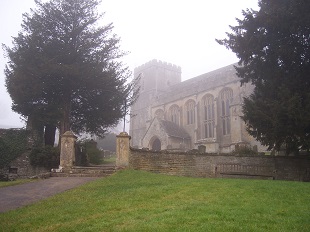
Chedworth The River Churn and River Coln meet here at Chedworth, situated as it is on the lower slopes of a steep sided valley overlooked by Pancake Hill. The village possesses much to see, with a wealth of photo opportunities. A little way outside of the village, amidst woodland, is Chedworth Roman Villa. The beautifully appointed church, rebuilt in 1883 by Frederick Waller, is set on high ground overlooking the village. The bells are rung from the ground floor and are an endearing six that are well worth visiting more than once. All of the bells were cast in Gloucester, with the back five from 1717 by Abraham I Rudhall, and the treble by John Rudhall in 1831. Between the church and the pub is a magnificent water-wheel that can be viewed on YouTube from Christmas Eve 2012 when it was overrun by the surge of water from Seven Tuns Hill as the village flooded.
The imposing tower contains a sublime ring of six bells, although the tenor is exceptionally fine set. Of the six bells, all bar the fifth date to 1738, the fifth being of 1747, all cast by Abel Rudhall at the Gloucester foundry. Whites of Appleton carried out a restoration in 1981, with a new wooden frame and canon retaining headstocks.
Chedworth The River Churn and River Coln meet here at Chedworth, situated as it is on the lower slopes of a steep sided valley overlooked by Pancake Hill. The village possesses much to see, with a wealth of photo opportunities. A little way outside of the village, amidst woodland, is Chedworth Roman Villa. The beautifully appointed church, rebuilt in 1883 by Frederick Waller, is set on high ground overlooking the village. The bells are rung from the ground floor and are an endearing six that are well worth visiting more than once. All of the bells were cast in Gloucester, with the back five from 1717 by Abraham I Rudhall, and the treble by John Rudhall in 1831. Between the church and the pub is a magnificent water-wheel that can be viewed on YouTube from Christmas Eve 2012 when it was overrun by the surge of water from Seven Tuns Hill as the village flooded.
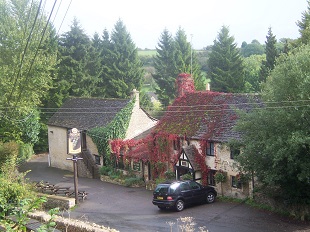 The Seven Tuns was long one of the most popular hostelries in Gloucestershire, radiating classic Cotswolds ambience, offering a fine choice of meals from the simple to the indulgent on the two occasions we visited. The Chedworth Silver Band has performed outside the pub every Boxing Day (with the exception of the war years) since 1905. As of March 2013 it has been closed, but locals have been rallying around in hopes of it being re-opened rather than converted into a private dwelling.
Colesborne · St James
Withington · St Michael
Chedworth · St Andrew
The Seven Tuns · Chedworth
Kennet and Avon
Saturday 22nd March 2003
10.00am Hungerford
Berks · St Lawrence (8) 12cwt
11.00am Ramsbury
Wilts · Holy Cross (6) 16cwt
12.15pm Savernake Forest
Wilts · St Katharine (5) 11cwt
01.00pm Mildenhall
Wilts · St John the Baptist (6) 7cwt
01.50pm The Horseshoe Inn
Mildenhall
03.30pm Chilton Foliat
Wilts · St Mary (5) 9cwt
Heather Banyard, Jonathan Beale, Bob Benstead, Jonathan Cresshull, Steve Davies, Hugh Deam, Andrew Dunn, Simon Edwards, Jeanne Fahy, Keith Godfrey, Sally Harrison, Nicholas Hartley, Anthony Hughes, Roy Jones, Susan King, Janice Knowles, Paul Lucas, Bernard Masterman, Paul Morley, Hilary Nex, Marika Pascovich, Lisa Ryan, Charles Smith, June Steele, Hillary Stevens, Leon Thompson and Richard Verrall.
Plain Bob Major, Stedman Triples, Grandsire Triples & Cambridge.
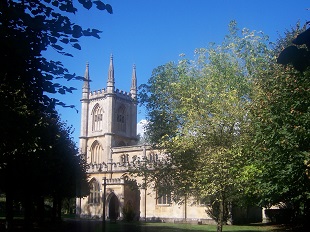
Hungerford · St Lawrence
Hungerford The name of the town is an Anglo-Saxon description of a ford leading to unproductive land, although there is a legend that Hingwar the Dane was drowned in the river here and that the town was named after him. This stems from the mistaken belief that the Battle of Ethandun took place at the Eddington here. Hingwar was in actuality Ivar Ragnasson, nicknamed Ivan the Boneless, possibly the most famous Viking adventurer on whom the character played by Kirk Douglas in the 1958 movie The Vikings was based. The celebration of Hocktide, also known as Tutti-Day, in the town, takes place on the second Tuesday after Easter, and has its origin in the local celebrations following King Alfred's expulsion of the Danes. The Bellman (town crier) summons the commoners to the Hocktide Court held at the town hall whilst Tutti-men visit every house with commoners' rights, accompanied by Tutti-girls.
 By 1241 Hungerford was a borough, and in the latter half of the 14th century John of Gaunt was Lord of the Manor; during this period residents were granted lucrative fishing rights on the River Kennet, although the town itself stands primarily on the River Dun as it joins the Kennet. Hungerford is the westernmost town in Berkshire, the parish formerly being divided into four tithing's known as Hungerford Town, Sanden Fee, Eddington with Hidden and Newtown & Charnham Street. Although Hungerford featured to a degree in the Civil War, with various armies camping here, it is an event of some forty years later that is of immensely greater significance. What in 1650 had been a battle between Crown and Parliament had become a tussle between Catholicism and Protestantism, and it was here at the Bear Inn that William of Orange met with representatives of James II, on his way to claiming the throne in what became known as the "Glorious Revolution". The parish church stands close to the Kennet & Avon Canal, on the west side of the town, having been rebuilt in the Gothic style between 1814 – 16 under the supervision of John Pinch the Elder, whose work is mainly to be seen gracing the city of Bath. Many of the monuments from the earlier church were transferred to this new building. A completely new set of eight bells cast at Whitechapel were installed in the tower in 1978 and they are superb to ring.
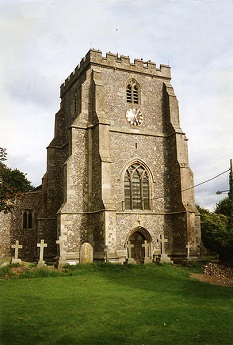
 Ramsbury First documented as Rammesburi in 947 A.D., the derivation of the name is disputed, although it is agreed that it was a fortification. At one time the importance of Ramsbury was such that it had a bishop, with three of them ascending to Archbishop of Canterbury, probably due to the high profile that being installed here offered. Ramsbury went into a decline when the London to Bath road was turnpiked in 1774, and the Kennet & Avon Canal re-routed. In front of the Bell Inn, at the centre of the village, once stood the Ramsbury Elm, known to have stood here since Charles I was on the throne, and beneath which John Wesley later preached.
The present parish church houses two coped stones from the 9th century Saxon chapel that existed on the same site. The chancel is Early English, and there is an elegant font with carvings around the stem that is the work of Thomas Meyrick. The west tower is primarily from the Decorated period, with mighty buttresses, although this upper part was added at a later date. The weighty bells are decidedly challenging, with the ringing chamber being cavernous. The front five bells all date to 1708, cast by Abraham I Rudhall of Gloucester. The tenor is from 1865, cast by John Warner & Sons, London.
Ramsbury First documented as Rammesburi in 947 A.D., the derivation of the name is disputed, although it is agreed that it was a fortification. At one time the importance of Ramsbury was such that it had a bishop, with three of them ascending to Archbishop of Canterbury, probably due to the high profile that being installed here offered. Ramsbury went into a decline when the London to Bath road was turnpiked in 1774, and the Kennet & Avon Canal re-routed. In front of the Bell Inn, at the centre of the village, once stood the Ramsbury Elm, known to have stood here since Charles I was on the throne, and beneath which John Wesley later preached.
The present parish church houses two coped stones from the 9th century Saxon chapel that existed on the same site. The chancel is Early English, and there is an elegant font with carvings around the stem that is the work of Thomas Meyrick. The west tower is primarily from the Decorated period, with mighty buttresses, although this upper part was added at a later date. The weighty bells are decidedly challenging, with the ringing chamber being cavernous. The front five bells all date to 1708, cast by Abraham I Rudhall of Gloucester. The tenor is from 1865, cast by John Warner & Sons, London.
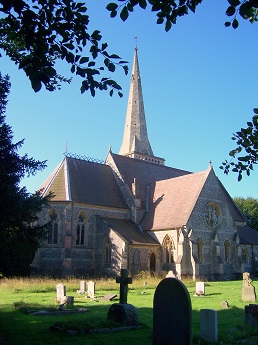
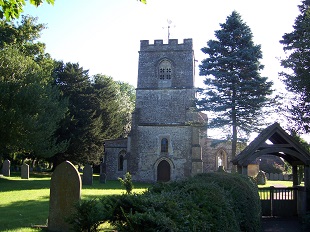 Savernake Forest Noted in 934 A.D. as Sefernoc, the name denotes a district of the river here, the ancient name being Severn, this now being called the River Bedwyn. As the name suggests this is essentially an expanse of mostly unbroken mature woodland, bridleways, and open glades, having been under the wardenship of the descendants of one family since the Norman Conquest. Henry VIII hunted wild deer here, later marrying Jane Seymour, whose family lived nearby. While their son was still young , the forest, along with the ruins of Marlborough Castle, passed to her brother Edward Seymour. One day each winter the forest is closed in order to prevent rights of way being established. Designated as a site of Special Scientific Interest, the 4,500 acre forest contains a herd of roe and fallow deer, 25 species of butterfly, and is further distinguished by its "Grand Avenue" flanked by a cathedral-like arcade of beech trees. The Victorian church, constructed of Bath stone, is an example of an Oxford Movement church, having been consecrated in 1861 as a chapel of ease to the mother church of Great Bedwyn. Some of the oaks that surround the church are believed to be over a thousand years old. The church received some bomb damage during World War II, with nearly all the stained-glass destroyed. All five bells date to 1862, cast at Whitechapel, and are fairly heavy for a five, but not as tricky as one might expect on first sight.
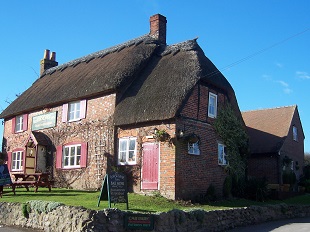 Mildenhall Pronounced locally as "Minal", a settlement was noted as being here at the beginning of the 9th century, when it was described as Mildamhald (nook of land belonging to Milda). The area has been occupied since the Romans had a fortress town of Cunetio nearby, with a hoard of Roman coins having been unearthed here in 1978. Cunetio was deserted as a Romano-British site by 450 A.D., being re-occupied in the Anglo-Saxon era. The River Kennet, which runs through the village, is thought to have derived its name from Cunetio. The Horseshoe Inn was recommended as being a ringer-friendly pub, and this proved to be no idle boast, with a capacious function room, extensive menu, and friendly service. Water-meadows are still profuse around this valley area, with the village comprised of red and blue brick cottages, with thatched and slate roofs, especially in the area close to the church. Although much of the present church is 13th century, some parts of the tower are almost certainly Saxon in origin. The villagers clubbed together to enable the refurbishment of the interior in 1816. Of particular note are the box pews, the twin pulpit and reading desk. The bells are rung from the ground floor in a room which also doubles as a kitchen. The back five bells date to 1801, cast by James Wells of Aldbourne. The treble was added in 1958 by Mears & Stainbank.
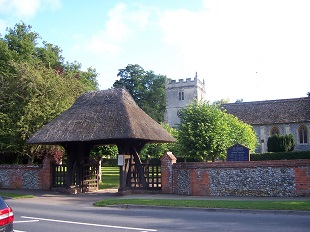 Chilton Foliat Originally known as Cilletone (a farm of a young nobleman), the manorial affix dates to 1221, from the Foliat family. The village sits close to the River Kennet, which is a delightful example of a gentle chalk-land river. In 1974, the village and its surrounds were designated as being a conservation area – The North Wessex Downs Area of Outstanding Natural Beauty. The BBC television series of the late 1980s – The Victorian Kitchen Garden – was filmed at Chilton Foliat. The elegant parish church dates from the 12th century, although it was restored by Benjamin Ferrey in 1845. The lych-gate and the rows of lime trees are the parish's memorial to those who died in the Great War. The trees to the west of the limes each represent a life lost from the parish in the Second World War. The bells are a fluent anti-clockwise ring of five which were re-tuned and rehung by Mears & Stainbank in 1932. The ring had been increased to five in 1844 when the treble and second were cast by Thomas II Mears of Whitechapel. The oldest bell is the fourth, 1663, cast by William III Purdue of Salisbury. The tenor is of 1742, cast by Henry III Bagley of Witney, and the third is from 1771, by Robert I Wells of Aldbourne.

Ramsbury · Holy Cross
Savernake · St Katharine
Mildenhall · St John
The Horseshoe Inn
Chilton Foliat · St Mary
South Oxfordshire
Saturday 22nd February 2003
09.45am Abingdon
Oxon · St Helen (10) 19cwt now 16cwt
11.00am Sutton Courtenay
Oxon · All Saints (8) 12cwt
12.30pm Berrick Salome
Oxon · St Helen (6) 7cwt
01.30pm The Chequers
Berrick Salome
Heather Banyard, Jonathan Beale, Jonathan Cresshull, Steve Davies, Hugh Deam, Andrew Dunn, Simon Edwards, Keith Godfrey, Corinne Grimley-Evans, Susan King, Peter Lloyd, Paul Lucas, Bernard Masterman, Paul Morley, June Steele, Hillary Stevens and Leon Thompson.
Grandsire Caters, Plain Bob Major, Stedman Triples & Cambridge.
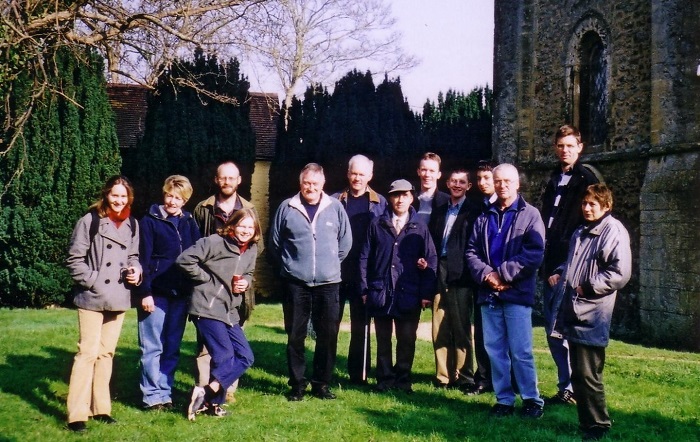
Sutton Courtenay
Abingdon Documented as Abbandune (Aebba's hill) in 968 A.D., this ancient and historic town is set on the River Thames, with the 15th century Abingdon Bridge spanning the river. Little now remains of the town's Benedictine Abbey, which dominated life in the town, and well beyond, for centuries. After the Dissolution, the town and its surrounds evolved as an agricultural and then industrial centre. The Old Gaol was opened in 1811 after being constructed by prisoners during the Napoleonic Wars. After becoming a leisure centre in the late 20th century, it has now been redeveloped into apartments. Abingdon's most famous tradition is the bun-throwing celebrations which take place on notable occasions, with locals gathering in their thousands outside the 17th century County Hall in the hope of catching one of the buns thrown from the roof by dignitaries.
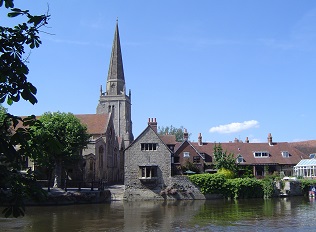 Ock Street is closed for two days every October for the Michaelmas Fair, originally a hiring fair, it is one of the country's longest funfairs. The Runaway Fair, the following Monday, was traditionally for workers who had found their new employers too much to bear in the first week. Several iconic products were made in Abingdon until fairly recent times, with 1.3 million MG's manufactured in the town; the MG Car Club still hosts rallies in the town. Morland Brewery was based here until being bought out in 2000, although their most famous brand of ale - Old Speckled Hen - is still selling well. In common with several other riverside towns and villages south of Oxford, the name of the Thames has officially been added to the name the town. There are two churches with bells in the town, the larger, St Helen, being situated close to the river.
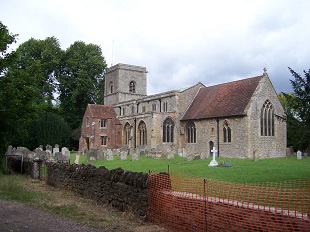 This 13th century building occupies the site of what was previously Helenstowe Nunnery. Within the churchyard are three sets of alms-houses, Long Alley (1446), Twitty's (1707), and Brick Alley (1718). Of particular note within the church are the painted ceiling panels of the north aisle which depict the Tree of Jesse. A ring of eight bells was cast by Whitechapel in 1764, with four of these surviving the 1885 augmentation. By early this century it was decided that the wooden frame needed to be replaced, and new cast-iron frame was installed and the bells were re-tuned at Whitechapel, 2006.
Sutton Courtenay The settlement noted as being here in 870 A.D. was noted as Suthton (southern farmstead), with its manorial affix as Suttone Curteney, from the Curtenai family, here from the 12th century. Towering willow trees skirt the backwaters of the river here, with a wealth of substantial houses and cottages along the central part of the village.
This 13th century building occupies the site of what was previously Helenstowe Nunnery. Within the churchyard are three sets of alms-houses, Long Alley (1446), Twitty's (1707), and Brick Alley (1718). Of particular note within the church are the painted ceiling panels of the north aisle which depict the Tree of Jesse. A ring of eight bells was cast by Whitechapel in 1764, with four of these surviving the 1885 augmentation. By early this century it was decided that the wooden frame needed to be replaced, and new cast-iron frame was installed and the bells were re-tuned at Whitechapel, 2006.
Sutton Courtenay The settlement noted as being here in 870 A.D. was noted as Suthton (southern farmstead), with its manorial affix as Suttone Curteney, from the Curtenai family, here from the 12th century. Towering willow trees skirt the backwaters of the river here, with a wealth of substantial houses and cottages along the central part of the village.
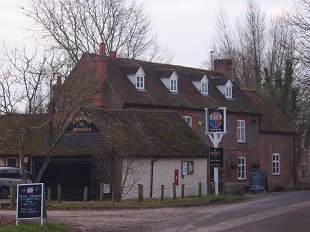 The abbey here, with its gabled wings and low battlemented front, was built around 1350 on land owned by Abingdon Abbey, and subsequently used as a summer residence for the Abbot. The grand 16th century manor house, which originally served as a chapel, is approached through gate-piers attributed to Inigo Jones, and inside are elegant panelled rooms and finely chiselled fireplaces. The gardens here are influenced by two famed gardeners, Norah Lindsay who lived at the house, and Brenda Colvin who remodelled the gardens into formal and wild styles. The parish church falls between Norman and Perpendicular, with the red-brick porch dating to Tudor times. There are two notable figures buried in the churchyard here, former Prime Minister, Herbert Asquith and author George Orwell, under his real name Eric Arthur Blair. The tower houses eight bells, the oldest of which are the sixth and seventh, 1675, cast by Richard Keene of Woodstock. The fourth is from 1775, cast by Thomas Swain of London. The third was cast twelve years later by Robert II Wells of Aldbourne. The fifth is from 1829, cast by Robert Taylor of Oxford. The other bells are from Whitechapel, tenor (1965), and front two bells from 1986.
Berrick Salome See Saturday 6th May 2000 for details.
The abbey here, with its gabled wings and low battlemented front, was built around 1350 on land owned by Abingdon Abbey, and subsequently used as a summer residence for the Abbot. The grand 16th century manor house, which originally served as a chapel, is approached through gate-piers attributed to Inigo Jones, and inside are elegant panelled rooms and finely chiselled fireplaces. The gardens here are influenced by two famed gardeners, Norah Lindsay who lived at the house, and Brenda Colvin who remodelled the gardens into formal and wild styles. The parish church falls between Norman and Perpendicular, with the red-brick porch dating to Tudor times. There are two notable figures buried in the churchyard here, former Prime Minister, Herbert Asquith and author George Orwell, under his real name Eric Arthur Blair. The tower houses eight bells, the oldest of which are the sixth and seventh, 1675, cast by Richard Keene of Woodstock. The fourth is from 1775, cast by Thomas Swain of London. The third was cast twelve years later by Robert II Wells of Aldbourne. The fifth is from 1829, cast by Robert Taylor of Oxford. The other bells are from Whitechapel, tenor (1965), and front two bells from 1986.
Berrick Salome See Saturday 6th May 2000 for details.

Abingdon · St Helen
Sutton Courtenay · All Saints
The Chequers · Berrick Salome
A record of outings 2002
by Hugh Deam
The Claydons, Buckinghamshire
Saturday 30th November 2002
09.30am Steeple Claydon
St Michael (6) 11cwt
10.30am East Claydon
St Mary (6) 7cwt
11.30am Great Horwood
St James (6) 16cwt
12.30pm The Swan Inn
Great Horwood
Heather Banyard, Jonathan Beale, Jane Burgess, Ron Burgess, Andrew Dunn, Keith Godfrey, Nicholas Hartley, Roy Jones, Janice Knowles, Paul Lucas, Bernard Masterman, Lisa Ryan, Hillary Stevens and Leon Thompson.
Plain Bob Minor, Stedman and Grandsire.
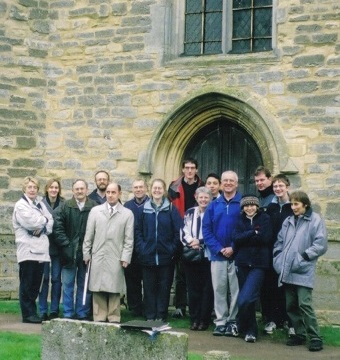
Great Horwood
Steeple Claydon This is by far the largest of the four Claydon villages, the others being Botolph, East and Middle, with the manor house located in the latter. Claydon House is famed for its sumptuous architecture, which includes rococo and chinoiserie decoration. Features of the house include a Chinese Room and parquetry grand stairs, with mementoes of Florence Nightingale who was a regular visitor here after her sister married Sir Harry Verney. The famous carriage "Florrie's lorry", used by her during the Crimean War, is occasionally loaned out to the house for display. The ghost of Sir Edmund Verney, standard-bearer to Charles I at the Battle of Edgehill, is said to appear whenever trouble threatens the family. The 14th century parish church is sited on the edge of the village, with its spire visible for many miles around. The church was heavily restored by William Wilkinson of Oxford during the 19th century, although retaining much of the original fabric.
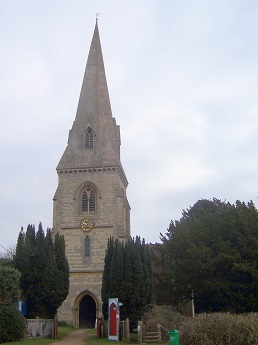 The bells are a challenging six that are rung from the ground floor. The oldest bell was the fourth, having been cast in 1592 by Bartholomew Atton of Buckingham, but was re-cast in 1929 at Whitechapel, with the present treble being added two years later by the same foundry. The third is by Richard Eldridge of Wokingham, 1620. The second and fifth bells are both by Edward Hall of Drayton Parslow, 1737 & 1754. The tenor is from 1828, cast by Taylor & Sons, Oxford.
East Claydon The name of the village denotes a clayey hill, being the most easterly of the four Claydons. The first documentation of a settlement here was as Est Cleydon in 1247. Today this is a village of numerous attractive cottages, with the centre featuring a distinctive thatched tree with seating around the base. The village hall has a bell-tower, the bell of which is known locally as "the mushroom". The parish church is a Restoration era re-building of the predecessor which was demolished during the Civil War by order of Cornelius Holland, who was one of the judges at the trial of Charles I. Sir George Gilbert Scott extensively restored the church in 1871. The stained-glass window was installed in memory of Rev Thomas Huntley Green, who died in 1887.
The bells are a challenging six that are rung from the ground floor. The oldest bell was the fourth, having been cast in 1592 by Bartholomew Atton of Buckingham, but was re-cast in 1929 at Whitechapel, with the present treble being added two years later by the same foundry. The third is by Richard Eldridge of Wokingham, 1620. The second and fifth bells are both by Edward Hall of Drayton Parslow, 1737 & 1754. The tenor is from 1828, cast by Taylor & Sons, Oxford.
East Claydon The name of the village denotes a clayey hill, being the most easterly of the four Claydons. The first documentation of a settlement here was as Est Cleydon in 1247. Today this is a village of numerous attractive cottages, with the centre featuring a distinctive thatched tree with seating around the base. The village hall has a bell-tower, the bell of which is known locally as "the mushroom". The parish church is a Restoration era re-building of the predecessor which was demolished during the Civil War by order of Cornelius Holland, who was one of the judges at the trial of Charles I. Sir George Gilbert Scott extensively restored the church in 1871. The stained-glass window was installed in memory of Rev Thomas Huntley Green, who died in 1887.
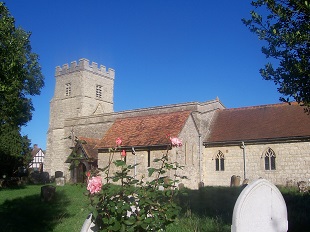 It is an early example of the work of Mary Lownes, who was a leading light in the Arts & Crafts movement as well as being a suffragette. The back five bells date to 1752, cast by Abel Rudhall of Gloucester. The bells were re-hung by Whites of Appleton, and re-tuned at Whitechapel in 1992, with the current treble being cast at this time.
Great Horwood The twin villages of Great and Little Horwood were originally noted as Horwudu (a muddy wood) in 792 A.D. During ancient times the village was on the periphery of the Whaddon Chase, royal hunting land that stretched across the north part of the Aylesbury Vale. In 1447 the village was granted a royal charter to hold a weekly market, with rents collected by New College, Oxford. As with several other villages in the county, market town status ended with the emergence of Aylesbury as the predominant town. There was a large fire in Great Horwood in 1781, which destroyed 16 farmhouses, 4 malt houses and 40 cottages and necessitated the rebuilding of much of the village core.
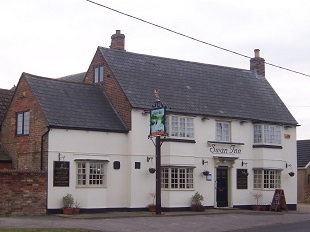
The Swan Inn dates to the years just after the fire, and is a wonderfully cosy pub, with a dining room warmed by a log fire.
It is an early example of the work of Mary Lownes, who was a leading light in the Arts & Crafts movement as well as being a suffragette. The back five bells date to 1752, cast by Abel Rudhall of Gloucester. The bells were re-hung by Whites of Appleton, and re-tuned at Whitechapel in 1992, with the current treble being cast at this time.
Great Horwood The twin villages of Great and Little Horwood were originally noted as Horwudu (a muddy wood) in 792 A.D. During ancient times the village was on the periphery of the Whaddon Chase, royal hunting land that stretched across the north part of the Aylesbury Vale. In 1447 the village was granted a royal charter to hold a weekly market, with rents collected by New College, Oxford. As with several other villages in the county, market town status ended with the emergence of Aylesbury as the predominant town. There was a large fire in Great Horwood in 1781, which destroyed 16 farmhouses, 4 malt houses and 40 cottages and necessitated the rebuilding of much of the village core.
The Swan Inn dates to the years just after the fire, and is a wonderfully cosy pub, with a dining room warmed by a log fire.
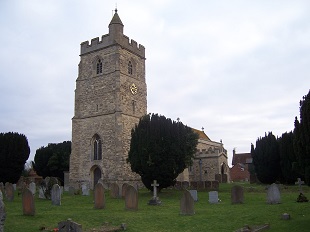
 The parish church is Norman in origin, but rebuilt during the latter half of the 14th century, constructed in limestone rubble, with ashlar dressings. The west tower, which is built to the north of the axis of the nave, is 15th century and of three-stages with diagonal western buttresses. Three of the bells date back to the 17th century, the oldest being the third, 1605, cast by Bartholomew & Robert Atton of Buckingham, the latter also casting the fifth bell in 1623. The second bell is of 1652, by Anthony Chandler of Drayton Parslow. The fourth is by Edward Hall of Buckingham, 1737. The treble and tenor date to 1847, both cast by Charles & George Mears, Whitechapel.
Steeple Claydon
East Claydon · St Mary
Great Horwood · St James
The Swan Inn · Great Horwood
Oxfordshire
Saturday 23rd November 2002
11.45am Drayton St Leonard
St Leonard & St Catherine (6) 7cwt
01.00pm The Catherine Wheel
Drayton St Leonard
Jonathan Beale, Hugh Deam, Roy Jones, Susan King, Janice Knowles and Peter Lloyd.
Drayton St Leonard This small but highly distinctive village stands on the banks of the River Thame as it meanders south to feed into the Thames. Once the seat of the seat of the Drayton family, the village has been closely associated with nearby Dorchester Abbey ever since. Drayton consists primarily of housing built along the course of a single road that persistently winds from the pub and church at the north down to barns and farmhouses on the southern end, passing an array of attractive cottages in the process.
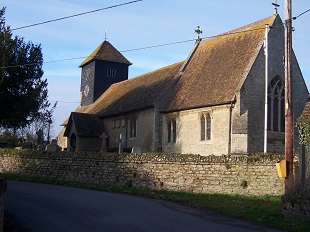
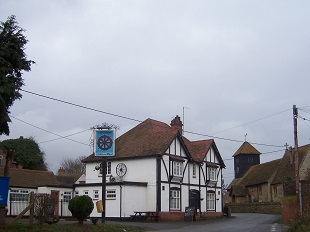 The Catherine Wheel continues to operate as a pub, but as with many such hostelries it also trades as an Indian restaurant in order to survive. The parish church has existed since 1146, when it was a chapel of the peculiar of Dorchester Abbey. The Norman doorways in the north and south walls date from this time. In 1859, the building was drastically restored under the direction of Gothic Revival architect George Edmund Street. A stained-glass portrayal of St Leonard in the lancet window in the north wall of the chancel originates from the 14th century, but most of the present pieces of glass date from the 1859 restoration. The 15th century bell-tower is of timber construction, which is highly unusual for Oxfordshire. In 1884, the tower was strengthened, shingled and fitted with a clock. It was at this this time that Mears & Stainbank of Whitechapel recast the original three bells and cast three new ones to make this a ring of six.
Drayton · St Leonard
The Catherine Wheel
The Ridgeway · Pang Valley · Berkshire
Sunday 29th September 2002
10.00am Hampstead Norreys
St Mary (6) 10cwt
11.15am Yattendon
St Peter & St Paul (6) 6cwt
12.15pm Aldworth
St Mary (3) 10cwt
12.45pm The Bell Inn
Aldworth
Jonathan Beale, Hugh Deam, Adrian Gray, Roy Jones, Janice Knowles, Ailsa Reid, Charles Smith & Leon Thompson.
Hampstead Norreys Originally referring to a homestead when documented as Hanstede in 1086, the manorial affix came about in 1557 (Hampstede Norreys) from the Norreys family; a motte and bailey castle once existing on what is now a copse. Situated by the River Pang, the village is still known to some locals as Hampstead Norris.
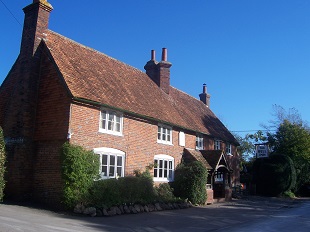
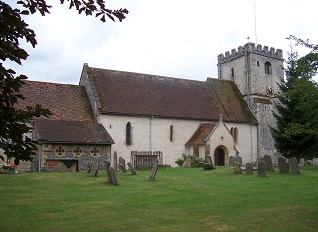 On the eastern flank of the village is The Living Rainforest which educates on ecological issues and has expanded as a tourist attraction since opening in the 1990s, with over 700 species of plants and animals. The parish church dates from around 1200, with an extension in the 15th century, when the tower was added. The tower contains six bells which are rung from the ground floor, five of which were cast at the Reading foundry of the Knight family. The second bell is the oldest, cast in 1619 by Henry Knight.
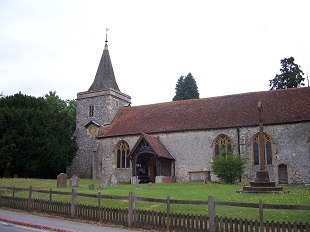 The third is by Ellis I Knight, 1637. The fourth is from 1674 by Samuel Knight, who also cast the treble in 1703. The tenor is from 1675, cast by Ellis II & Henry III Knight. The fifth is by Taylor's of Loughborough, 1930. From 2012, fund-raising began in order to restore and repair the tower and the bell-frame.
Yattendon The spelling of the village name has changed regularly over time, although the pronunciation has remained roughly the same. The Domesday Book noted the settlement as Etingdene (valley of the followers of a man called Geat). The castle which stood here for several centuries was long the home of the Norreys family. Henry VIII and his first wife Katherine of Aragon visited here regularly. A mere handful of years after this happy time, Sir Henry Norreys was accused of adultery with Anne Boleyn, and he was subsequently found guilty of treason and executed, a fate that befell numerous courtiers at this time.
The third is by Ellis I Knight, 1637. The fourth is from 1674 by Samuel Knight, who also cast the treble in 1703. The tenor is from 1675, cast by Ellis II & Henry III Knight. The fifth is by Taylor's of Loughborough, 1930. From 2012, fund-raising began in order to restore and repair the tower and the bell-frame.
Yattendon The spelling of the village name has changed regularly over time, although the pronunciation has remained roughly the same. The Domesday Book noted the settlement as Etingdene (valley of the followers of a man called Geat). The castle which stood here for several centuries was long the home of the Norreys family. Henry VIII and his first wife Katherine of Aragon visited here regularly. A mere handful of years after this happy time, Sir Henry Norreys was accused of adultery with Anne Boleyn, and he was subsequently found guilty of treason and executed, a fate that befell numerous courtiers at this time.
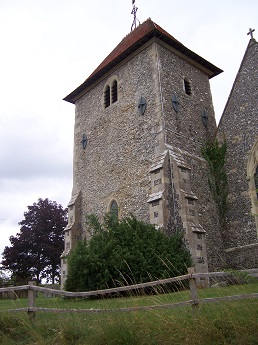 The present church was ordered built in 1450 by Sir John Norreys, Master of the Wardrobe to Henry VI; he is recalled by small sculptures at the doorway and the family coat of arms in one of the windows. The building has an array of wall monuments, probably most notable being the late Georgian pyramid-topped tablet to George III's dance-master, Sir John Gallini, adjoining an oval slate, with beautiful calligraphy, to the newspaper proprietor, Lord Iliffe. The oldest bell is the fifth, circa 1420, cast at a foundry in Wokingham. The second is of 1657, cast by Ellis Knight of Reading, with the fourth cast three years later by Francis Knight, also Reading. The other three bells are by Mears & Stainbank, Whitechapel, 1925 (third) and 1939 (treble and tenor).
Aldworth Known as Elleorde (an old enclosure) in 1086, during the Middle Ages the village was in the ownership of the de la Beche family, and the church served as their private chapel. Inside the church are the famed Aldworth Giants, nine life-size monuments dedicated to the family. Measured at over 7ft in length they were originally thought to have been erected by Sir Nicholas de le Beche in the 1340s, but historians now suggest that they date from various periods. This is the largest number of medieval memorials to a single family in any English parish church. The ashes of the poet Laurence Binyon, whose most famous work is "For the Fallen", were scattered in the churchyard, and there is a slate memorial to him here. The yew tree in the churchyard is at least 1000 years old, and despite being struck by lightning and blown over in storms it is still partly alive. The oldest part of the church is the lower half of the tower, circa 1200. The bells are rung from the ground floor, with the oldest being the tenor, cast by Robert & James Wells of Aldbourne in 1793. The treble and second are by Mears & Stainbank, 1868. The pub in Aldworth, The Bell Inn, is a classic countryside hostelry with a beer garden that is adjacent to the path of the Ridgeway.
The present church was ordered built in 1450 by Sir John Norreys, Master of the Wardrobe to Henry VI; he is recalled by small sculptures at the doorway and the family coat of arms in one of the windows. The building has an array of wall monuments, probably most notable being the late Georgian pyramid-topped tablet to George III's dance-master, Sir John Gallini, adjoining an oval slate, with beautiful calligraphy, to the newspaper proprietor, Lord Iliffe. The oldest bell is the fifth, circa 1420, cast at a foundry in Wokingham. The second is of 1657, cast by Ellis Knight of Reading, with the fourth cast three years later by Francis Knight, also Reading. The other three bells are by Mears & Stainbank, Whitechapel, 1925 (third) and 1939 (treble and tenor).
Aldworth Known as Elleorde (an old enclosure) in 1086, during the Middle Ages the village was in the ownership of the de la Beche family, and the church served as their private chapel. Inside the church are the famed Aldworth Giants, nine life-size monuments dedicated to the family. Measured at over 7ft in length they were originally thought to have been erected by Sir Nicholas de le Beche in the 1340s, but historians now suggest that they date from various periods. This is the largest number of medieval memorials to a single family in any English parish church. The ashes of the poet Laurence Binyon, whose most famous work is "For the Fallen", were scattered in the churchyard, and there is a slate memorial to him here. The yew tree in the churchyard is at least 1000 years old, and despite being struck by lightning and blown over in storms it is still partly alive. The oldest part of the church is the lower half of the tower, circa 1200. The bells are rung from the ground floor, with the oldest being the tenor, cast by Robert & James Wells of Aldbourne in 1793. The treble and second are by Mears & Stainbank, 1868. The pub in Aldworth, The Bell Inn, is a classic countryside hostelry with a beer garden that is adjacent to the path of the Ridgeway.
The Bell Inn · Aldworth
Hampstead Norreys · St Mary
Yattendon · St Peter & St Paul
Aldworth · St Mary
River Thames
Saturday 28th Sept 2002
10.00am Mapledurham
Oxon · St Margaret (6) 8cwt
11.00am Checkendon
Oxon · St Peter & St Paul (8) 10cwt
12.05pm Streatley
Berks · St Mary (6) 8cwt
01.00pm Aston Tirrold
Oxon · St Michael (6) 11cwt
01.35pm Aston Tirrold
Oxon · The Chequers
03.00pm Brightwell
Oxon · St Agatha (8) 10cwt GF
Checkendon
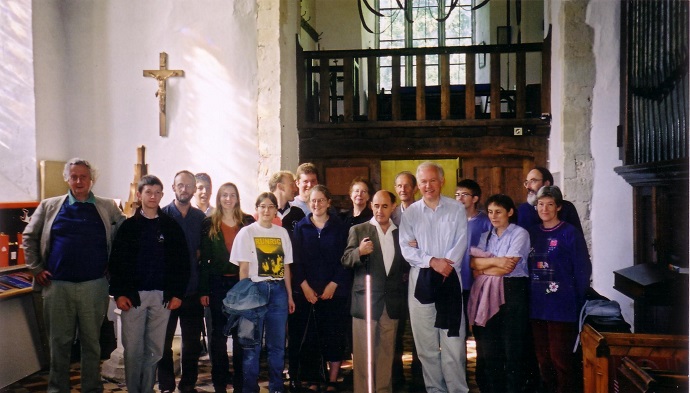
Jonathan Beale, Hugh Deam, Simon Edwards, Keith Godfrey, Adrian Gray, Nicholas Hartley, Helen Howes, Anthony Hughes, Roy Jones, Susan King, Janice Knowles, Bernard Masterman, Paul Morley, Susan Morrison, Ailsa Reid, Sue Reynolds, Hillary Stevens, Leon Thompson and Basil Townsend.
Plain Bob Major, Grandsire Triples, Cambridge, Kent and Stedman.
Checkendon · St Peter
Mapledurham See Sat 16th July 2011 for details of Mapledurham.
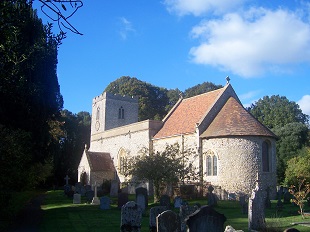
Checkendon Recorded as being continuously settled since the 7th century, the settlement here in 1086 was known as Cegadene (Ceacca's valley by the wooded hill), and even today it is still surrounded by copious woodland. The chalk slopes of the Chilterns support grasslands, being interspersed with extensive areas of gravel which are covered with beech forests. These woods supported a cottage industry that produced furniture. Sheep grazed the higher grassland slopes, with cattle and arable farming taking place on the lower lands. Today the village is home to a successful equestrian centre, and also a famous recording studio located within a manor house at Hook End which was owned for several years by David Gilmour of Pink Floyd. The group's 1982 album – The Final Cut – was recorded here, with their famous inflatable pig, used to promote their Animals albums, stored in an outbuilding.
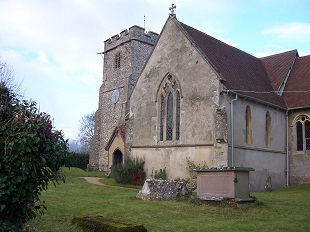 The Manic Street Preachers and the Cure have also recorded albums here. The parish church is 12th century and marks the site of the original settlement. Across the road are several timber-framed buildings of note, such as the Old Smithy, the former Post Office and the 15th century pub – The Four Horseshoes. On display within the church is an early 13th century wall-painting of Christ in Majesty above a procession of apostles. The Perpendicular Gothic west tower houses a ring of eight bells cast at Whitechapel, the oldest four of which were cast by Lester & Pack in 1765. Two more were cast by Mears & Stainbank in 1879, and the front two bells were added in 1967. The bells are rung from a gallery and are well worth visiting. The turret clock is by Tucker of London, 1853.
Streatley See Sat 4th March 2000 for details of Streatley.
Aston Tirrold The twin villages of Aston Tirrold and Aston Upthorpe sit on the northern edge of the Berkshire Downs in a valley below the Wantage to Streatley Road (A417).
The Manic Street Preachers and the Cure have also recorded albums here. The parish church is 12th century and marks the site of the original settlement. Across the road are several timber-framed buildings of note, such as the Old Smithy, the former Post Office and the 15th century pub – The Four Horseshoes. On display within the church is an early 13th century wall-painting of Christ in Majesty above a procession of apostles. The Perpendicular Gothic west tower houses a ring of eight bells cast at Whitechapel, the oldest four of which were cast by Lester & Pack in 1765. Two more were cast by Mears & Stainbank in 1879, and the front two bells were added in 1967. The bells are rung from a gallery and are well worth visiting. The turret clock is by Tucker of London, 1853.
Streatley See Sat 4th March 2000 for details of Streatley.
Aston Tirrold The twin villages of Aston Tirrold and Aston Upthorpe sit on the northern edge of the Berkshire Downs in a valley below the Wantage to Streatley Road (A417).
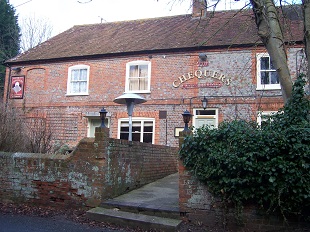 Just to the west is Blewburton Hill, an Iron-Age earthwork. The name of the village is generally thought to derive from Torold de Aston, who was an immediate tenant of the manor under the Earl of Warwick. The pub here, long known as The Chequers, also served as the local police house in days gone by, and was converted into a gastro-pub a couple of years after our visit and is currently (2013) known as the Sweet Olive at the Chequers Inn, serving French cuisine. There may well have been a place of worship on the site of the present church during Saxon times as the north aisle has a square-headed doorway that appears to date from this period. The chancel was rebuilt in Early English Gothic style during the first half of the 13th century. The church used to have a rood loft, but this was removed during the Reformation, and the stairs are now blocked. In 1863 the church was restored and the north aisle was added. The south-west corner of the tower possesses a pair of sundials. The oldest bell in the tower is the third, dating to 1550, and cast by a foundry in Wokingham. The second bell is from 1603, by Joseph Carter of Reading. The fourth and fifth bells are both by Henry I Knight, also Reading, 1617 and 1639 respectively. The tenor is from 1760, by Lester & Pack, Whitechapel. The treble was added in 1937 by Mears & Stainbank.
Brightwell cum Sotwell See Sat 12th April 1986 for details of Brightwell.
Just to the west is Blewburton Hill, an Iron-Age earthwork. The name of the village is generally thought to derive from Torold de Aston, who was an immediate tenant of the manor under the Earl of Warwick. The pub here, long known as The Chequers, also served as the local police house in days gone by, and was converted into a gastro-pub a couple of years after our visit and is currently (2013) known as the Sweet Olive at the Chequers Inn, serving French cuisine. There may well have been a place of worship on the site of the present church during Saxon times as the north aisle has a square-headed doorway that appears to date from this period. The chancel was rebuilt in Early English Gothic style during the first half of the 13th century. The church used to have a rood loft, but this was removed during the Reformation, and the stairs are now blocked. In 1863 the church was restored and the north aisle was added. The south-west corner of the tower possesses a pair of sundials. The oldest bell in the tower is the third, dating to 1550, and cast by a foundry in Wokingham. The second bell is from 1603, by Joseph Carter of Reading. The fourth and fifth bells are both by Henry I Knight, also Reading, 1617 and 1639 respectively. The tenor is from 1760, by Lester & Pack, Whitechapel. The treble was added in 1937 by Mears & Stainbank.
Brightwell cum Sotwell See Sat 12th April 1986 for details of Brightwell.
Aston Tirrold · St Michael
The Chequers · Aston Tirrold
Salisbury
Saturday 29th June 2002
10.30am Ebbesbourne Wake
Wilts · St John the Baptist (5) 6cwt
11.30am Compton Chamberlayne
Wilts · St Michael (6) 6cwt
12.20pm Barford St Martin
Wilts · St Martin (6) 14cwt
01.10pm Stratford sub Castle
Wilts · St Lawrence (6) 5cwt
02.45pm The Old Castle
Old Sarum · Wilts
Jane Burgess, Ron Burgess, Hugh Deam, Sally Harrison, Roy Jones, Janice Knowles,
Peter Lloyd, Bernard Masterman, Leon Thompson and Sonia Tucker.
Peter Lloyd, Bernard Masterman, Leon Thompson and Sonia Tucker.
Plain Bob Minor, Stedman, St Martin's and Grandsire.
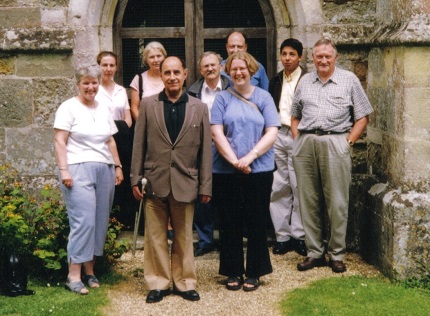
Compton Chamberlayne
Ebbesbourne Wake This tranquil village is set amidst the valley formerly known as the Ebble Valley, now referred to as the Chalke Valley. The manorial affix from 1249, Ebbeleburn Wak, recognised the Wake family, here from the 12th century. The River Ebble flows through the upper half of the village, with at the opposite side of the valley the sites of two early Iron Age settlements; Romano-British pottery having been found in the same area. Archaeological records show that smelting took place here from the Iron-Age onwards. Records for the recent few centuries show that the parish has been home to six separate blacksmiths' forges and at least ten blacksmiths. The parish church was constructed on the side of a hill soon after the Norman Conquest. Although the direct relationship to Hereward the Wake has not been established for certain, the shield of his coat of arms is to be seen on the tower. This exceptional church is a classic of simplicity, with a lack of transepts, but no lack of charm. The tower is late 15th century, with the oldest bell, the second, being from 1633, and cast by John Danton. The fourth was also cast by him four years later, 1637. The third is from 1660, by William III Purdue of Salisbury. The treble and tenor were added in 1884 by Llewellins & James of Bristol.
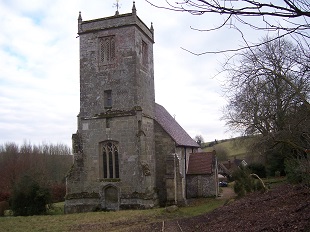
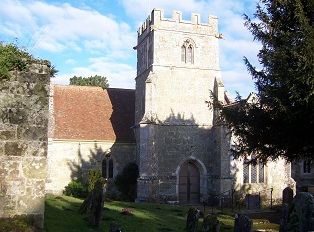 Compton Chamberlayne Known merely as Contone (farmstead in a valley) in the Domesday Book, the manorial affix is from 1316 and recognises the Chamberlain family, here from the 13th century. On the southern border of the village is high chalk down-land and to the north is the River Nadder. Compton House was, from the 16th century until 1930, the family seat of the Penruddocke family. Col John Penruddock was a Royalist, who took part in a failed uprising against Oliver Cromwell, known as the "Penruddock Uprising". He was subsequently tried and executed in Exeter on 16th May 1655. During World War I there were thousands of Australian and Canadian troops encamped in the fields south of the village prior to being shipped to France for combat. The parish burial ground has 20 graves of Australian soldiers who died of influenza during their transit through the local camp. There is still a field known as "Hospital" that was the site of the military hospital. The outline of Australia carved into the surface of the chalk downs was left to grass over in 2005. The 13th century Early English style parish church stands on a bank overlooking the picturesque valley of woods, and a large lake fed by the River Nadder. The interior of the church contains an array of monuments to the Penruddock family. The south tower contains six bells, the oldest of which is the tenor, 1616, by John Wallis of Salisbury. The fifth bell is from 1656, by William III Purdue at the same foundry. The front four bells added 1878, by John Warner & Sons, London.
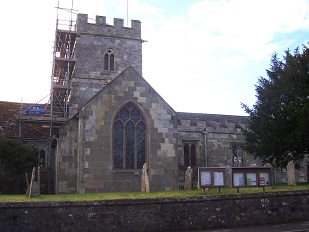 Barford St Martin Noted as Bereford (a ford used at harvesting time for transporting barley) in 1086, the affix from the dedication of the church (Berevord St Martin) came about in 1304. Once a landscape made up primarily of lakes and marshes; today the River Nadder flows through the village as a reminder of Barford's heritage. The 13th century parish church consists of Early English and Perpendicular styles, with the chancel known to pre-date Salisbury Cathedral. The church is built on a mound and would have been surrounded by water-meadows in centuries past. The main door in the 17th century west front opens into a porch, and the glazed inner west door leads to the Perpendicular nave. The central embattled tower houses a peal of six bells which are rung from the chancel crossing, and require careful handling. The back four bells date from the middle of the 18th century (3, 4.5) from 1732, cast by William Cockey, and tenor from 1747. The front two bells are by Mears & Stainbank, Whitechapel, 1906. Besides the church, the medieval preaching cross is also Grade 1 Listed.
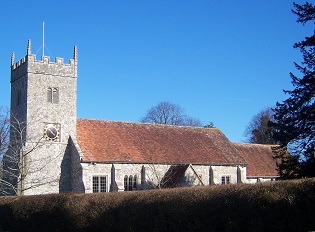 Stratford sub Castle The southern part of the village is now virtually a heavily urbanised suburb of Salisbury, but keep heading north and all of a sudden a sea of glorious countryside is before you, with just a smattering of houses and cottages, a parish hall, and the elegant church. This rural part of the village is situated on the western slopes of the hill that is dominated at its zenith by the remains of Old Sarum Castle, the origins of which was as a strategically placed Iron-Age hill-fort. The stronghold was successively occupied by the Romans, Saxons, and Normans, who built the first Great Sarum Cathedral. It was still of importance even in Victorian times, as although abandoned, it continued to return an M.P. to Parliament. The date of the formation of the church is uncertain, first being mentioned as a chapel annexed to St Martin's in Salisbury. The font is 12th century, and some features of the chancel are from the following century. The nave was rebuilt in the 16th century, with the tower rebuilt in 1711. The building was restored in 1904/05 under the direction of William D. Caroe, with further restoration work in 1977/58. There are many pre-Victorian fittings, with an oak chancel of the 15th century. In 1553 there were three bells hanging in the tower, but one was sold in 1584. In 1998, another of the original bells was sold and five new bells, cast at Whitechapel, were hung. The remaining original bell, cast by John Wallis of Salisbury, is now the fourth bell.
Ebbesbourne Wake · St John
Compton Chamberlayne
Barford · St Martin
Stratford sub Castle
Test Valley, Hampshire
Saturday 13th April 2002
10.30am Romsey Abbey
Hants · St Mary & Ethelflaeda (8) 24cwt
11.40am Farley Chamberlayne
Hants · St John (3) 5cwt
12.25pm Mottisfont
Hants · St Andrew (5) 6cwt
01.10pm The Crown Inn
King's Somborne
02.30pm King's Somborne
Hants · St Peter & St Paul (6) 10cwt
03.45pm Stockbridge
Hants · St Peter (6) 7cwt
Jane Burgess, Ron Burgess, Jonathan Cresshull, Hugh Deam, Steve Everett, Sally Harrison, Nicholas Hartley, Anthony Hughes, Roy Jones, Paul Lucas, Susan King, Janice Knowles, Peter Lloyd, Bernard Masterman, Paul Morley, Susan Morrison, Sue Reynolds & Leon Thompson.
Plain Bob Major, Grandsire Triples, Cambridge and Little Bob.
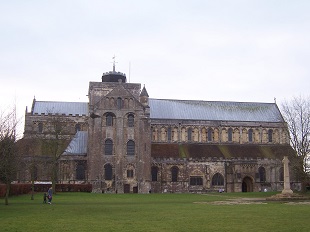
Romsey Abbey
Romsey This bustling market town is situated on the banks of the River Test and is known as being a gateway to the New Forest. The Romans called it Romana Insula, with the town and abbey standing upon an island. By the late 10th century nuns led by Elfaeda, daughter of Edward the Elder had founded a community here. The Vikings sacked the town in 993 A.D. and burnt down the nunnery. Rebuilding work commenced around 1000, and a market was established outside the gates. The Normans built the Abbey (1120 – 40) that stands today. King Henry I granted Romsey its first charter, thus allowing a market to be held every Sunday, and a 4-day annual fair in May. The town's woollen industry survived until the middle of the 18th century when new enterprises filled the gap, with brewing, paper-making and sack-making all making good use of the waters of the River Test.
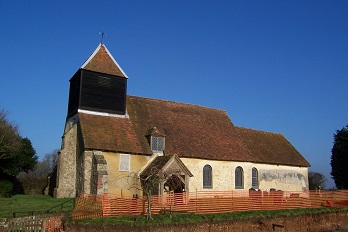 Collapsible boats, invented by Rev E.L. Berthon in 1851, were made here from 1870 until 1917, being utilised as lifeboats on ocean-going liners. Lord Palmerston, the 19th century Prime Minister, was born and lived at Broadlands, the country estate here which later became the home of Lord Louis Mountbatten. Another country estate here is Embley Park, once the home of Florence Nightingale, and where she received her divine calling whilst sitting under a tree in the grounds. After her return from the Crimea she regularly spent time at Embley. After her death in 1910 her body was brought by train to Romsey prior to her burial at East Wellow church. Romsey Abbey was restored to its former glory during the 19th century thanks to the efforts of the aforementioned Rev Berthon. It is now the largest parish church in the county and houses the tomb of Lord Mountbatten.
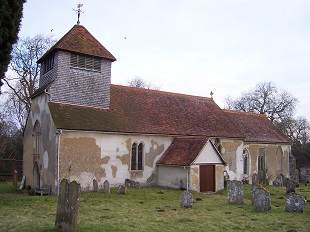 The Abbey has two organs and two choirs, a girls' choir having been formed in 1996. The bells were once housed in a detached campanile. After its demolition in 1625, the six bells were transferred to a wooden belfry on top of the central tower. These bells were replaced by a new set of eight bells in 1791. Three of the bells were re-cast in 1932, with a restoration of the bell-frame and re-hanging of the bells in 2007.
Farley Chamberlayne In reality, more a hamlet than a village, the name refers to a woodland clearing covered by ferns, and the affix from Herbert Fitz-Remi, Chamberlain to William the Conqueror. This beautiful area was blighted in the Middle Ages when the Black Death took its toll, decimating the inhabitants of the parish. Among those who died was the Lord of the Manor, John de la Berton, and thus the estate reverted to his mother, who married Thomas Missenden, groom of the Chancellor to Edward III.
The Abbey has two organs and two choirs, a girls' choir having been formed in 1996. The bells were once housed in a detached campanile. After its demolition in 1625, the six bells were transferred to a wooden belfry on top of the central tower. These bells were replaced by a new set of eight bells in 1791. Three of the bells were re-cast in 1932, with a restoration of the bell-frame and re-hanging of the bells in 2007.
Farley Chamberlayne In reality, more a hamlet than a village, the name refers to a woodland clearing covered by ferns, and the affix from Herbert Fitz-Remi, Chamberlain to William the Conqueror. This beautiful area was blighted in the Middle Ages when the Black Death took its toll, decimating the inhabitants of the parish. Among those who died was the Lord of the Manor, John de la Berton, and thus the estate reverted to his mother, who married Thomas Missenden, groom of the Chancellor to Edward III.
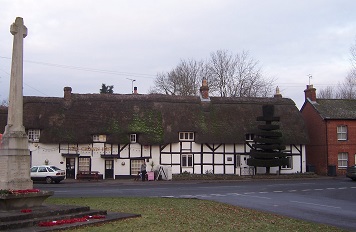 St John's church also has links to the House of Lancaster as Margaret Beauchamp was the mother of Sir John St John, who was Lord of the Manor from 1487 – 1512. The weather-boarded church stands on high ground affording views across the Solent to the Isle of Wight on a clear day. The bells are a testing three which are rung from the ground floor. The second bell is of medieval date, 1404, cast by John Barber of Salisbury. The treble is from 1500, by William Hasylwood of Reading, and the third is from 1603. The front two bells are reputed to have pealed during the War of the Roses.
Mottisfont Noted as Mortesfunde (a spring near a river confluence) in the Domesday Book, today the River Test runs through the heart of the village. A 12th century Augustinian priory was established here, this being replaced by the Georgian structure that stands today. Mottisfont Abbey is now run by the National Trust, with the house containing a drawing-room decorated by Rex Whistler, as well as a substantial art collection. The key attraction though is the grounds, playing host to specimen trees, wide lawns, walled gardens and the National Rose Collection. A plane tree towers 100ft above the river, where two trees have grown into one. The medieval parish church dates in part to the first half of the 12th century and is Grade I Listed. Constructed of ancient flint and stone the church is adorned with several stained-glass windows of note. The square wooden belfry contains five bells which are rung from the ground floor. The oldest bell is the third, being cast in 1663 by Francis Foster. The treble and fourth bells (1675 & 1678) are the work of unidentified founders. The second is by William Tosier, 1718. The most recent bell is the tenor, 1891, by John Warner & Sons.
St John's church also has links to the House of Lancaster as Margaret Beauchamp was the mother of Sir John St John, who was Lord of the Manor from 1487 – 1512. The weather-boarded church stands on high ground affording views across the Solent to the Isle of Wight on a clear day. The bells are a testing three which are rung from the ground floor. The second bell is of medieval date, 1404, cast by John Barber of Salisbury. The treble is from 1500, by William Hasylwood of Reading, and the third is from 1603. The front two bells are reputed to have pealed during the War of the Roses.
Mottisfont Noted as Mortesfunde (a spring near a river confluence) in the Domesday Book, today the River Test runs through the heart of the village. A 12th century Augustinian priory was established here, this being replaced by the Georgian structure that stands today. Mottisfont Abbey is now run by the National Trust, with the house containing a drawing-room decorated by Rex Whistler, as well as a substantial art collection. The key attraction though is the grounds, playing host to specimen trees, wide lawns, walled gardens and the National Rose Collection. A plane tree towers 100ft above the river, where two trees have grown into one. The medieval parish church dates in part to the first half of the 12th century and is Grade I Listed. Constructed of ancient flint and stone the church is adorned with several stained-glass windows of note. The square wooden belfry contains five bells which are rung from the ground floor. The oldest bell is the third, being cast in 1663 by Francis Foster. The treble and fourth bells (1675 & 1678) are the work of unidentified founders. The second is by William Tosier, 1718. The most recent bell is the tenor, 1891, by John Warner & Sons.
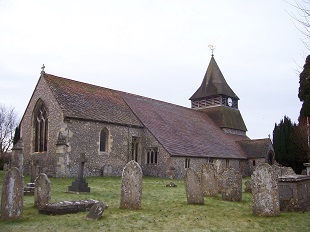 King's Somborne First documented as Swinburnan (a pig stream) in 909 A.D., the later affix from this having been a royal estate. Between the village and the river is the medieval deer park created for John of Gaunt, 1st Duke of Lancaster. A cow drove ran through the village and was used by travellers unwilling to pay the tolls on the turnpike roads to Stockbridge and the fair. The cliffs at nearby Brook are a local landmark where chalk is extracted. There are several manor houses of note in and around the village, including Marsh Court which was constructed entirely of blocks of local chalk and designed by Edwin Lutyens, with the original garden plan by Gertrude Jekyll. Also close by are Somborne Park and Compton Manor, home of the late Sir Thomas Sopwith of aviation fame. The fondly remembered ITV series Worzel Gummidge, from the books by Barbara Euphan Todd, was filmed in and around the village. The parish church is situated at the heart, with the large thatched pub, the Crown Inn, directly across the road. The church was extensively restored in 1886, with the chancel arch, north and south arcade and west end of the nave all belonging to this date. The oldest bell in the tower is the fifth, cast around 1499 in Salisbury. The fourth is from 1818, by James Wells of Aldbourne. The second and fourth (1887) and treble (1927) are all by Gillett & Johnston, London. The tenor is by John Warner & Sons, London, 1911.
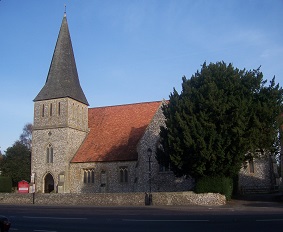 Stockbridge This picturesque town sits at the heart of the Test Valley, with the wide artery of the High Street reflecting its early role as part of a drover's route. The Test Way passes through Stockbridge, with the clear waters of the river running the length of the main street, and as a result there is the opportunity to catch glimpses of the trout. The Poetry in Motion Trail is a short trail of ten poems for visitors to discover amidst the shops, tea-rooms and galleries. During Victorian times, Lillie Langtry lived in the town. The original church is situated at the eastern end of Stockbridge, although only a small chancel and a graveyard now remain. The Victorian Gothic replacement was designed by John Coulson and built in 1866, constructed of flint with stone dressings. There has been considerable work of enhancement in recent years, with a new inner roof and a complete rebuilding of the organ. The south tower houses six bells, with the oldest (3, 5 & 6) dating to 1691 by Samuel Knight. Treble, second and fourth are of 1887, cast by Mears & Stainbank.
Farley Chamberlayne · St John
Mottisfont · St Andrew
The Crown Inn · King's Somborne
King's Somborne · St Peter
Stockbridge · St Peter
The Cotswolds
Saturday 16th March 2002
10.00am Stow on the Wold
Gloucs · St Edward (8) 27cwt
11.00am Guiting Power
Gloucs · St Michael (6) 6cwt
12.05pm Naunton
Gloucs · St Andrew (6) 9cwt
1.00pm The Black Horse
Naunton
Hugh Deam, Simon Edwards, Steve Everett, Malcolm Fairburn, Roy Goodwin, Nicholas Hartley, Anthony Hughes, Roy Jones, Susan King, Janice Knowles, John Lonsborough, Peter Lloyd, Paul Lucas, Bernard Masterman, Paul Morley, Ailsa Reid, Sue Reynolds, Charles Smith, June Steele, Leon Thompson, Clare Tucker, Richard Verrall and David Williamson.
Plain Bob Major, Stedman Triples, Grandsire Triples and Cambridge.
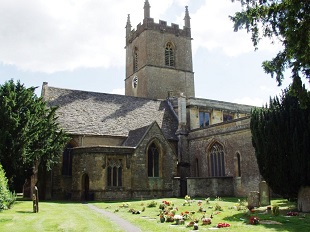
Stow on the Wold · St Edward
Stow on the Wold The original name of the settlement here was Eduuardestou (St Edwards holy place), and it was not until 1574 that the present affix came about, when noted as Stowe on the Olde, from the Anglo Saxon "Wald" (high ground cleared of forest). For several centuries Stow was supplied with water from springs below the town. On Digbeth Street stands the Royalist Hotel, possibly England's oldest inn, having been a hostelry since 947 A.D. The houses here were traditionally built with mellow Cotswold limestone from local quarries, and generally possessing massive internal oak beams. This busy market town stands 700ft above sea level, with the large market square lined with historic houses, inns and shops, all in a variety of styles. The town owes much of its prosperity to the wool trade, with Stow Fair remaining a huge draw every year, with as many as 20,000 sheep being
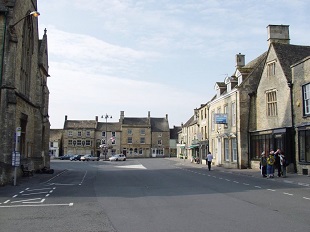 traded at any one time in years gone by. As the importance of the sheep trade declined so the character of the fair changed to recognise the rise in horse dealing by farmers, dealers and gipsies. The parish church of St Edward was built between the 11th and 15th century, with the 88ft high tower being the last part to be completed in 1447. The lavish features of this outstanding Cotswold church can be attributed to the prosperity brought by the wool trade. The tower houses the heaviest peal of eight bells in Gloucestershire. The two oldest bells, the third and sixth, date to 1620, cast by Henry Farmer. The fourth is by Abraham I Rudhall of Gloucester, 1717. The seventh is from 1778, by Thomas Rudhall, and the tenor by John Rudhall, 1811, at the same foundry. The fifth dates to 1883, and the front two bells, 1897, all by Taylor's of Loughborough. The bells sound every bit as magnificent as they ring.
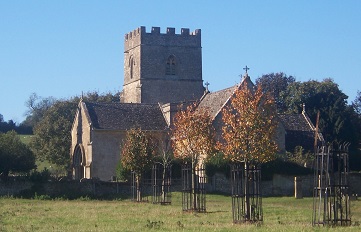 Guiting Power First noted as Gythinge in 814 A.D., the name of the settlement described a stream with a strong current. The later manorial affix denotes the Le Poer family, being documented as Gettinges Poer in 1220. The village is situated on the slopes above a valley formed by a tributary of the River Windrush. The ancient pathway of the Warden's Way passes through the village on its route from Bourton on the Water to Winchcombe. Also here is a 17 acre wetland nature reserve. Nearby are the excavated foundations of the original Anglo-Saxon church and a large kerbed round barrow shown as tumulus on ordnance survey maps. Just outside the village is the Cotswold Farm Park, run by Adam Henson from BBC's Countryfile; set on high ground, it contains rare farm breeds such as Longhorn cattle, Soay and Orkney sheep, and Gloucester Old Spot pigs. The origins of the present church are Norman, the chancel being added later, and the tower built in the 15th century, at the time when the walls of the nave were raised. A major course of restoration work was carried out on the church in 1903. The bells have been declared unringable on several occasions, most recently in the early 1980s. In 1981 they were re-hung in a new frame and augmented to a six by Whitechapel, with the treble and fourth bell added at this time. The third, fifth and tenor date to 1869, all cast by Henry I Bond of Burford. The second bell was cast a year later by John Warner of London.
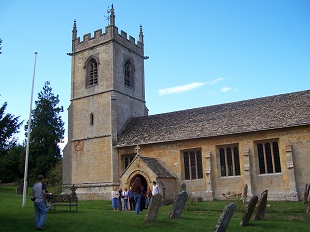 Naunton Describing a new farmstead or estate, the village was documented as Niwetone in the Domesday Book. What was long an agrarian based community has steadily become a dormitory village with astronomical house prices. Although without a shop since the 1990s, Naunton does still have a pub, The Black Horse, which was converted from a row of tiny farmworkers cottages in the 1870s. The front bar has a flagstone floor, low black beams, and built-in pews. The village nestles in the heart of the Windrush Valley, with the Cotswold-stone buildings standing out against the rich backcloth of the wold. The river meanders through the village, with Harford Bridge crossing the river nearby. The 1998 Grand National winner, Earth Summit, was trained at the local stables of Nigel Twiston- Davies. Earth Summit is the only horse that has won all three Nationals, Grand, Scottish and Welsh. The primarily 15th century parish church possesses a fine Perpendicular tower, a variety of gargoyles, and two 18th century sun dials. A highlight inside the church is the assiduously carved 15th century stone pulpit, which is one of the best surviving examples of that era. The church was restored by Waller & Sons in 1899. The bells were augmented from three to six in 1991/92, with the new front three bells cast at Whitechapel. The tenor is from 1684, by Richard Keene of Woodstock. The fourth and fifth are from 1775, by Thomas Rudhall, Gloucester.
Stow on the Wold
Guiting Power · St Michael
Naunton · St Andrew
Sunningwell & Appleford
Saturday 23rd February 2002
10.00am Sunningwell
Oxon · St Leonard (6) 8cwt
11.30am Appleford
Oxon · St Peter & St Paul (6) 8cwt
12.45pm The Carpenters Arms
Appleford (now The Appleford Kitchen & Bar)
Hugh Deam, Anthony Hughes, Roy Jones, Peter Lloyd, David Ramsbottom,
Suzette Reynolds, Mark Walker, Brenda and Brian Thomas.
Suzette Reynolds, Mark Walker, Brenda and Brian Thomas.
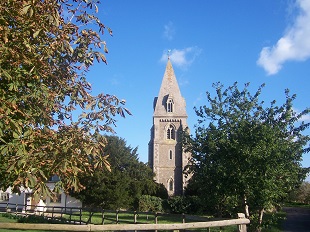
Appleford · St Peter & St Paul
Sunningwell See Saturday 29th November 2003 for details.
Appleford on Thames As the name implies, the village was once famed for its many orchards, with the ford being used to aid the transportation of the fruit to market. Appleford stands in the shadow of Wittenham Clumps, with pre-historic and Roman relics having been found in abundance locally, especially in the area close to the church. At the centre of the village is “The Nap”, this being the local description for a green. During the Civil War, a courageous and resourceful band of villagers managed to repel a troop of Royalist cavalry led by Prince Rupert. Orchard House was once the home of Edmund Bradstock, the village’s principal benefactor, who founded the school and set up charities for the elderly here and in Sutton Courtenay. The most colourful character in more recent history was John “Jockey” Faulkner, who died in 1933 at the age of 104. He rode his first race as a jockey at the age of eight and his last at 70. An earlier horseman of fame, Dick Turpin, also briefly made his home here. The parish church is Norman in origin and originally served as a chapelry of Sutton Courtenay.
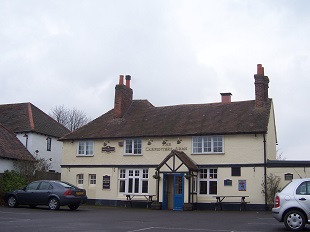 During the 19th century the architect Ewan Christian was responsible for a remodelling and extension of the nave. In 1885/86, the architect William Gilbee Scott rebuilt the tower and added the spire. Samuel Green built the organ in 1777 for Abbey House in Sutton Courtenay, and it was transferred to here later. The tower houses six bells, the oldest of which are the fourth (c.1399) and fifth (c.1499), both cast at the great medieval foundry in Wokingham. The other four bells were cast by John Warner & Sons, 1886. A peal record carved into the stone of the ringing chamber documents 720 changes of Grandsire Minor rung here in 1889. The bells have been classified as unringable since not long after our visit due to the wooden frame being considered unsafe. That these splendid bells have remained silent for such a long period of time is a tremendous pity, with the massive wooden beams of the ringing chamber being equally memorable.
Situated on the main road (B4016) through the village, The Carpenters Arms pub has since been renamed as The Appleford Kitchen & Bar, but is still very much operating as a pub as well as a dining place. At the time we visited in 2002 there was a particularly fine log fire warming the room.
During the 19th century the architect Ewan Christian was responsible for a remodelling and extension of the nave. In 1885/86, the architect William Gilbee Scott rebuilt the tower and added the spire. Samuel Green built the organ in 1777 for Abbey House in Sutton Courtenay, and it was transferred to here later. The tower houses six bells, the oldest of which are the fourth (c.1399) and fifth (c.1499), both cast at the great medieval foundry in Wokingham. The other four bells were cast by John Warner & Sons, 1886. A peal record carved into the stone of the ringing chamber documents 720 changes of Grandsire Minor rung here in 1889. The bells have been classified as unringable since not long after our visit due to the wooden frame being considered unsafe. That these splendid bells have remained silent for such a long period of time is a tremendous pity, with the massive wooden beams of the ringing chamber being equally memorable.
Situated on the main road (B4016) through the village, The Carpenters Arms pub has since been renamed as The Appleford Kitchen & Bar, but is still very much operating as a pub as well as a dining place. At the time we visited in 2002 there was a particularly fine log fire warming the room.
The Carpenters Arms
A record of outings 2001
by Hugh Deam
Marlborough Downs
Saturday 22nd September 2001
10.15am Lacock
Wilts · St Cyriac (6) 12cwt
11.15am Heddington
Wilts · St Andrew (6) 8cwt
12.05pm Yatesbury
Wilts · All Saints (5) 9cwt
12.50pm Avebury
Wilts · St James (6 now 8) 4cwt
01.30pm The Red Lion
Avebury
04.00pm Wootton Rivers
Wilts · St Andrew (6) 3cwt
Hugh Deam, Simon Edwards, Jonathan Everett, Steve Everett, Keith Godfrey, Sally Harrison, Anthony Hughes,
Roy Jones, Susan King, Janice Knowles, Peter Lloyd, Paul Morley, Sue Reynolds and Charles Smith.
Roy Jones, Susan King, Janice Knowles, Peter Lloyd, Paul Morley, Sue Reynolds and Charles Smith.
Cambridge, Little Bob, Stedman, St Andrew, St James and Grandsire.
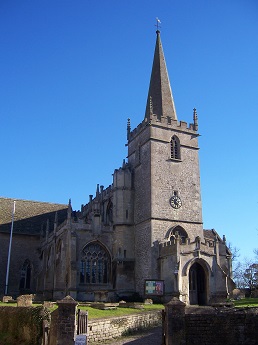
Lacock · St Cyriac
Lacock The Abbey here was founded in 1229 by Ela, Countess of Salisbury, with the village retaining its Tudor feel, being comprised primarily of thatched and stone cottages. The 15th century church is in the Perpendicular style. The entire village of Lacock is now a National Trust property. See Saturday 27th April 2013 for full details of Lacock.
Heddington Noted as Edintone (Hedde's estate) in 1086, the village is on the heart of what is still an agricultural area, nestling as it does under the flank of the Marlborough Downs. A seminal BBC documentary series on English rural life was filmed here during the 1970s. A popular steam rally is held here annually on the first weekend of July, with allied attractions such as classic cars, motorbikes, tractor pulling, falconry, quad bikes and a fun-fair. Besides the parish church here, there is also a Buddhist temple and associated community situated in Splatt's House. St Andrew's church dates to the 13th century and is constructed of ashlar and rubble stone with slate roofs. The nave and south aisle roofs were restored in 1976. The oldest of the six bells in the tower is the fifth, dating to 1605 and cast by John Wallis. The third, fourth and tenor were all cast by Abel Rudhall of Gloucester in 1741. The second bell, originally from 1618, was recast in 1939, and the current treble added in 1953 to commemorate the Queen's Coronation.
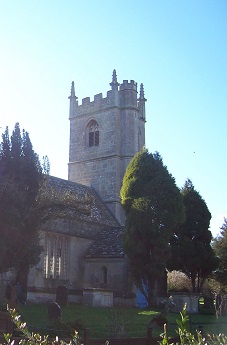 Yatesbury Originating as a fortified stronghold, the Domesday Book documented the settlement as Etesberie. The village has expanded little in recent centuries, although plans have been laid down for new housing on what was an RAF base here. The airfield opened during World War I and became a radio & radar training school during World War II. The disused airstrip was used to film the video for the 1988 U.K. Number 1 song by The Timelords - Doctorin' the Tardis. A further musical connection is that Julian Cope of Teardrop Explodes has resided in the village for many years, and has been referenced in one of his songs. The delightful 13th century church, partially rebuilt in the following century, sits on the edge of a copse and in the shadow of Windmill Hill. The present day dedication of All Saints only came about in 1763.
Avebury The village is primarily known for Avebury Ring, which is a 28 acre World Heritage Site consisting of 100 sarsen stones as the outer circle and 40 for the inner circle. The archaeologist Alexander Keiller went to great lengths to have them re-erected in their original positions during the 20th century. The inner ring is enclosed by a ditch and an external bank, having endured a chequered history since first figuring as a ceremonial centre circa 2500 B.C. The museum which bears the archaeologist's name is located in the 17th century stables and features artefacts from what is the largest prehistoric monument in Western Europe.
Yatesbury Originating as a fortified stronghold, the Domesday Book documented the settlement as Etesberie. The village has expanded little in recent centuries, although plans have been laid down for new housing on what was an RAF base here. The airfield opened during World War I and became a radio & radar training school during World War II. The disused airstrip was used to film the video for the 1988 U.K. Number 1 song by The Timelords - Doctorin' the Tardis. A further musical connection is that Julian Cope of Teardrop Explodes has resided in the village for many years, and has been referenced in one of his songs. The delightful 13th century church, partially rebuilt in the following century, sits on the edge of a copse and in the shadow of Windmill Hill. The present day dedication of All Saints only came about in 1763.
Avebury The village is primarily known for Avebury Ring, which is a 28 acre World Heritage Site consisting of 100 sarsen stones as the outer circle and 40 for the inner circle. The archaeologist Alexander Keiller went to great lengths to have them re-erected in their original positions during the 20th century. The inner ring is enclosed by a ditch and an external bank, having endured a chequered history since first figuring as a ceremonial centre circa 2500 B.C. The museum which bears the archaeologist's name is located in the 17th century stables and features artefacts from what is the largest prehistoric monument in Western Europe.
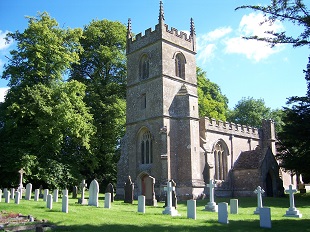 During the Middle Ages the Catholic Church became alarmed by the revival of Pagan Rites and issued orders for the megaliths here to be buried. In 1938, a man's skeleton was found underneath one of the stones. Coins and surgical tools found with the skeleton identified him as a surgeon-barber who died around 1320. The scissors are amongst the earliest examples to have ever been found. The excellent Red Lion public house is a beautifully thatched hostelry which plies its trade in the shadow of the stones. The day we visited the autumnal equinox was being celebrated and there was much druid activity here. The church dates from around 1000 A.D., and retains its tall Anglo-Saxon nave. The aisles were added to the nave in the 12th century and widened in the 15th century, when the Norman south doorway was moved to its present position.
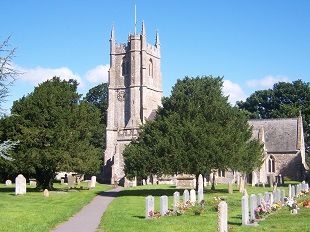 The chancel was largely rebuilt in 1879, with the choir stalls made at this time from the 17th century oak-pew for the Trusloe family that had stood in the chancel. On the south wall is a memorial to John Trusloe, who held the Manor from 1568 – 1593. The tower is of three stages and now contains eight bells. The tenor of the old heavy set of bells was retained and converted for use in striking the hours for the clock. A new peal of six bells was cast in 1980 at Whitechapel, and installed the following year. The set was augmented to an eight when the same foundry cast the present front two bells in 2009.
Wootton Rivers Noted as Wdutun (farmstead by a wood) in 804 A.D., the village gained its manorial affix (Wotton Ryvers) in 1332, denoting the de Rivere family, landowners here from the 13th century. Wootton Rivers is situated on the course of the Kennet & Avon Canal, and has become something of a "dormitory village" of late.
The chancel was largely rebuilt in 1879, with the choir stalls made at this time from the 17th century oak-pew for the Trusloe family that had stood in the chancel. On the south wall is a memorial to John Trusloe, who held the Manor from 1568 – 1593. The tower is of three stages and now contains eight bells. The tenor of the old heavy set of bells was retained and converted for use in striking the hours for the clock. A new peal of six bells was cast in 1980 at Whitechapel, and installed the following year. The set was augmented to an eight when the same foundry cast the present front two bells in 2009.
Wootton Rivers Noted as Wdutun (farmstead by a wood) in 804 A.D., the village gained its manorial affix (Wotton Ryvers) in 1332, denoting the de Rivere family, landowners here from the 13th century. Wootton Rivers is situated on the course of the Kennet & Avon Canal, and has become something of a "dormitory village" of late.
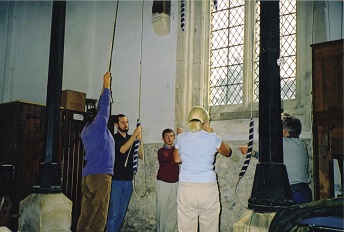 There is ample opportunity to view an array of colourful narrow-boats as there are four locks to be negotiated within the space of two miles. The verdantly appointed church dates to 1861 and was constructed under the guidance of George Edmund Street. The wooden bell-turret is capped by a shingled broach spire. Arguably the most interesting facet of the church is the elegant three faced clock known as the "Jack Sprat Clock", having been built by local craftsmen in 1911 to mark the Coronation of George V. This exquisite mechanism defied all expectations as it was constructed from scrap materials due to the villagers not having the money to afford the purchase of a new clock. Experts stated that it could not possibly be accurate as it was comprised of seemingly unsuitable items such as bicycles, prams and farm tools, but such was the dedication of the whole enterprise that it still functions today. It has 24 different chimes, and its faces have letters instead of numbers. The bells are rung from the ground floor and are extremely light, thus requiring tidy handling. The back five bells were cast in 1793 by Robert II Wells of Aldbourne, with the treble added by Whitechapel in 1999.
Heddington
Yatesbury · All Saints
Avebury · St James
Wootton Rivers · St Andrew
Aylesbury Vale
Saturday 16th June 2001
3.30pm Lane End
Bucks · Holy Trinity (6) 5cwt
4.30pm Ickford
Bucks · St Nicholas (3) 8cwt
5.15pm Tetsworth
Oxon · St Giles (6) 4cwt
6.00pm Leigh End
Oxon · Campanile (6 now an 8) 0-2-8
7.15pm Chilton
Bucks · SMV (3) 7cwt
Steve Davies, Richard Day, Hugh Deam, Steve Everett, Keith Godfrey, Roy Goodwin, Helen Howes, Roy Jones, Mary Joseph, Susan King, Janice Knowles, Peter Lloyd, John Lonsborough, Paul Morley, Len Porter, Sue Reynolds, June Steele and Mark Walker.
Cambridge, Plain Bob Minor, Stedman and Grandsire.
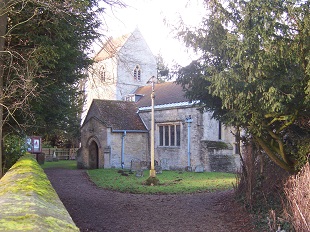
Ickford · St Nicholas
Lane End See Saturday 28th October 1989 for details.
Ickford This elegant village was documented as Iforde (Icca's ford) in 1086, with a modification to Yeford in 1175. The village annually competes with Tiddington on the Oxfordshire side of the River Thame, this being the county border, with the losers inevitably ending up in the water. The church is a mixture of Norman and Early English work, with an unbuttressed west tower that is Norman in the lower half, and has 13th century bell-openings facing to the west; the roof is of the saddleback type. Substantial work on re-modelling the church was carried out (1644 – 60), when the rectory was held by Gilbert Sheldon, who presented the Sheldonian Theatre to Oxford University and did much to help the poorer members of the clergy. He went on to become, successively, the Bishop of London and Archbishop of Canterbury. The elegant pulpit here is just one of his many donations to the church. Long rung from the ground floor, an upstairs ringing chamber has now been installed. The treble bell was cast around 1599, probably by George Appowell of Buckingham. The tenor was cast in 1623 by Ellis I Knight of Reading, and the second bell was cast in 1716 by George Chandler of Drayton Parslow.
Leigh End Campanile Located in the village of Wheatley, this is a wonderfully constructed campanile built by Mark Walker, rung from the living room, which have since been augmented to a ring of eight.
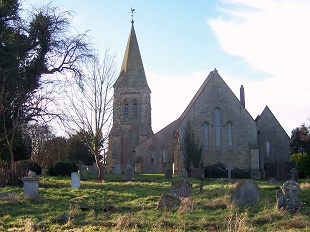 Tetsworth The settlement here in 1150 was noted as Tetlewrthe, from the Anglo-Saxon for Taetel's enclosure. The village lies in the fertile plain of the Chiltern escarpment, and long stood on the trunk road between London and Oxford. Tetsworth is clearly visible from the M40, with the spire of St Giles church the most prominent feature on the skyline. The centre of the village is a pleasing mix of pubs on one side and a large green used for cricket and football on the other. The parish church was rebuilt in 1855 in the Early English style, although retaining a Norman doorway. The new building was designed by architect John Billing of Reading, who also conducted repairs to Christ Church Cathedral in Oxford. The stonework around the window in the ringing chamber incorporates the date when this building work took place. By the end of the 18th century the old church already had a ring of six bells and they were re-hung in the new building. Mears & Stainbank of Whitechapel re-cast all the bells in 1936.
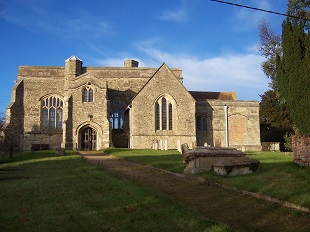 Chilton This small estate village was noted as Ciltone, from the Anglo-Saxon for a young man's farm, in the Domesday Book of 1086, and now also includes the hamlet of Easington. The elegant mansion of Chilton House, seat of the Aubrey-Fletcher family, has for over half a century also acted as a residential home. A large windmill that used to be a focal point on a rise overlooking the village was unfortunately demolished in 1925. There has been a place of worship here since Norman times, with the present church set on high ground overlooking the central junction of the village; the spectacular array of stained glass means that the light within the church is superb. The Decorated Gothic tower forms the north transept and is mid-14th century. The nave, chancel arch, and chancel roof were restored in the 15th century. The three bells are rung from the ground floor, the ropes being laid out in a straight line close to the wall. All the bells were, including the Sanctus bell, were cast by Richard Keene of Woodstock, tenor and Sanctus (1685) and front two bells from a year later (1686).
Tetsworth · St Giles
Chilton · SMV
The Chilterns
Saturday 28th April 2001
10.00am Lane End
Bucks · Holy Trinity (6) 5cwt
11.00am Turville
Bucks · St Mary (5) 7cwt
12.05pm Nettlebed
Oxon · St Bartholomew (6) 5cwt
01.15pm The Three Horseshoes
Garsington
03.30pm Little Milton
Oxon · St James (6) 11cwt
05.00pm Thame
Oxon · SMV (8) 11cwt
David Andrews, Hugh Deam, Jonathan Everett, Roy Goodwin, Nicholas Hartley, Anthony Hughes, Roy Jones, Mary Joseph, Susan King, Peter Lloyd, John Lonsborough, Paul Morley, Catherine Sherwood, Charles Smith, Christine Taylor and Richard Verrall.
Plain Bob Major, Grandsire Triples, Cambridge, St Clements and Stedman.
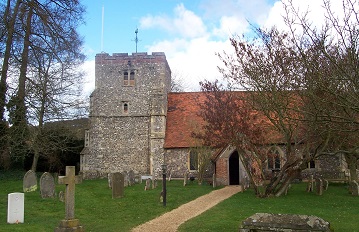
Turville · St Mary
Lane End See Saturday 28th October 1989 for details.
Turville Documented as far back as 796 A.D. as Thyrefeld, the name of this famous scenic village denotes "dry open land". Along with its near neighbour Hambleden the village is a much favoured filming location for television and movies, with a list of credits as long your arm. The Vicar of Dibley, Midsomer Murders, Goodnight Mr Tom and Chitty Chitty Bang Bang have all used Turville as a major location for filming, but most significant is probably the film "Went the Day Well?", where it doubled as Bramley End, a sleepy English village which was taken over by a forward guard of German paratroopers disguised as a British Unit with the intention of using the manor house as headquarters until the main invasion force arrived. The screenplay was written by Graham Greene and was a shocking wake-up call, with the vicar mercilessly shot
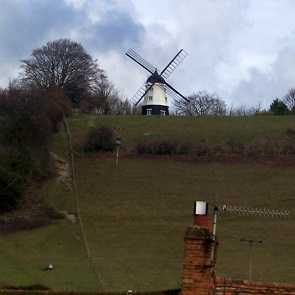 as he chimed one of the bells to warn the parishioners and the trusted squire (played by Leslie Banks who was normally associated with the hero's role) a fifth columnist. The film is still considered one of the greatest war movies ever made, with the village still perfectly recognisable from this time (1942). This village is replete with 17th – 19th century timber-framed cottages and is overlooked by hills at virtually every angle. The approach from the north passes through a dense beech-wood that sees the road become impassable in icy weather. The area is popular with walkers and pony-trekkers and was badly affected by the draconian restrictions on such movements during the foot & mouth outbreak in early 2001. The Bull & Butcher pub, with its rustic appearance and warm low-beamed interior has long been a widely known meeting place for locals and visitors alike. The parish church, with its broad tower, retains fragments from its rebuilding of 1300. The south doorway has pilgrim crosses cut into the masonry. The five bells here are rung from the ground floor and allow for a very satisfying ringing experience.
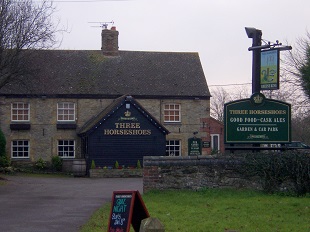 The oldest bell is the fourth, from 1628, by Ellis I Knight of Reading. The fifth is of 1744, by Thomas Lester of Whitechapel. The same foundry much more recently cast the front three bells, the third in 1996 and the front two a year later.
Nettlebed See Saturday 12th April 1986 for details.
Little Milton As the name suggests this is the small of the twin Milton villages, Great Milton being just north of here. The Domesday Book describes the settlement as Mideltone (a middle farmstead or estate). The parish is bounded by the River Thame to the west and one of its tributaries, Haseley Brook, to the south. To the east is the hamlet of Rofford, and an ancient track that is now a bridleway, with the village set on raised ground. The manor house dates to the 15th and 16th century and contains interesting 19th century lodges from the remodelling and extension of the 19th century. Amidst the numerous cottages in the village centre is the thatched public house – The Lamb – which dates to the 17th century and has particularly low beams.
The oldest bell is the fourth, from 1628, by Ellis I Knight of Reading. The fifth is of 1744, by Thomas Lester of Whitechapel. The same foundry much more recently cast the front three bells, the third in 1996 and the front two a year later.
Nettlebed See Saturday 12th April 1986 for details.
Little Milton As the name suggests this is the small of the twin Milton villages, Great Milton being just north of here. The Domesday Book describes the settlement as Mideltone (a middle farmstead or estate). The parish is bounded by the River Thame to the west and one of its tributaries, Haseley Brook, to the south. To the east is the hamlet of Rofford, and an ancient track that is now a bridleway, with the village set on raised ground. The manor house dates to the 15th and 16th century and contains interesting 19th century lodges from the remodelling and extension of the 19th century. Amidst the numerous cottages in the village centre is the thatched public house – The Lamb – which dates to the 17th century and has particularly low beams.
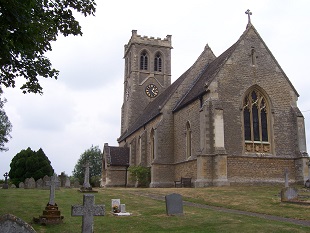 The elegant church was built as recently as 1844 by John Hayward of Exeter in a distinctive 14th century style, with the tower added in 1861. The long climb up to the ladder to the ringing chamber is somewhat daunting, but the bells here are well worth overcoming any fear of heights. A re-hanging just prior to the Millennium has made them a lot easier to ring, and a hand-rail has been added to the ladder so as to make the ascent and descent less unnerving. All six bells were cast by Mears & Stainbank, Whitechapel, in 1867.
Thame Around 1000 A.D. the settlement here was noted as Tame, from the Celtic description for the river here. Today, Thame is one of the most archetypal of market towns, instantly recognisable by its broad High Street comprising a variety of distinct styles from across the centuries, with a weekly street market whose origins date back to 1230. The town centre has featured in numerous episodes of Midsomer Murders since the 1990s. In 1550 the courtier John Williams, 1st Baron Williams of Thame, ordered the building of the alms-houses in Church Lane, and after his death in 1559 monies left in his will paid for the establishment of the local grammar school. The Civil War in
The elegant church was built as recently as 1844 by John Hayward of Exeter in a distinctive 14th century style, with the tower added in 1861. The long climb up to the ladder to the ringing chamber is somewhat daunting, but the bells here are well worth overcoming any fear of heights. A re-hanging just prior to the Millennium has made them a lot easier to ring, and a hand-rail has been added to the ladder so as to make the ascent and descent less unnerving. All six bells were cast by Mears & Stainbank, Whitechapel, in 1867.
Thame Around 1000 A.D. the settlement here was noted as Tame, from the Celtic description for the river here. Today, Thame is one of the most archetypal of market towns, instantly recognisable by its broad High Street comprising a variety of distinct styles from across the centuries, with a weekly street market whose origins date back to 1230. The town centre has featured in numerous episodes of Midsomer Murders since the 1990s. In 1550 the courtier John Williams, 1st Baron Williams of Thame, ordered the building of the alms-houses in Church Lane, and after his death in 1559 monies left in his will paid for the establishment of the local grammar school. The Civil War in
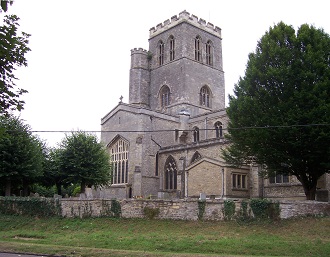 the 1640s saw Thame occupied in turn by both sides. After the Battle of Chalgrove Field in 1643, Col John Hampden, who had been educated at the grammar school, died of his wounds at the house of Ezekiel Browne, the dwelling later becoming the Greyhound Inn. The most notable resident of the town in recent times was Robin Gibb of the Bee Gees who lived in the Prebendal House across the road from the church, of which he was a benefactor, until his death in 2012. Other famous residents have been poet/playwright W.B. Yeats, violinist Alfredo Campoli and Sir Frank Bowden, 3rd Baronet, grandson of the founder of the Raleigh Bicycle Company, and who lived at Thame Park. Thame Abbey was founded in 1138 for the Cistercian Order, with the Dissolution of the 16th century seeing the building demolished and Thame Park built on the site. The earliest feature of the parish church is the 12th century base of the font, the octagonal bowl having been re-cut in the following century. The present church is a cruciform building of the 13th century, the chancel being Early English Gothic, from 1220, with six lancet windows in its north wall. The nave has 5-bay north and south aisles which were widened in the 14th century. In the 15th century the tower piers were strengthened and the two upper stages of the tower were built. All eight bells here date to 1876, being cast by Mears & Stainbank, Whitechapel.
Turville
The Three Horseshoes
Little Milton · St James
Thame · SMV
The Malvern Hills
Saturday 17th March 2001
10.20am Hallow
Worcs · St Philip & St James (8) 21cwt
11.20am Madresfield
Worcs · SMV (6) 13cwt
12.20pm Welland
Worcs · St James (6) 10cwt
01.10pm The Three Kings
Hanley Castle
02.30pm Hanley Castle
Worcs · SMV (6) 14cwt
04.30pm Harvington
Worcs · St James the Great (6) 8cwt
Robert Chadburn, Hugh Deam, Roy Goodwin, John Hearn, Anthony Hughes, Roy Jones,
Mary Joseph, Susan King, Peter Lloyd, Paul Morley and Richard Verrall.
Mary Joseph, Susan King, Peter Lloyd, Paul Morley and Richard Verrall.
Grandsire Triples, London, Cambridge, Original, St Clements and Plain Bob Minor.
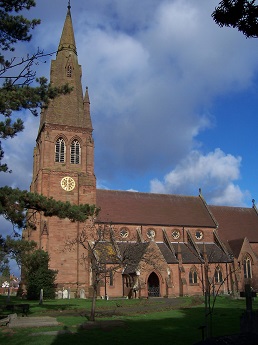
Hallow · St Philip
The Malvern Hills are a limestone outcrop that take their name from the Celtic term for "bare hill", and are estimated to be some 650,000,000 years old.
Hallow Documented as Halhagan (enclosures in a nook of land) in the 9th century, during the reign of Coenwulf of Mercia the settlement belonged to Worcester Cathedral. The 11th century Worcester Priory had fishponds constructed at Hallow, and in 1256 permission was granted for a warren as well. The Domesday Book records that Hallow had two water-mills on the River Severn that were utilised for grinding grain. Until 1876, Hallow was a chapelry of Grimley, with the chapel of ease demolished in 1830 and replaced by a modest chapel close by. In 1867 the second chapel was demolished and building began on the present parish church. It was designed by William J Hopkins, and completed in 1869. The nave and clerestory are of four bays and are flanked by north and south aisles. 17th and 18th century memorial tablets from the old chapel were preserved and are mounted in the new church. A 16th century bell from the original chapel hung in the church until 1900, when a new peal of eight bells was cast by Taylor's of Loughborough and hung in the tower. The bells are superb to ring, with a wonderful tone, although the tower has a tendency to sway slightly whilst ringing takes place.
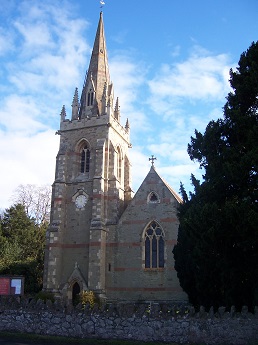 Madresfield Documented as Metheresfeld (open land of Maethere) in 1192, the village sits on the woodland slopes amidst the Malvern Hills, a mere two miles south of Malvern town centre. A multiplicity of lanes and bridleways crisscross the many acres of common-land that encompasses half a dozen villages and hamlets in the shadow of the hills at their steepest. The mansion of Madresfield Court is surrounded by a moat, and is reputed to have been the inspiration for Evelyn Waugh's most famous novel – Brideshead Revisited. The parish church dates to 1966/67, by Frederick Preedy, with a richly coloured east window that depicts the ascension watched dutifully by angels, above and in the flanking lights. The bells are rung from the ground floor and require good handling. Since this time (2005) the tenor and fourth bell have been re-cast to make the two new front bells, which results in ringing being more equable. The other four bells of 1867, also by Taylor's of Loughborough were re-tuned at this time.
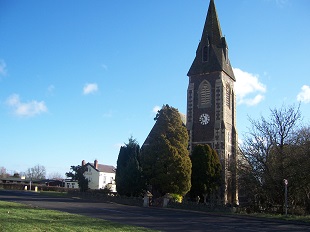 Welland Deriving its name from the Celtic description for a river, Welland is situated in the shadow of the ancient and beautiful Malvern Hills at their most stark and exposed to its north and west. The shadow of Raggedstone Hill is said to bring misfortune to anyone upon whom it falls, a superstition which began in the Middle Ages with the death of a monk who had been forced to serve penance for a misdeed by crawling up the hill on his hands and knees every day. Shortly before he died he is said to have cursed his persecutors with an untimely death should the shadow of the hill's stones fall across them. The village is adjacent to Castlemorton Common which was once part of the royal hunting grounds of Malvern Chase. To the south are the earthwork remains of a medieval motte and bailey. The manor house here is the elegant 18th century Welland Court. The Welland Steam Rally takes place annually on the last weekend of July, with numerous steam engines and historic vehicles on display. The original church of 1300 was situated on a different site, a mile or so from the present building, which dates to 1875. The tower clock was added to mark Queen Victoria's Diamond Jubilee in 1897. The tower, with wooden spire, is of Malvern stone, faced with Bath stone. The bells are by Taylor's of Loughborough, 1874, and re-hung in 1936.
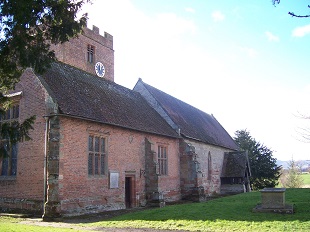 Hanley Castle The original settlement here was known as Hanlege (a high wood), with affix as a result of the 13th century castle that was ordered by King John for his use as a hunting lodge, taking six years to construct (1206 – 1212). Over a century later, 1324, a gargantuan ditch was carved out around it, measuring 60ft wide and 7ft deep, being fed by the Mere Brook. By the 15th century the greater part had been demolished and the tower finally removed in 1795. In days gone by the village was alternatively known by some locals as Potters' Hanley. The Three Kings pub virtually adjoins the church gate, and is so understated that it could easily be missed. The epitome of a country hostelry, this is a true hidden gem that eschews commercialism which has been run by the same family for over a century and has won CAMRA's pub of the year title. The delightful parish church is tucked away behind the grounds of the Hanley Castle High School, and dates back to medieval times, but following damage incurred from constant skirmishing during the Civil War it was partially rebuilt in the 17th century. The most prominent of the numerous memorials here recall the Lechmere family, the principal local landowners. Rung from a capacious ringing chamber, the bells are about as good a set as you could wish to find. The bells were originally cast by Abraham I Rudhall of Gloucester in 1699, but were re-tuned and the front three re-cast by Taylor's of Loughborough in 1925.
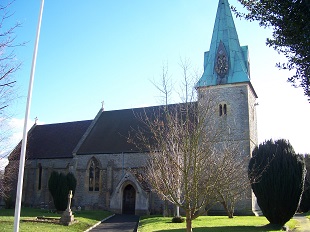 Harvington This now extensive village is situated on the banks of the River Avon just to the north of Evesham, and has an abundance of half-timbered cottages of cruck construction. A settlement documented as Herverton (a farmstead near a ford suitable for the passage of an army) is known to have been here in 707 A.D., with the Domesday Book noting it as Herferthun. Besides the many cottages, there is also a magnificent moated hall here, the moat of which dates to medieval times, with the house being of the Tudor period, although internally decorated by Elizabethan wall-paintings and riddled with the largest concentration (four) of priest-holes of any comparably sized residence in the country. The late 15th century parish church was refurbished around the Millennium with the lower part of the tower surviving from Norman times, and the upper half capped by the only copper spire in the vale. The clock was made by Dent in 1854 and possesses a recoil escapement and a compensated pendulum; it strikes the hour only, and has just one dial, this being on the north face of the tower. The bells were hung-dead when first installed, but in 1998 they were re-hung for full circle ringing, with a number of innovative space-saving devices and designs utilised in the ringing chamber. The six bells of 1855 were cast by C & G Mears of Whitechapel, who also broke up the old bells at this time.
Madresfield · SMV
Welland · St James
Hanley Castle · SMV
Harvington · St James Gt
A record of outings 2000
by Hugh Deam
Vale of the White Horse
Saturday 21st October 2000
10.00am Buscot
Oxon · St Mary (4) 7cwt
10.45am Faringdon
Oxon · All Saints (8) 17cwt
11.45am Longcot
Oxon · SMV (8) 8cwt
12.30pm Shellingford
Oxon · St Faith (6) 6cwt
01.30pm The Fox & Hounds
Uffington
02.30pm Uffington
Oxon · St Mary (6) 12cwt
03.30pm Childrey
Oxon · St Mary (6 but now an 8) 12cwt
Hugh Deam, Jonathan Everett, Joy Everett, Steve Everett, Keith Godfrey, Roy Goodwin,
Anthony Hughes, Roy Jones, Mary Joseph and Richard Verrall.
Anthony Hughes, Roy Jones, Mary Joseph and Richard Verrall.
Grandsire Triples, Plain Bob Minor, Stedman, St Simon's, Uffington and Single Court.
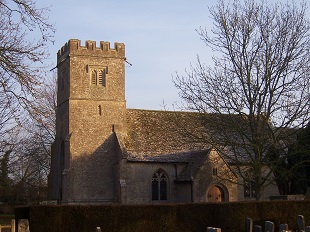
Buscot · St Mary
Buscot The name of the village denotes "cottages of the fort-keeper", being noted as Boroardescote in 1086. Much of the area is administered by the National Trust, with several picturesque walks, particularly to and from Buscot Weir; as a result, ramblers, anglers and birdwatchers all mark this as a destination of choice. A riverside path runs between the village and Kelmscott, with its famous 16th century country house that served as the home of textile designer William Morris for over 25 years. Buscot's own great house, Buscot Park, was built in neo-classical style between 1780 and 1783 for Edward Lovedon Townsend. In 1887, the estate was sold to Alexander Henderson, later Baron Faringdon. The 2nd Lord Faringdon engaged architect Geddes Hyslop to restore the house to its 18th century form, and enlarged the art collection. The landscape architect Harold Peto was commissioned
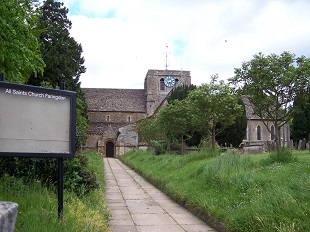 to design an Alhambra-style water garden. The estate was bequeathed to the National Trust in 1956, with the contents (including works of art by Rembrandt and Burne-Jones) owned by the Faringdon Collection Trust and the house managed by Lord Faringdon. The parish church of 1200 is situated close to the idyllic Cheese Wharf, a beautiful stretch of water that loops off from Buscot Lock. The church retains its fine Norman chancel, with the tower dating to the 15th century. An outstanding feature of the church is the east window showing The Good Shepherd by Sir Edward Burne-Jones, and given to the church in 1891 by Lord Faringdon. The pulpit is made from Flemish altar panels. The bells are rung from the ground floor, the third bell dating to 1399 and cast in Bristol. The treble is from 1520 by Thomas Jefferies, also Bristol. The second bell dates to 1708, by William and Robert Cor,
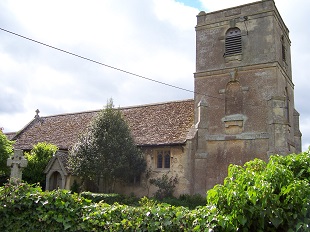 Aldbourne; with the fourth of 1891, Whitechapel.
Faringdon For details see Sat 6th Dec 1986.
Longcot The settlement documented as being here in 1233 was known as Cotes (a row of cottages), but a century later it had grown so much that it was renamed Longcote. The village continued to expand as a result of its wharf, which saw coal, wool, beer and grain all passing along the canal. With the demise of the canal network, dairy farming became the predominant local employer. The heart of the village is centred about its green, with the 13th century parish church just beyond. The church is clearly not the most alluring of edifices visually, but it does enjoy a verdant setting and idyllic rural ambience. The churchyard is carefully managed and maintained to ensure that it also serves as a form of wildlife garden. The west tower, with classical urns on the parapet, was rebuilt after a catastrophic
Aldbourne; with the fourth of 1891, Whitechapel.
Faringdon For details see Sat 6th Dec 1986.
Longcot The settlement documented as being here in 1233 was known as Cotes (a row of cottages), but a century later it had grown so much that it was renamed Longcote. The village continued to expand as a result of its wharf, which saw coal, wool, beer and grain all passing along the canal. With the demise of the canal network, dairy farming became the predominant local employer. The heart of the village is centred about its green, with the 13th century parish church just beyond. The church is clearly not the most alluring of edifices visually, but it does enjoy a verdant setting and idyllic rural ambience. The churchyard is carefully managed and maintained to ensure that it also serves as a form of wildlife garden. The west tower, with classical urns on the parapet, was rebuilt after a catastrophic
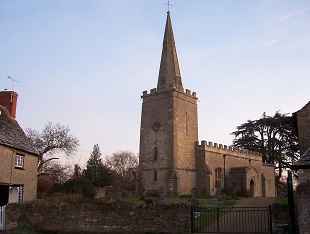 collapse in 1722. The bells are rung from the ground floor and require tidy handling. The back six bells are by Abraham II Rudhall of Gloucester, (4 – 8) 1722, and third (1729). The front two bells were added in 1998 by Taylor's of Loughborough.
Shellingford In the 10th century the settlement here was first described as Scaringaford, with a flurry of amendments, especially in the 13th century. By the 18th century it was recorded as Shillingford, but was later amended to Shellingford so as to avoid confusion with the village by Wallingford. Abingdon Abbey held the Manor from 913 A.D. until 1538. Amongst the subsequent administrators of the Manor was Sarah Churchill, Duchess of Marlborough. During the 19th century a new manor house Kitemore House – was built to replace the Elizabethan mansion. Between 1931 and 1957 there was an operational aerodrome nearby to the village.
collapse in 1722. The bells are rung from the ground floor and require tidy handling. The back six bells are by Abraham II Rudhall of Gloucester, (4 – 8) 1722, and third (1729). The front two bells were added in 1998 by Taylor's of Loughborough.
Shellingford In the 10th century the settlement here was first described as Scaringaford, with a flurry of amendments, especially in the 13th century. By the 18th century it was recorded as Shillingford, but was later amended to Shellingford so as to avoid confusion with the village by Wallingford. Abingdon Abbey held the Manor from 913 A.D. until 1538. Amongst the subsequent administrators of the Manor was Sarah Churchill, Duchess of Marlborough. During the 19th century a new manor house Kitemore House – was built to replace the Elizabethan mansion. Between 1931 and 1957 there was an operational aerodrome nearby to the village.
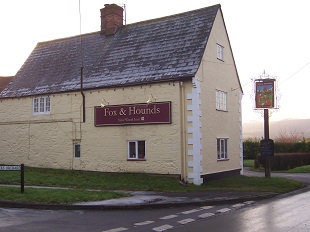 RAF Shellingford was originally used for elementary flying training, but later played a key role in the training of Horsa glider pilots in preparation for the D-Day landings of June 1944. The site has since been given over to quarrying. The parish church has a late 12th century nave and chancel, although much else has been altered in succeeding centuries. The west tower is Early English Gothic, with the tower arch rebuilt in the 16th century. The bells are rung from the ground floor, with the oldest bell being the fifth, cast around 1599 by an unknown founder. The fourth dates to 1738 by Henry III Bagley of Chacombe. The second is of 1841 by Thomas II Mears, Whitechapel; with the other three bells also cast there, tenor in 1920, with treble and three from 1998.
Uffington Originally noted as Uffentune (Uffa's estate), in the early 10th century the village was granted to Abingdon Abbey, and
RAF Shellingford was originally used for elementary flying training, but later played a key role in the training of Horsa glider pilots in preparation for the D-Day landings of June 1944. The site has since been given over to quarrying. The parish church has a late 12th century nave and chancel, although much else has been altered in succeeding centuries. The west tower is Early English Gothic, with the tower arch rebuilt in the 16th century. The bells are rung from the ground floor, with the oldest bell being the fifth, cast around 1599 by an unknown founder. The fourth dates to 1738 by Henry III Bagley of Chacombe. The second is of 1841 by Thomas II Mears, Whitechapel; with the other three bells also cast there, tenor in 1920, with treble and three from 1998.
Uffington Originally noted as Uffentune (Uffa's estate), in the early 10th century the village was granted to Abingdon Abbey, and
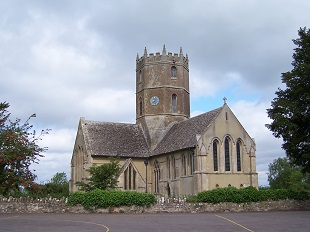 remained in their possession until 1620 when it became the property of the Craven family. Today the village is characterised by thatched and chalk-block houses, being overlooked by the famous White Horse Hill. Uffington is in the heart of the Ock Valley, in what was, until 1974, Berkshire, the River Ock still forming the northern parish boundary. The village is undoubtedly best known for its proximity to one of the country's most famous archaeological sites, the 374ft long Bronze Age white horse figure cut out of the turf on the hillside. Atop the hill stand the remnants of Uffington Castle, an Iron Age hill-fort overlying a Bronze Age predecessor. Just to the south is the ancient Ridgeway, thought to be Britain's oldest road. Thomas Hughes, author of Tom Brown's Schooldays was born in Uffington, with the old school mentioned in the book now Tom Brown's School Museum. The Poet Laureate, Sir John Betjeman lived in the village during the 1930s and served as a church warden. The parish church is known as the "Cathedral of the Vale" and has the rare feature of a hexagonal tower at its centre. The bells are a delight to ring, a new frame having been installed in 1992.
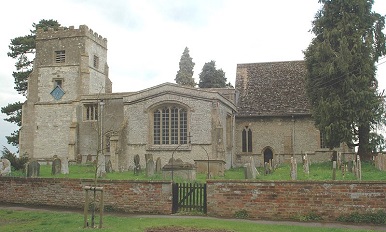 Childrey The name of the village derives from the Anglo-Saxon description of a spring, originally being known as Cillarthe. Today, Childrey sits on the northerly edge of the Berkshire Downs, with at its heart one of the best kept village ponds in the country. Childrey was associated with the influential Fettiplace family for several centuries until they moved to Swinbrook; the family gaining their ultimate influence with the restoration of the monarchy, Sir John Fettiplace becoming 1st Baronet of Childrey. St Mary's is a notable example of a Norman cruciform church, built late in the 12th century. The chancel was rebuilt late in the following century, and the Perpendicular Gothic west tower was constructed in the 15th century. The tomb recess in the north transept contains a well preserved effigy of a knight, and the larger south transept is now the Fettiplace family chapel. As far back as 1552 it was recorded that three bells were housed in the tower here. During the 17th century the three oldest of the present bells were cast in local foundries. Two more were cast during the next two centuries, and another was recast from an older bell in 1907 at Whitechapel. In April 2005, the bells were re-tuned, re-hung and augmented to an eight, with three new bells cast at Whitechapel.
Faringdon · All Saints
Longcot · SMV
Shellingford · St Faith
The Fox & Hounds · Uffington
Uffington · St Mary

Childrey · St Mary
Buckinghamshire
Saturday 14th October 2000
1.00pm Hughenden
St Michael AA (8) 14cwt
2.30pm Great Missenden
St Peter & St Paul (8) 24cwt
4.30pm Little Missenden
St John the Baptist (6) 12cwt
5.45pm Chalfont St Peter
St Peter (6) 11cwt
7.00pm Beaconsfield
St Mary & All Saints (8) 19cwt
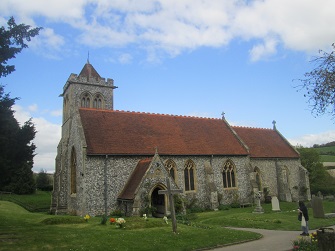
Hughenden · St Michael
Hughenden Several influential historical figures have controlled manors and estates within the parish, from Odo, Bishop of Bayeux, Henry I, Simon de Montfort and later, Henry VIII. Even though Hughenden is an extensive village in its own right, it is Hughenden Manor that is most widely known, primarily due to one of Britain’s most famous Prime Ministers, Benjamin Disraeli, having lived here from 1848 until his death in 1881. He was buried in a vault beneath the church, which is accessed from the churchyard. The church also contains a memorial to Disraeli, ordered by Queen Victoria. The manor house was given to the National Trust in 1947, along with much of Disraeli’s library. The parish church stands amidst land owned by the National Trust, although the building itself and churchyard belong to the Church of England. A church was founded here around 1100 by Geoffrey de Clinton, with monks establishing a small priory. The original mediaeval building now forms the chancel and north chapel of the present church, with the exterior walls of the church being of flint, with stone dressings. When restoration work, including an extension, was carried out (1874 – 90), the floor was covered with ceramic tiles designed by Edward William Godwin. Also at this time the walls were decorated by paintings in the Aesthetic Movement style depicting the Nativity, the four Evangelists and the Prophets. Amongst the stained-glass work is the east window depicting Christ in Majesty, which was installed as another memorial to Disraeli. The magnificent bells here were all cast by Taylors of Loughborough in 1952.
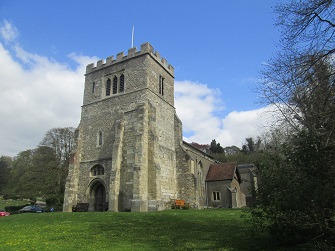 Great Missenden Noted as Missedene (a valley where marsh plants grow) in 1086, the source of the River Misbourne is to be found just north of the village. Latterly Great Missenden lay on a major coaching route between London and the Midlands, and hence the plethora of inns from that era. The first railway line followed the course of the Grand Union Canal and so Missenden reverted to a more agricultural outlook until the 20th century when it became a commuter village for London. Gipsy House was the home of Roald Dahl from 1954 until his death in 1990, and several local scenes and characters came to be reflected in his work. In June 2005 the Roald Dahl Museum opened here to honour his work. His grand-daughter Sophie and jazz musician husband Jamie Cullum subsequently bought a property in the village. Great Missenden was also briefly home to Robert Louis Stevenson (Treasure Island, Dr Jekyll & Mr Hyde). Missenden Abbey, founded in 1133 as an Augustinian monastery, fell into ruin following the Dissolution, and the remains were incorporated into a Georgian mansion. The large parish church retains much 14th and 15th century work, even allowing for the Victorian restoration. At the time the bells were rung from the ground floor but a gallery has been built recently, with four of the bells surviving from the 17th century. The sixth (1824) and tenor (1840) were cast by Thomas II Mears of Whitechapel.
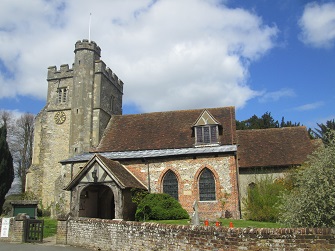 Little Missenden The village as built along the course of the River Misbourne, a small river which flows into the River Colne. The main London to Aylesbury road used to run through the centre of the Little Missenden and two widely known coaching inns, the Red Lion and the Crown, became popular hostelries. Like most of the oldest parts of the village, the Saxon parish church was built next to the river. The original parts of the church are c.975 AD, with several courses of renovation, rebuilding and extension having taken place over the centuries. Some medieval wall paintings survive inside the church, having been uncovered in 1931. The best preserved of these is a 13th century depiction of St Christopher with a young Jesus. The bells are rung from the ground floor, with the third being one of the oldest surviving full-circle ringing bells in the country, cast in 1380 by John Rufford of Toddington. The fourth is from 1470, by John Danyell, London. The fifth (1603) and tenor (1663) were both cast in Reading. The front two bells both cast at London foundries, second (1881) and treble (1948).
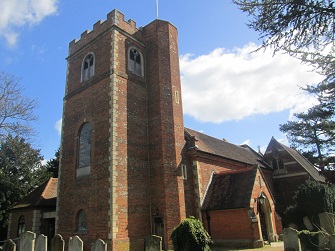 Chalfont St Peter First noted as Celfunte (a spring frequented by calves) in 1086, the distinguishing affix of the Chalfont villages (with the exception of Little Chalfont) comes from the dedications of the churches, in this instance becoming Chalfhunte Sancti Petri in the mid-13th century. The first major development of the village was during the Georgian period, with a grand row of shops being constructed to meet the needs of the expanding village. The medieval parish church was destroyed in 1708, when the tower collapsed into the nave following flooding in the area. A contemporary style church replaced it, but was largely altered and extended in the mid-19th century. All bar one of the bells date to 1798, cast by Thomas I Mears at Whitechapel. The second bell is from 1884, cast by Henry I Bond & Son of Burford.
Beaconsfield The name of the town derives from the Anglo-Saxon description for open land near to a beacon. The parish comprises the town itself and land mainly given over to arable land, although some beech forest remains from that planted to supply the furniture industry of High Wycombe. The original part of the town retains a couple of old coaching inns along a wide street that also contains a mix of red brick houses and small shops.
Chalfont St Peter First noted as Celfunte (a spring frequented by calves) in 1086, the distinguishing affix of the Chalfont villages (with the exception of Little Chalfont) comes from the dedications of the churches, in this instance becoming Chalfhunte Sancti Petri in the mid-13th century. The first major development of the village was during the Georgian period, with a grand row of shops being constructed to meet the needs of the expanding village. The medieval parish church was destroyed in 1708, when the tower collapsed into the nave following flooding in the area. A contemporary style church replaced it, but was largely altered and extended in the mid-19th century. All bar one of the bells date to 1798, cast by Thomas I Mears at Whitechapel. The second bell is from 1884, cast by Henry I Bond & Son of Burford.
Beaconsfield The name of the town derives from the Anglo-Saxon description for open land near to a beacon. The parish comprises the town itself and land mainly given over to arable land, although some beech forest remains from that planted to supply the furniture industry of High Wycombe. The original part of the town retains a couple of old coaching inns along a wide street that also contains a mix of red brick houses and small shops.
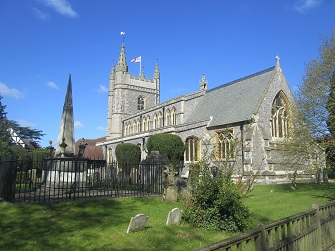 In the Victorian era, Beaconsfield was the Parliamentary constituency of Benjamin Disraeli, with the town being the burial place of G.K. Chesterton (Father Brown), statesman Edmund Burke and the poet Edmund Waller, for whom a stone obelisk was erected over his tomb chest in the churchyard of St Mary & All Saints. The famous model village of Bekonscot is the oldest original model village in the world. It portrays aspects of England from the 1930s, and has been run by the Church Army since 1978. There are six model villages set within the 1:12 landscape, buildings being constructed in natural materials. As of 2012 it had welcomed 14 million visitors, raising millions of pounds for charity over the years. The town is well known for its film and television connections, Beaconsfield Studios having been converted into the National Film & Television School. Several successful movies have filmed scenes here – Brief Encounter, Thunderball and Hot Fuzz. The parish church, largely a rebuilding of 1879, is constructed of flint and Bath stone, with a 3-stage tower of around 1420. The clock is positioned on the west side of the tower. Six of the bells were cast or recast in 1884 by Mears & Stainbank, Whitechapel. The second and sixth bells were cast in 1977 at the same foundry.
Great Missenden
Little Missenden
Chalfont St Peter
Beaconsfield
River Thames & South Chilterns
Saturday 6th May 2000
10.00am Ewelme
Oxon · SMV (6) 18cwt
11.00am Benson
Oxon · St Helen (8) 14cwt
12.05pm Berrick Salome
Oxon · St Helen (6) 7cwt
Hugh Deam, Roy Goodwin, Sally Harrison, Anthony Hughes, Roy Jones, Mary Joseph,
Susan King, Peter Lloyd, Jim Richardson and Mary Richardson.
Susan King, Peter Lloyd, Jim Richardson and Mary Richardson.
Grandsire Triples, Stedman, Eynesbury, St Simon's and St Martin's.
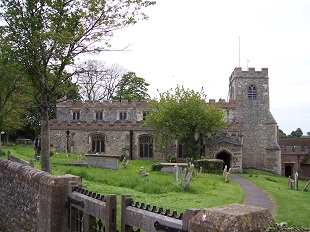
Ewelme · SMV
Ewelme Documented in 1086 as Auuilme (a settlement at the source of a river), Ewelme is a picturesque and historic village on the westerly facing slopes of the Chilterns, with watercress beds along the clear chalk stream, near which many Roman artefacts have been unearthed. Years of work by dedicated local people has restored these famed beds to their former glory, local watercress having been greatly sought after in London. The restored beds were officially opened on 23rd July 2004 by the Duke of Kent. Otters have returned to the waters here, with kingfishers often to be seen speeding along the course of the various brooks. The present manor house incorporates part of the former royal palace of Tudor times. The alms-houses of 1437 were commissioned by Alice, Duchess of Suffolk. Today, only eight of the original thirteen alms-houses survive, with five new ones built on the less steep main street. The Master is the Regius Professor of Medicine at Oxford, meaning that any of the family can use the lodgings whenever they wish. An earlier building on the site of the present church was dedicated to All Saints, but was totally rebuilt (1432) at the expense of the Earl and Countess of Suffolk. The exterior is comprised of mixed flint and limestone. Thomas Chaucer, Speaker of the House of Commons and son of Geoffrey Chaucer, and his daughter Alice de la Pole are both buried in the church. Jerome K. Jerome, author of Three Men in a Boat, and his wife Ettie are both buried in the churchyard. The 14th century west tower contains six bells which are rung from the ground floor. The oldest bell is the third, dating back to the early 16th century, and cast by John White. The fifth is of 1631 by Ellis I Knight of Reading. The second is from 1702, cast by William & Robert Cor of Aldbourne. The tenor recast 1782 by Thomas Janaway of Chelsea, and fourth recast by Taylors of Loughborough in 1840; the treble was also cast by them in 1950.
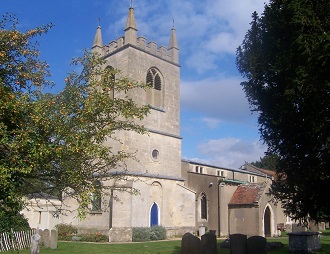 Benson Originally named Baensingtun (Benesa's farm), this was a British town captured by the Saxons in 571 A.D., and subsequently became a fortified frontier town between Wessex and Mercia. In meadows beside the River Thames a major battle was fought between West Saxons and Mercians in 777 A.D., a clash which saw Offa emerge victorious. Benson had a Royal Manor from this time up until 1628, when the extravagant lifestyle of Charles I required him to sell it in order to pay off his spiralling debts. Benson thrived during the turnpike and coaching era, with three coaching inns opening during this time to meet this surge in traffic. An RAF station was sited here in the 1930s and an experimental photo-reconnaissance unit was established. The De Havilland Mosquito made its operational debut from Benson. The Royal Flight was based here from 1939 to 1941, and returned when it reformed in 1946; nowadays the base is known for its helicopter squadron, although a replica Spitfire is on open display as a reminder of its World War II service. The heavily restored parish church retains little of the original 13th century architecture, with the tower from the Georgian period. The churchyard is particularly resplendent with colour when the apple trees are in full blossom. The eight bells were re-tuned and re-hung in 2009 thanks to a fund-raising campaign orchestrated by the ringers; the bells being re-hung clockwise as opposed to their previous anti-clockwise configuration. The treble and back five bells were cast in 1781 by Thomas Janaway of Chelsea. The second is from 1852 by Charles & George Mears of Whitechapel. The third is from the same foundry, 1922.
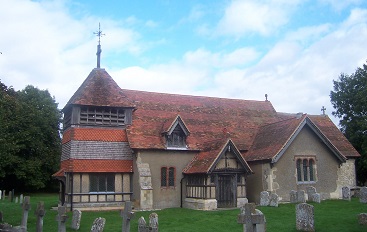 Berrick Salome The village nestles in the plain between the Chilterns and the River Thames, with a notation in the Domesday Book as Berewiche (a barley farm). By 1571 the name had been modified to Berwick Sullame, the manorial affix denoting the de Suleham family. The villages of Berrick Prior and Berrick Salome merge seamlessly along the course of a single through road, the parish also including the hamlets of Roke and Rokemarsh. A church was established here long before the Norman era, this supposition due to the dedication to St Helen, who was the favourite saint of King Ethelbald of Mercia who took this area from Wessex early in the 8th century. The church is set some distance away from the village, next to open land. By tradition, on Christmas Eve, Church Lane is lit by candles on either side. The Victorian architect A. Mardon Mowbray restored the church in 1890. The tower here is timber-framed, with horizontal bell-openings. Henry I Knight of Reading cast the second and fourth bells in 1621. Alexander Rigby of Stamford cast third, fifth and tenor in 1692, with Taylor's of Loughborough casting the treble in 1836.
Benson · St Helen
Berrick Salome · St Helen
Training Morning
Saturday 25th March 2000
10.00am Kirtlington
Oxon · St Mary (8) 16cwt
Richard Day, Hugh Deam, Roy Goodwin, Anthony Hughes, Roy Jones,
Mary Joseph, Susan King, Peter Lloyd, Paul Morley and Clare Tucker.
Mary Joseph, Susan King, Peter Lloyd, Paul Morley and Clare Tucker.
Grandsire Triples.
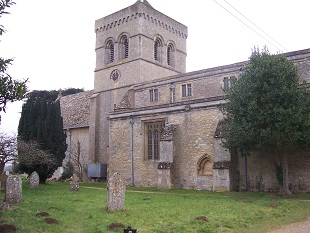
Kirtlington · St Mary
Kirtlington The village stands at the junction of two Roman roads, Akeman Street and Portway, with its first recorded notation around 1000 A.D. as Kyrtlingtune (Cyrtla's Estate). During that Saxon era it was a frontier town of Mercia. Centuries later, in 1742, work began on constructing the manor house and landscaping the grounds of Kirtlington Park for Sir James Dashwood. The Polo Club which is situated within the park was started in 1926; twenty years after the property had been sold to the Budgett family. Prince Charles often turned out for the Cambridge Old Blues Polo Team here during the 1970s and 1980s. Kirtlington has two village greens, a large village pond, a multitude of thatched cottages, and distinctively named roads such as Molly Minn's Lane, Betty Bull's Lane and Tinkers Ditch. Quarrying was once a significant factor in local employment, with the quarry now transformed into a nature reserve which continues as far as the canal. The working narrow-boats have been replaced by holiday barges, with the flood-gate near Flight's Mill having an 2eel-trap" incorporated within its structure. The oldest visible parts of the parts of the parish church include the 12th century Norman arches supporting the central tower and a tympanum over the vestry door. Beneath the floor of the chancel are the foundations of a former apse. About 1250 the nave was rebuilt, and north and south aisles were added, each linked with the nave by arcades of three bays. The Lady Chapel was converted into a family chapel and burial vault for Sir Robert Dashwood., 1st Baronet. The bell tower was rebuilt in 1853 by Benjamin Ferrey in Norman Revival style. The three oldest bells (4, 5, 6) were cast by Henry III Bagley of Chacombe in 1718. Tenor by Abel Rudhall, Gloucester, 1753. Second and third cast at Whitechapel (1853 and 1870). Treble and seventh, 1938, Taylor's of Loughborough.
The River Thames & The Ridgeway
Saturday 4th March 2000
10.00am Purley on Thames
Berks · St Mary (6) 8cwt
11.00am Pangbourne
Berks · St James the Less (6) 10cwt
11.45am Whitchurch
Oxon · SMV (6) 8cwt
12.45pm Streatley
Berks · St Mary (6) 8cwt
01.30pm The Catherine Wheel
Goring on Thames
03.15pm Goring on Thames
Oxon · St Thomas of Canterbury (8) 8cwt
04.15pm Cholsey
Oxon · St Mary (8) 10cwt
Hugh Deam, Simon Edwards, Roy Goodwin, Sally Harrison, Anthony Hughes, Roy Jones,
Mary Joseph, Susan King, Edgar Litt, Peter Lloyd, Nesta Long, Brian Lowe, Margaret McHugh,
Paul Morley, Leonora Richardson, Jim Richardson and Mary Richardson.
Mary Joseph, Susan King, Edgar Litt, Peter Lloyd, Nesta Long, Brian Lowe, Margaret McHugh,
Paul Morley, Leonora Richardson, Jim Richardson and Mary Richardson.
Grandsire Triples, St Clements, Plain Bob Minor, Stedman and Rev Canterbury.
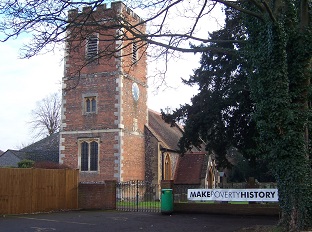
Purley on Thames · St Mary
Purley on Thames The Domesday Book documents the settlement here as Porlei (a woodland clearing frequented by bittern or snipe). The manor house here is the late 18th century mansion of Purley Park, built under the guidance of James Wyatt. The 5-bay façade is constructed of Portland stone and, in common with many such grand buildings of the time, there are Tuscan columns much in evidence. The church is set away from the bulk of the housing, close to the marina, in an area that still gives the impression of a quiet village, as opposed to the main road which indicates that this is now an suburb of Reading. St Mary's church dates primarily to 1150, but does retain some original Saxon work. The font is Norman, being set on short columns, and with a variety of decorations. The bells are rung from the ground floor and require steady handling. Four of the bells are from the first half of the 17th century, cast by Ellis I Knight of Reading. The fourth (1627), third and tenor (1629), and the second (1635). The other two bells were cast by Thomas Janaway of Great Chelsea, fifth (1787) and treble a year later.
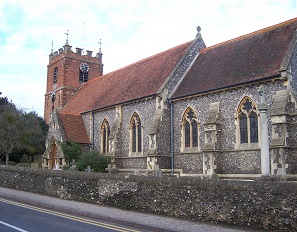 Pangbourne The town takes its name from the River Pang, which flows into the River Thames here, with documentation revealing a settlement here in 844 A.D. called Pegingaburnan. Distinct expansion came about during the latter half of the 19th century, with Pangbourne becoming a fashionable riverside resort, and a result there are many attractive Victorian and Edwardian villas, including a row of ornate houses known as the "Seven Deadly Sins". The author of Wind in the Willows, Kenneth Grahame lived in Church Cottage, whilst the illustrator of the book, Ernest Shepherd used the river here to inspire his evocative drawings. Pangbourne Meadows is a glorious example of a traditional meadow by the Thames, scythed after flowering and seeding in order to preserve its diverse range of wild flowers. An elegant iron bridge over the Thames links the town with Whitchurch on the Oxfordshire side of the river. The brick tower of the parish church dates from 1718, with the church rebuilt in 1866 under the supervision of J. Woodman. All six bells here were cast in 1720 by Abraham II Rudhall of Gloucester.
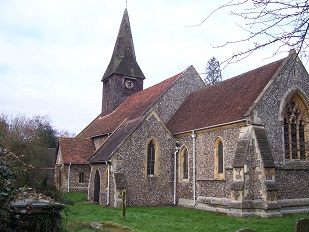 Whitchurch on Thames The name of the village denotes the white stone-built church from the Saxon era. An early Iron Age encampment existed at Bozedown, an area within the parish that that now gives its name to the Bozedown Alpacas, one of the largest alpaca breeding and stud centres in the country. The narrow flood plain is backed by steep woodland, with a quiet pool of tree-lined water between the bridge and the water-mill. Whitchurch toll-bridge was closed for a rebuilding in 2013. Whitchurch was the birthplace of Sir John Soane, the famed architect, whose great works included the Bank of England, the Banqueting House in Whitehall, the picture-gallery of Dulwich College and various parts of Brasenose College. He became Clerk of the Works to St James' Palace, Chelsea Hospital, and the Houses of Parliament, being responsible for re-design to all three buildings. The parish church was rebuilt in 1858 in a distinctive 14th century style, and is tucked away behind several large houses close to the river. The Gothic Revival architect Henry Woodyer was responsible for this work, retaining only the Norman south door, south porch and a few other minor details. All six bells date to 1912, cast at the London foundry of Gillett & Johnston.
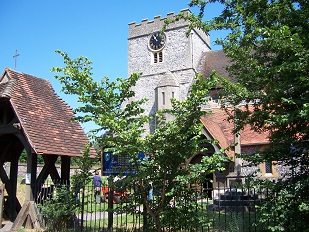 Streatley The village lies at the foot of wooded chalk hills where beech trees cast down their arching branches as they flank the river. A settlement is known to have been here in 690 A.D., when it was described as Stretlea. During the 1930s the BBC recorded what became regarded as the definitive "song of the nightingale" in the woods here. Probably the most significant private dwelling is Streatley House, a three-storey red-brick late 18th century mansion situated on the High Street and surrounded by other Georgian houses and cottages all the way up the hill. A number of malt-houses between the church and the High Street were converted into a village hall and two private houses by W. Ravenscroft .The parish church is a Victorian rebuilding from 1865 that was carried out by Charles Buckeridge. The short Perpendicular west tower houses six bells, the oldest two of which, second and tenor, date to 1649, cast by Ellis I Knight of Reading. The fifth bell was cast at Whitechapel by Mears & Stainbank in 1887. The other three bells were also cast at the foundry, treble in 1936, with third and fourth from 1978.
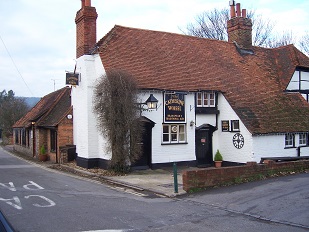 Goring on Thames Goring is thought to derive its name from "the dwellers at the gara", which is a triangular piece of land, with a notation in the Domesday Book as Garinges. There was once an Augustinian nunnery here, with late 19th century excavations revealing it to have been sited just south-east of the church. Major disagreements in the 14th and 15th century culminated in its ownership passing to Charles Brandon, Duke of Suffolk. The twin villages of Goring and Streatley sit either side of the river, guarding the water, road and rail routes between the chalk ridges. As well as the large weir and historic wooden bridge, Goring is noted for its numerous elegant Edwardian riverside properties and gabled boat-houses. The Icknield Way crossed the river here by means of a ford, and joined up with the Berkshire Ridgeway, these routes being mainly used for driving sheep from East Anglia to the great fairs in the west country. One of
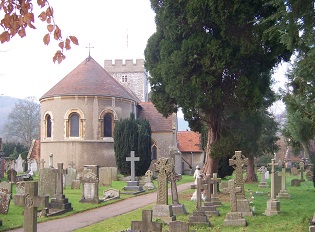 the area's greatest disasters occurred in July 1674, when a boat containing 60 passengers came too close to the weir and overturned, drowning all but 14 passengers. The earliest recorded bridge over the Thames here was built upstream of the ferry in 1837. The toll cost 1d to cross on foot, but only ½ d if one was accompanied by a calf or pig. The early 12th century church was rebuilt in 1887, and is subtly sheltered by a host of mature trees. The construction was overseen by Robert D'Oyley, the first Norman Lord of Goring. One of the oldest surviving bells in the country is to be found here, having been cast around 1290 by Richard de Wymbis. No longer rung, it now hangs on a bracket. The set of eight bells were cast in 1929 by Mears & Stainbank, Whitechapel.
Cholsey The first notation of a settlement here was in 895 A.D. when it was described as Ceolesig (dry ground in marshland
the area's greatest disasters occurred in July 1674, when a boat containing 60 passengers came too close to the weir and overturned, drowning all but 14 passengers. The earliest recorded bridge over the Thames here was built upstream of the ferry in 1837. The toll cost 1d to cross on foot, but only ½ d if one was accompanied by a calf or pig. The early 12th century church was rebuilt in 1887, and is subtly sheltered by a host of mature trees. The construction was overseen by Robert D'Oyley, the first Norman Lord of Goring. One of the oldest surviving bells in the country is to be found here, having been cast around 1290 by Richard de Wymbis. No longer rung, it now hangs on a bracket. The set of eight bells were cast in 1929 by Mears & Stainbank, Whitechapel.
Cholsey The first notation of a settlement here was in 895 A.D. when it was described as Ceolesig (dry ground in marshland
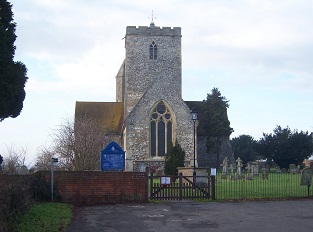 belonging to Ceol). The focal point at the heart of the village is the green, known locally as "The Forty", which is bordered by numerous horse-chestnut trees. Lollingham House, built in 1516, was home to one of Britain's most famed Poet Laureates, John Masefield. Cholsey possessed one of the great tithe barns of the country, but by the 19th century it was in a dilapidated state and the decision was taken to dismantle the building. The number of tiles taken from the roof was calculated to have been in excess of 230,000. The parish church was founded in 986 A.D. on monastic land donated by Ethelred the Unready, with the present building of stone and flint dating to the 12th century. King Henry I gave the church lands to the Abbots of Reading, who also owned a summer residence in Cholsey. A major restoration in 1877 left the exceptional Early English chancel unspoilt. The world renowned mystery writer, Agatha Christie is buried in the north-west corner of the extensive churchyard. The imposing and impressive tower houses a superb set of eight bells. The oldest two bells are the third and sixth, cast in 1826 by John Hunt of Cholsey. The seventh dates to 1869, by John Warner & Sons, London. The front two bells and the fifth are from Whitechapel, 1939. The fourth and tenor by Taylor's of Loughborough, 1978.
Pangbourne · St James
Whitchurch · SMV
Streatley · St Mary
The Catherine Wheel · Goring
Goring on Thames · St Thomas
Cholsey · St Mary